

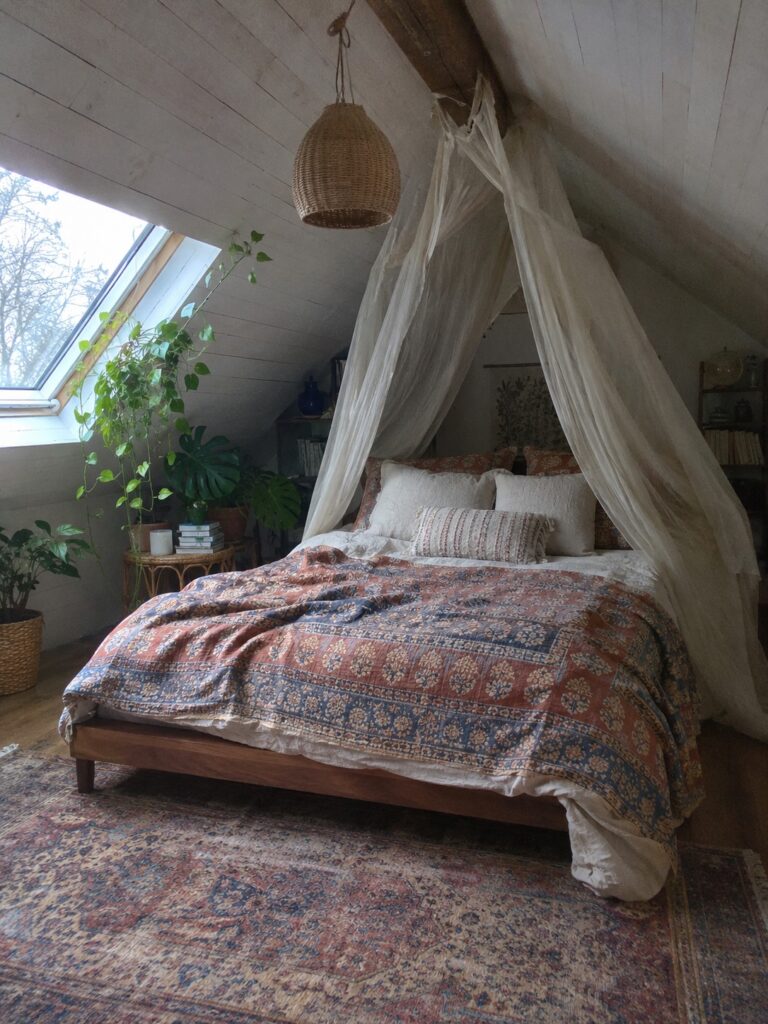
A sloped ceiling can make an attic bedroom feel cozy, but it also changes where the bed, storage, and lighting can comfortably fit.
I find that the room works best when the layout follows the roofline instead of fighting it.
Boho details like layered textiles, natural wood, and warm colors can soften the angles without making a small space feel crowded.
The first thing I notice in these rooms is often how the bed sits beneath the slope and whether there’s still enough clear space to move around.
Some ideas are easy to adapt, while others may be worth saving for a room with a similar shape.
Use a Canopy to Make an Attic Bed Feel Cozy
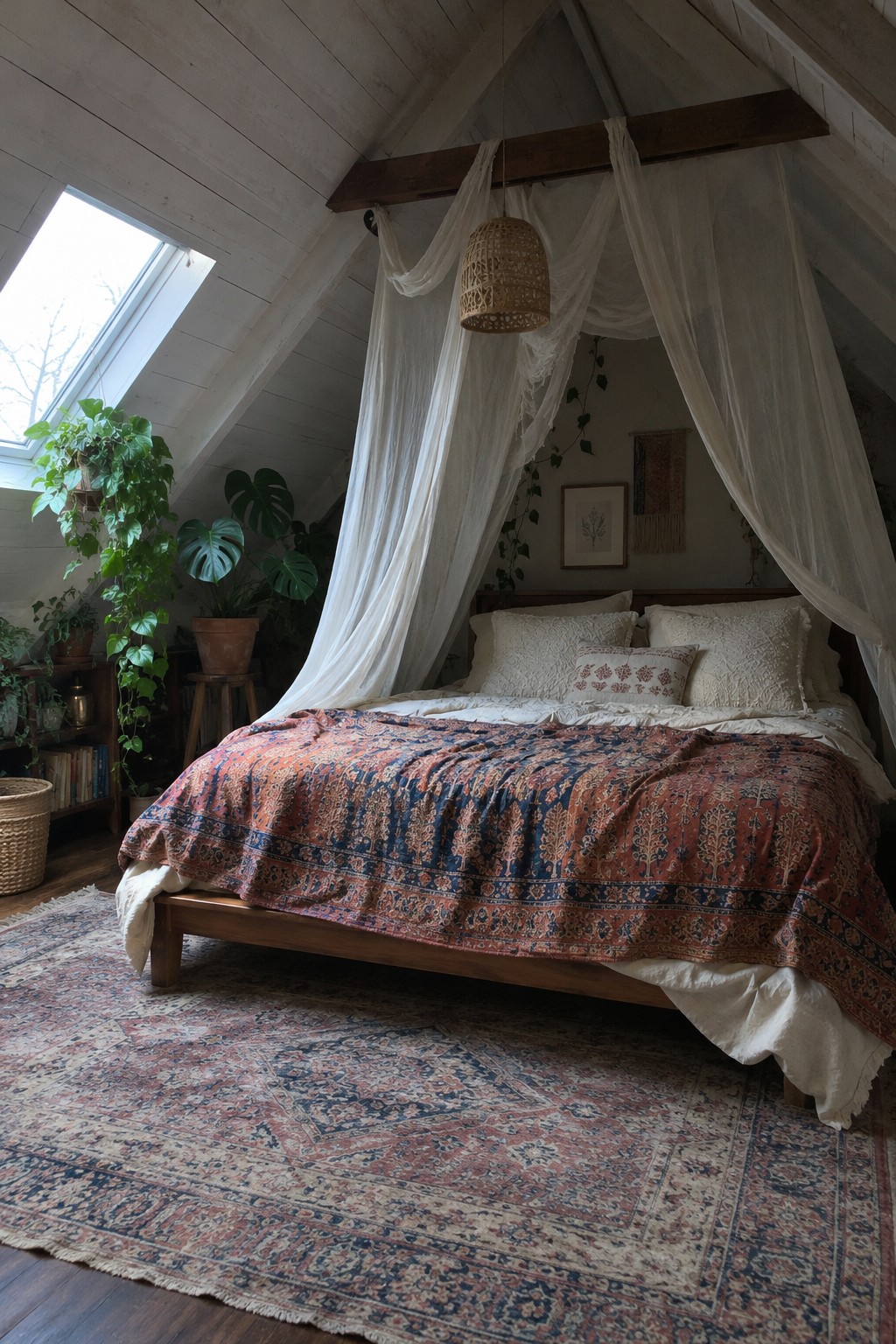
A fabric canopy gives a bed a defined, tucked-in feel without needing a full-height wall. In an attic, that can make the sleeping area feel settled even when the ceiling slopes sharply around it.
Hang light fabric from a beam or a simple ceiling frame, and let it fall loosely around the bed. Keep the cloth easy to move and wash, and avoid heavy drapes that could make a small room feel closed in.
Use Soft Colors In A Sloped Attic Bedroom
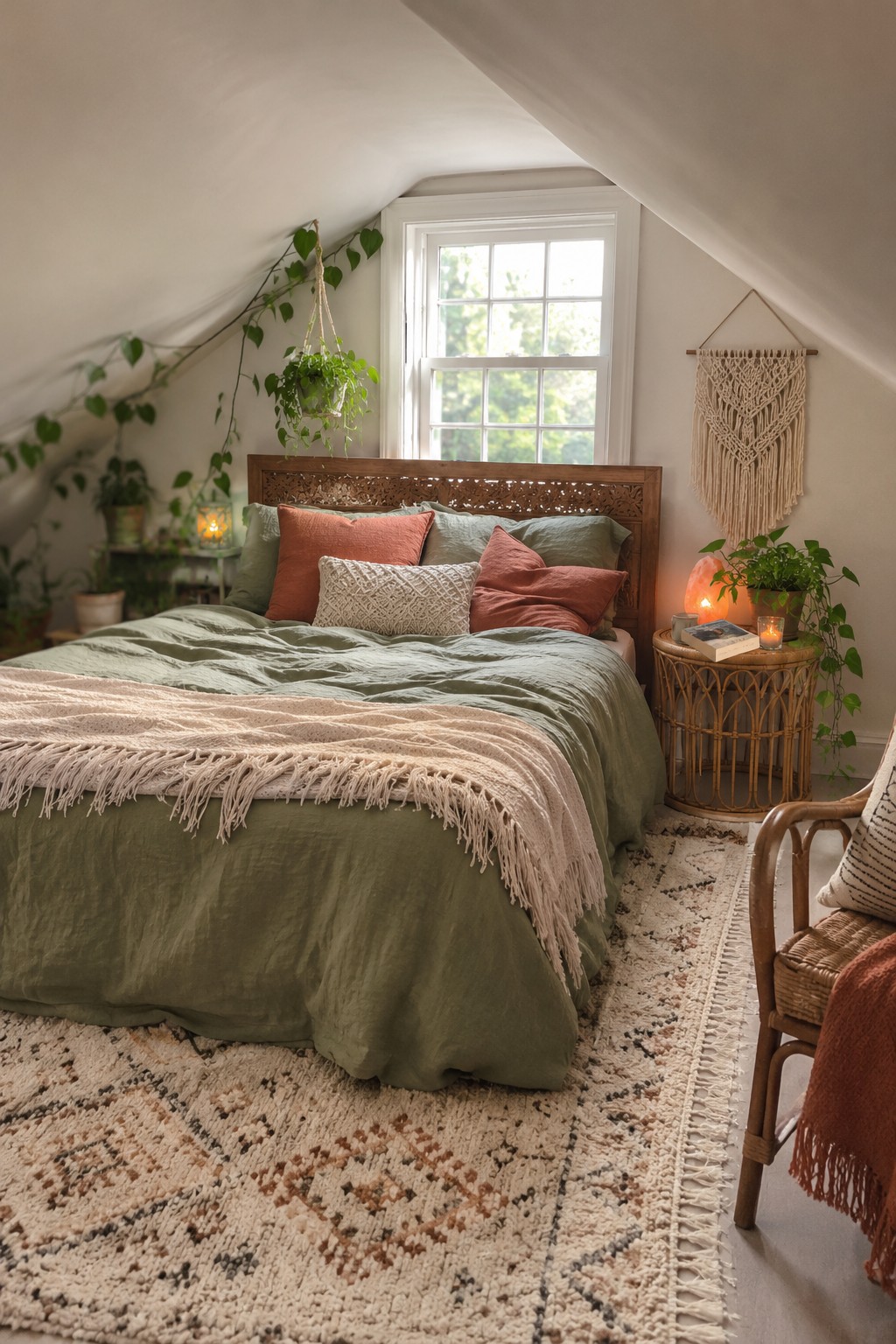
A muted color scheme helps an attic bedroom feel restful without making the slanted walls seem busy. Sage green bedding and a few rust-colored pillows bring in color while keeping the room easy on the eyes.
Try one soft shade for the larger bedding pieces, then use a warmer color in a few smaller accents. This approach suits rooms with low or angled ceilings, where too many strong colors can make the space feel crowded.
Use Patterned Textiles to Make an Attic Bedroom Cozy
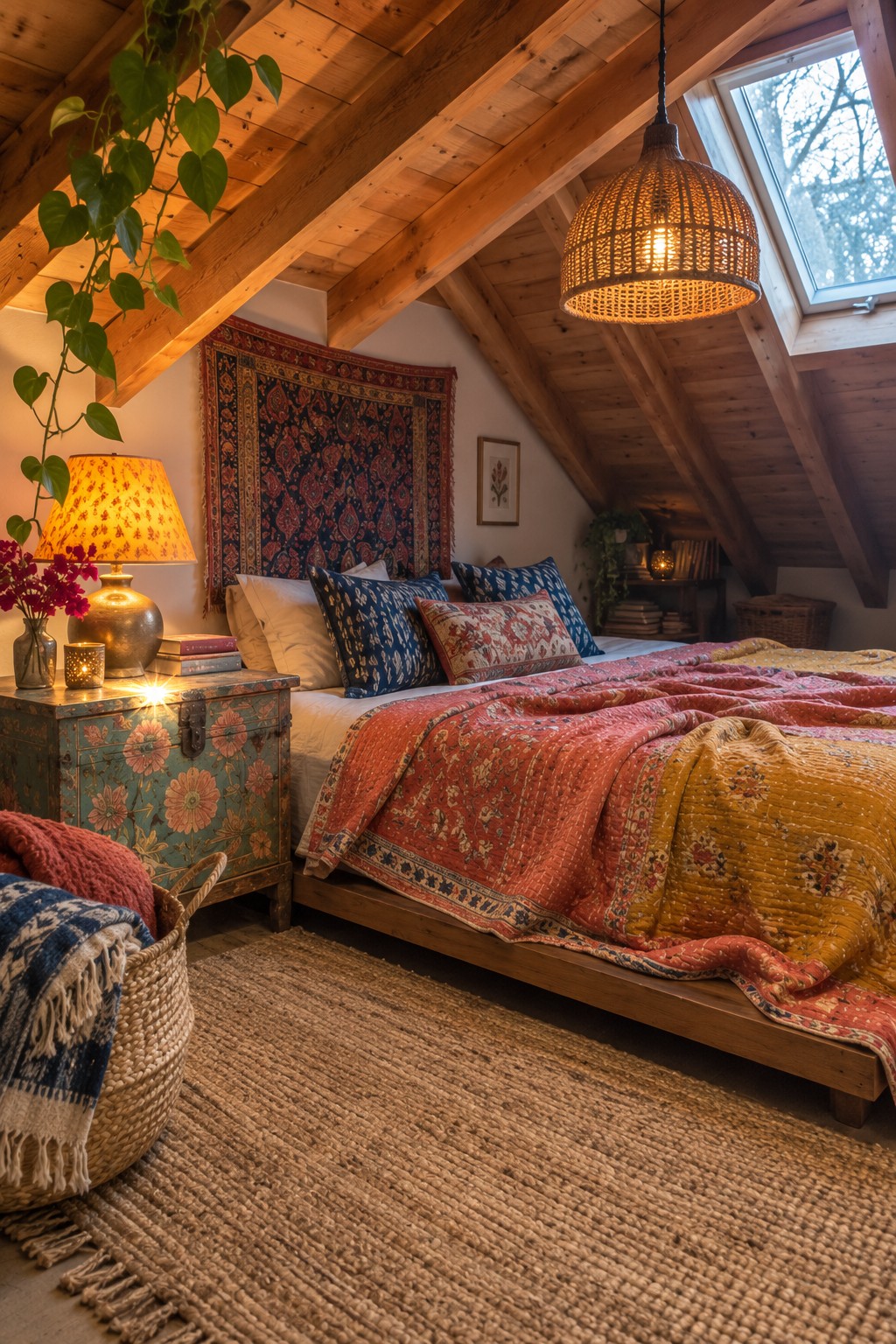
Boho textiles can help an attic bedroom feel settled and comfortable, even when the slanted ceiling makes the layout a little awkward. A patterned quilt and a fabric wall hanging bring color to the lower part of the room without needing much wall space.
Start with one main pattern, then add a few smaller prints in related colors. This approach suits a simple bed tucked beneath the eaves, but leave some plain fabric in the mix so the patterns have room to breathe.
Use the Sloped Ceiling for a Cozy Bed Nook
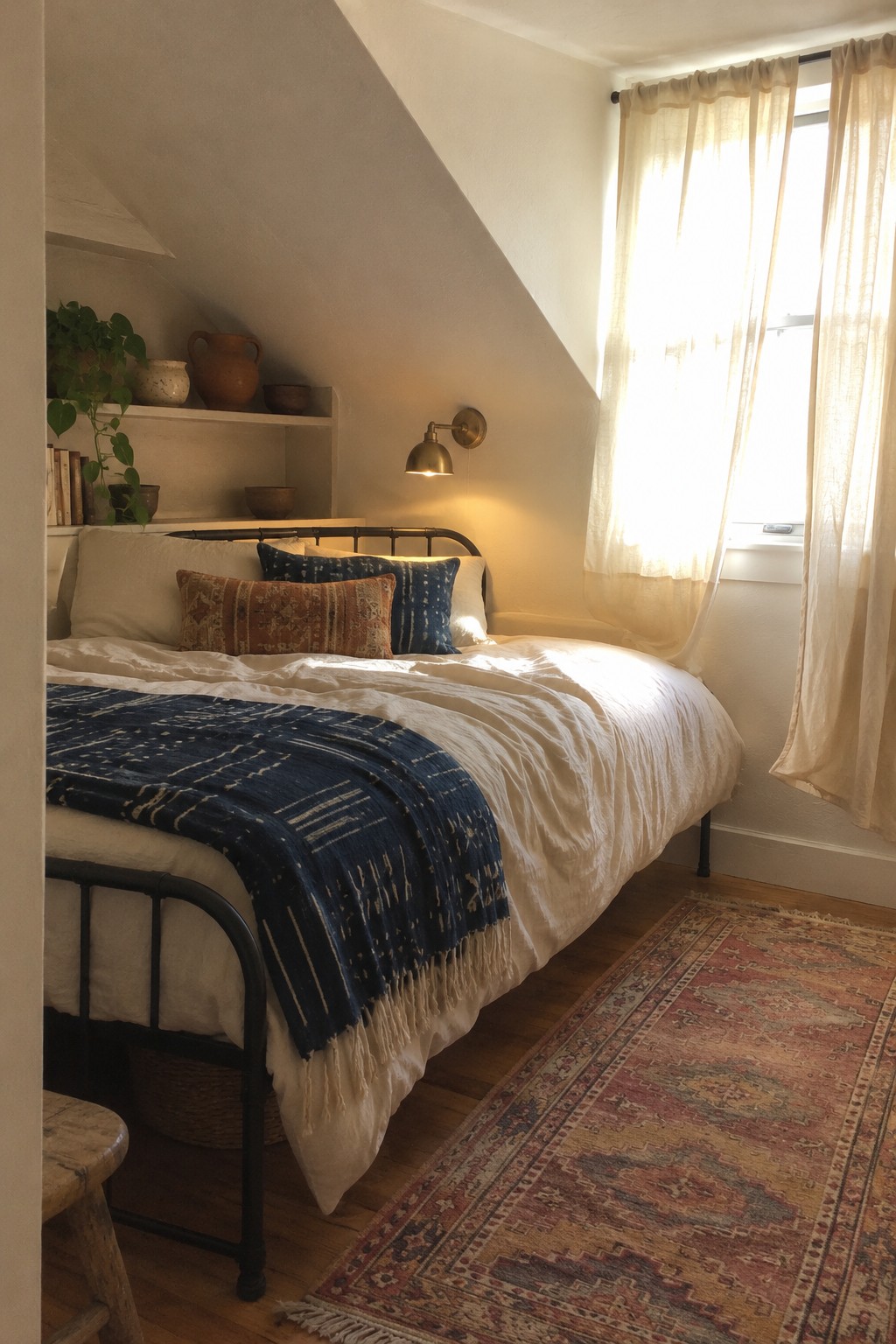
Placing the bed beneath a slanted ceiling makes good use of an awkward attic corner and gives the sleeping area a tucked-away feel. A simple iron bed frame and layered bedding suit this close-fitting layout without making it feel crowded.
This arrangement works best when there’s enough room to get in and out of bed comfortably. Keep taller furniture near the room’s highest wall, and use the low space beside the bed for items that don’t need much headroom.
Use a Carved Screen as an Attic Headboard
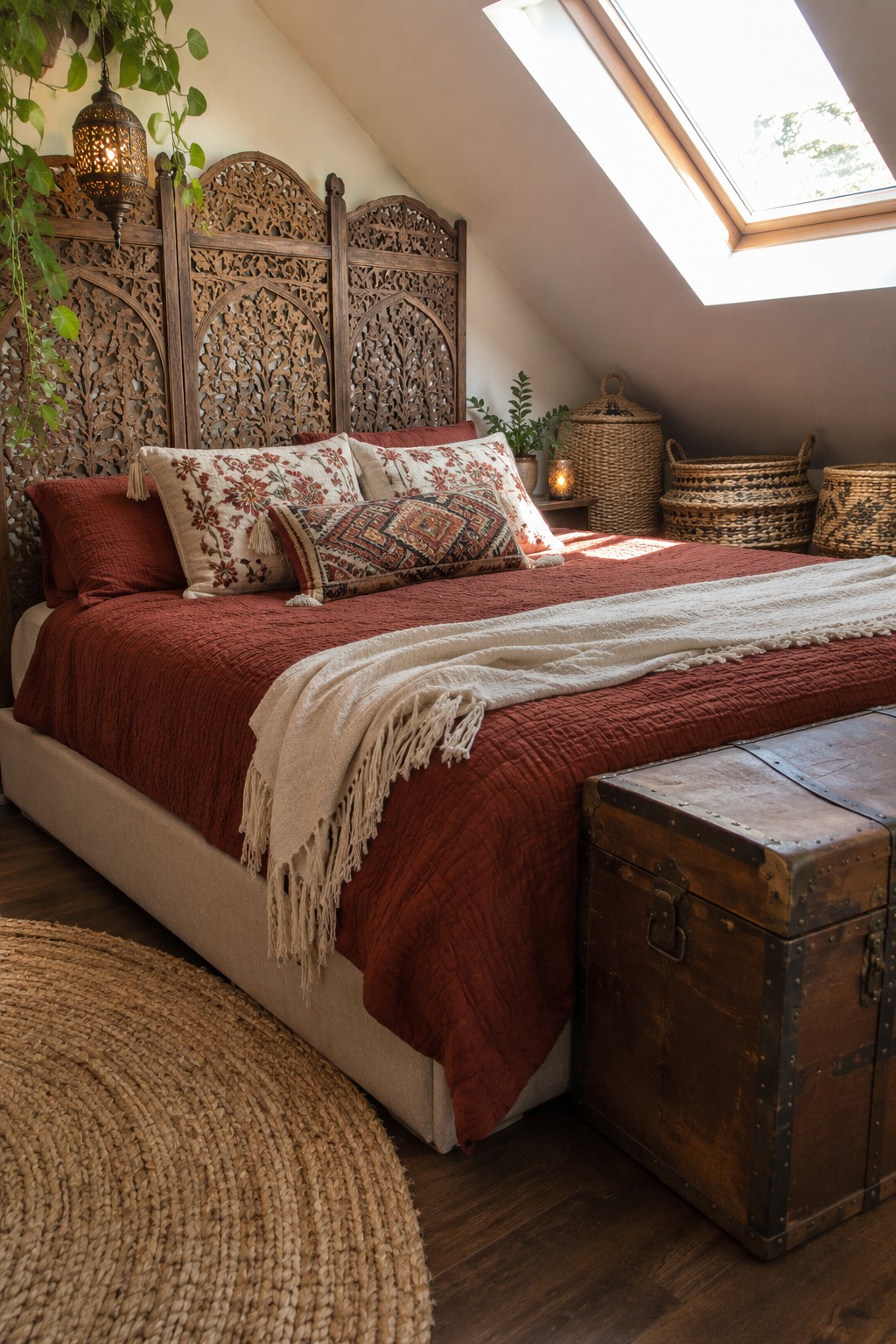
A carved wood screen makes a striking headboard and gives a boho attic bedroom a clear focal point without changing the sloped ceiling. Its open pattern brings in detail while still letting the wall feel light.
Use a folding screen behind the bed when a full-size headboard won’t fit neatly under the eaves. Check that it sits securely, and keep the rest of the bedding fairly simple so the carved pattern can stand out.
Let a Large Attic Window Shape the Bed Layout
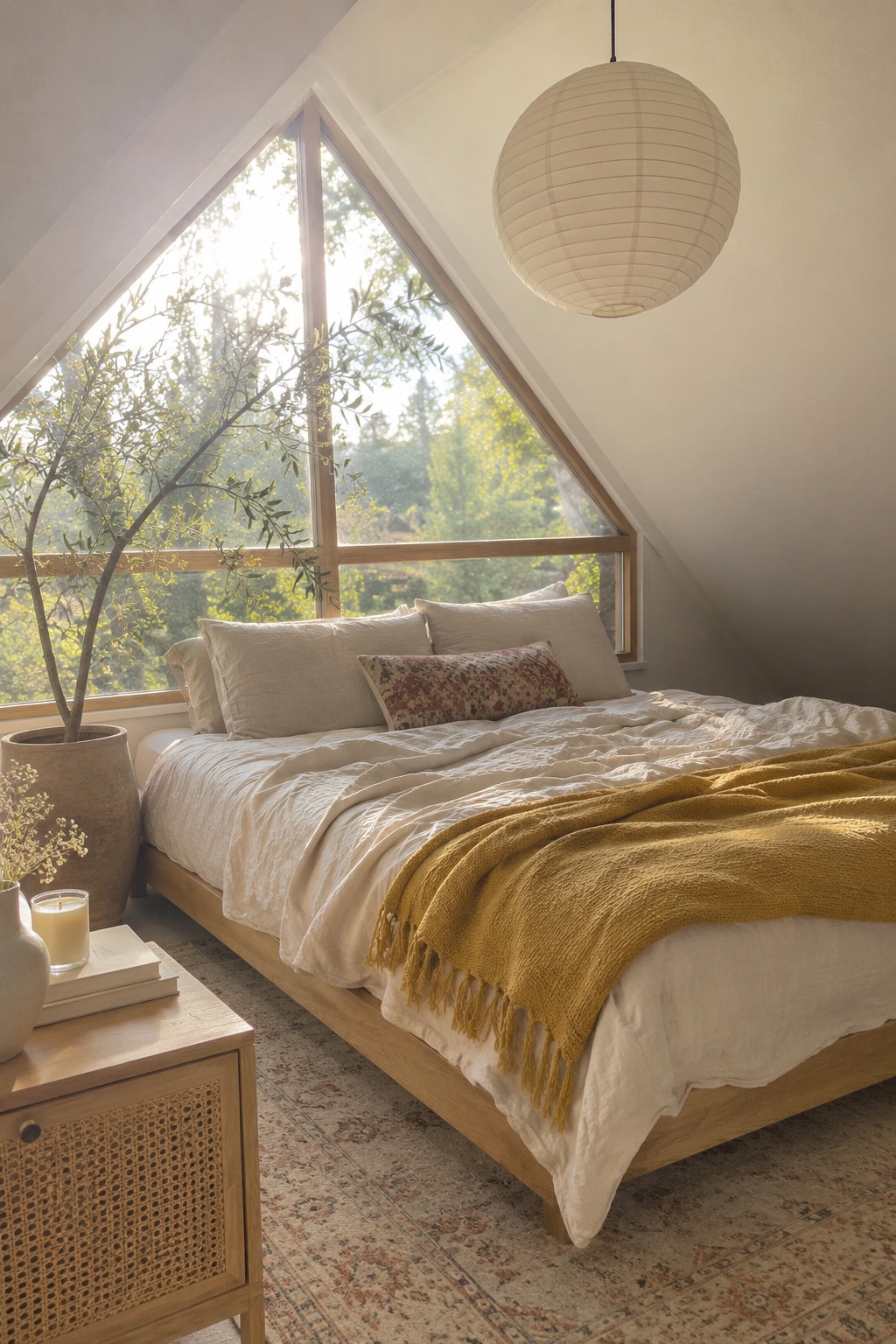
A bed placed near a large attic window can make good use of the room’s center, where there is often more headroom. The sloped ceiling feels less limiting when the bed faces the open view rather than being tucked into the lowest part of the room.
Keep the bedding simple so the window remains the main feature, and leave enough space to move around the bed comfortably. This layout suits attic bedrooms with a gable window, though it works best when the bed does not block access to the glass.
Layer Rugs to Make an Attic Bedroom Feel Cozy
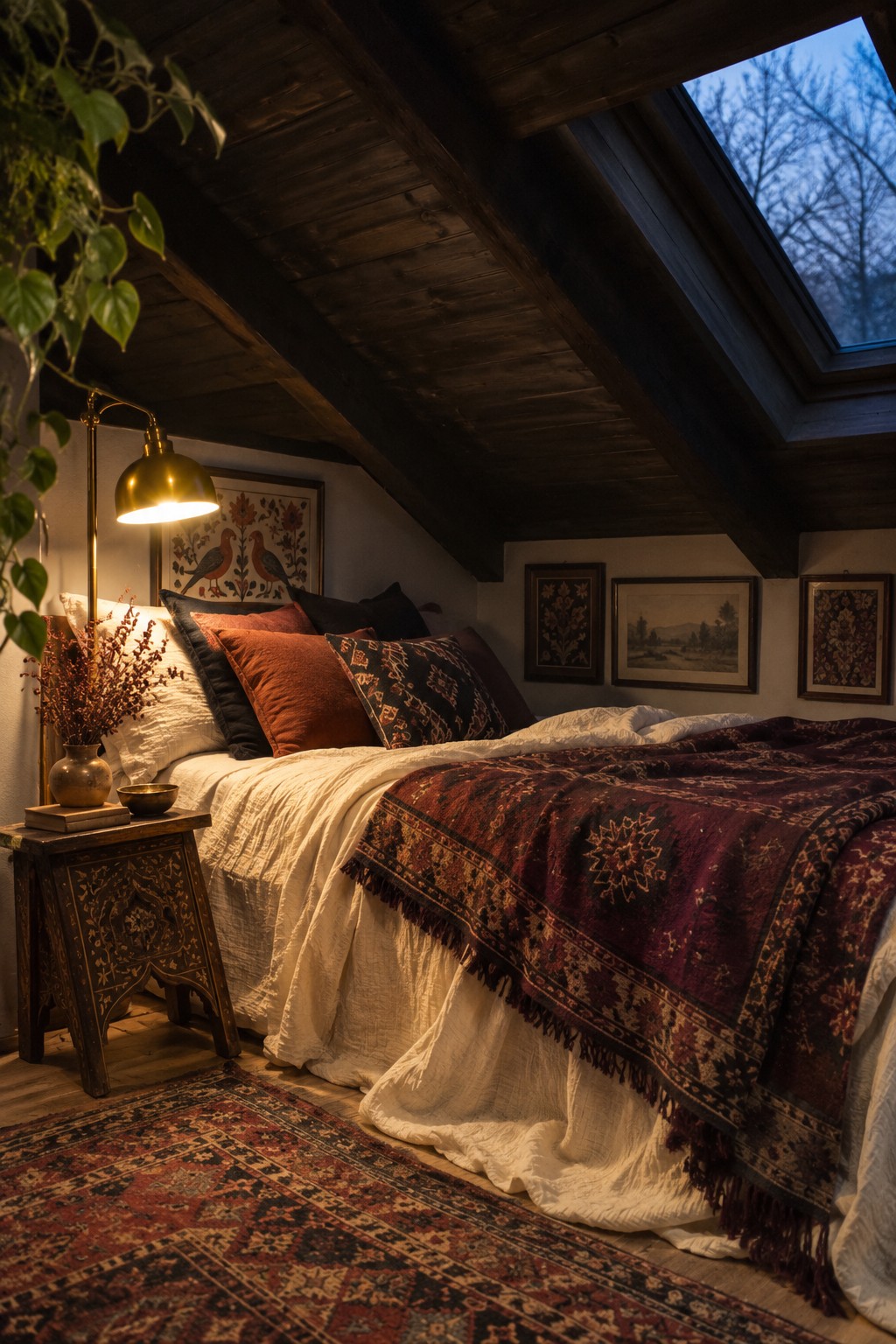
Layered rugs help an attic bedroom feel comfortable, especially when the floor is mostly wood. Here, a patterned rug under the bed ties in with the rich colors of the bedspread without needing more decoration on the walls.
Try a larger rug under the bed, leaving enough visible around the sides and foot to make the space feel connected. In a small attic room, keep the patterns in a similar color range so they don’t compete.
Bring Plants Into an Attic Bedroom
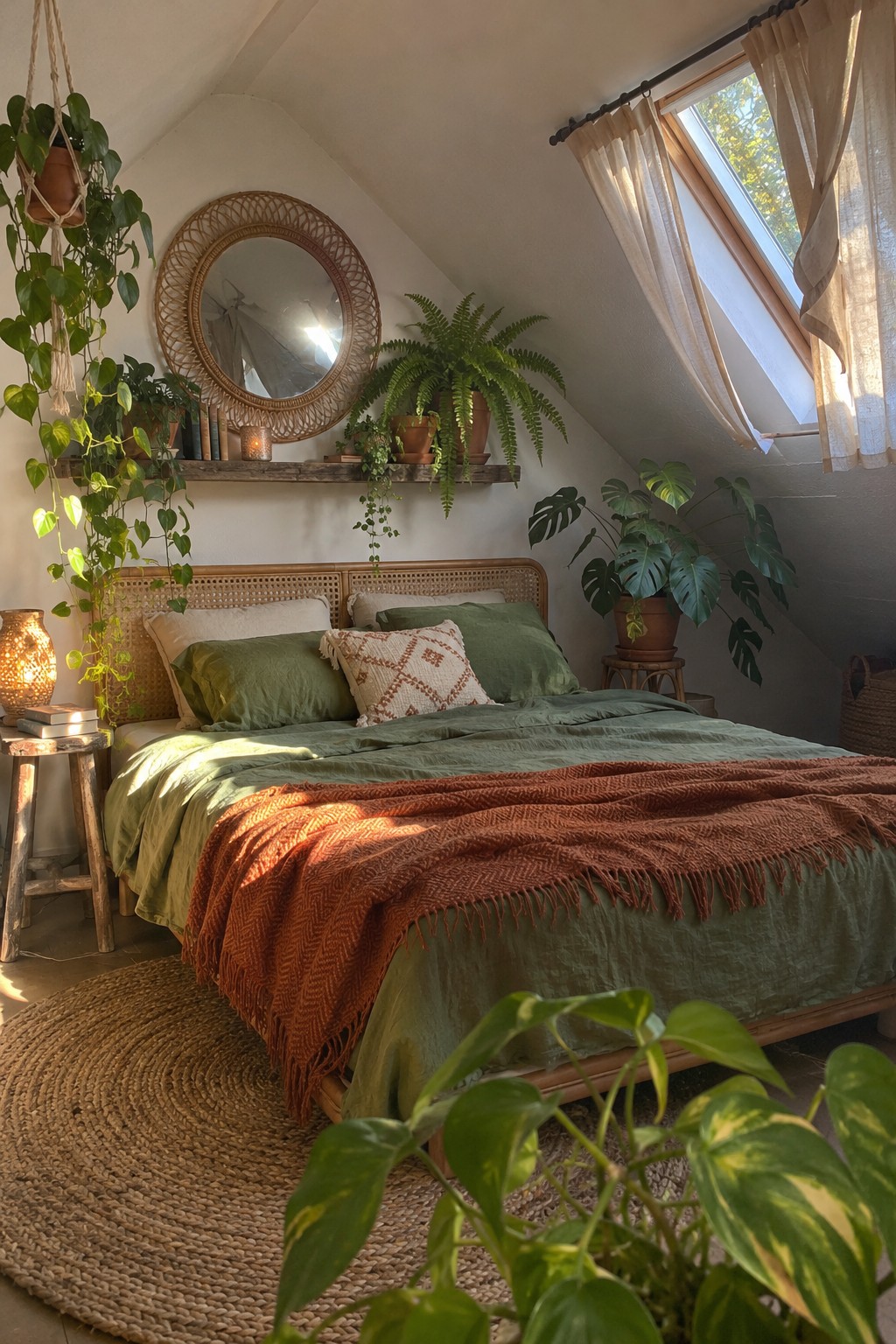
Houseplants can make an attic bedroom feel more lived-in without taking up much floor space. A trailing plant on a high shelf uses the awkward wall area near a sloped ceiling, while a larger plant can sit beside the bed.
Choose spots where plants get enough light and can be watered easily. Hanging pots and shelves work well in smaller rooms, but keep them clear of walkways and avoid placing heavy planters where they could fall.
Hang a Canopy From an Attic Beam
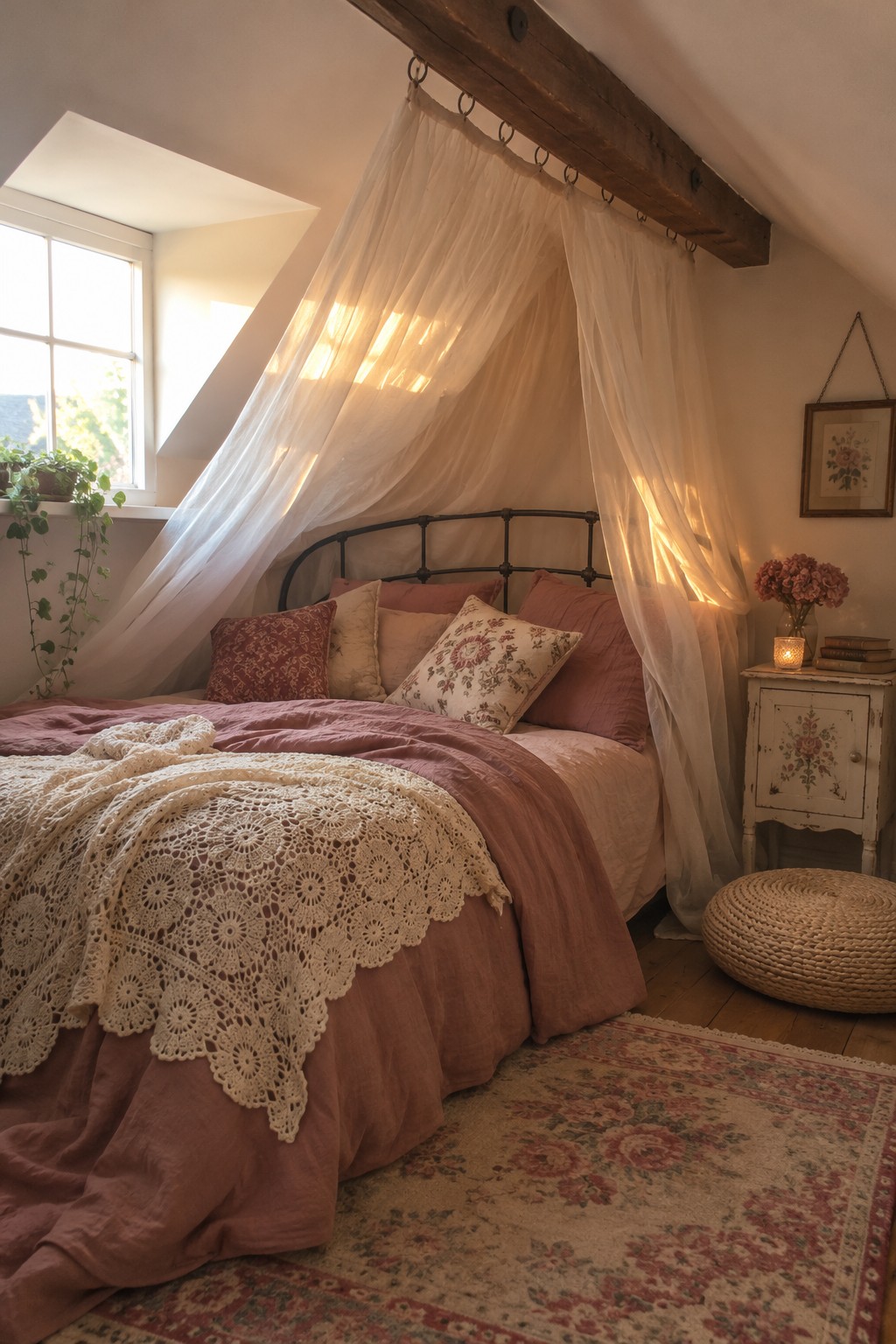
A simple canopy can make an attic bed feel tucked away without adding bulky furniture. Here, sheer fabric hangs from a wooden ceiling beam, following the roofline and giving the bed its own cozy nook.
Use lightweight fabric so it drapes easily and does not crowd a low ceiling. A sturdy exposed beam can provide a handy place to hang it, but check that the beam and fixings can safely support the canopy.
Use Exposed Beams to Give an Attic Bedroom Character
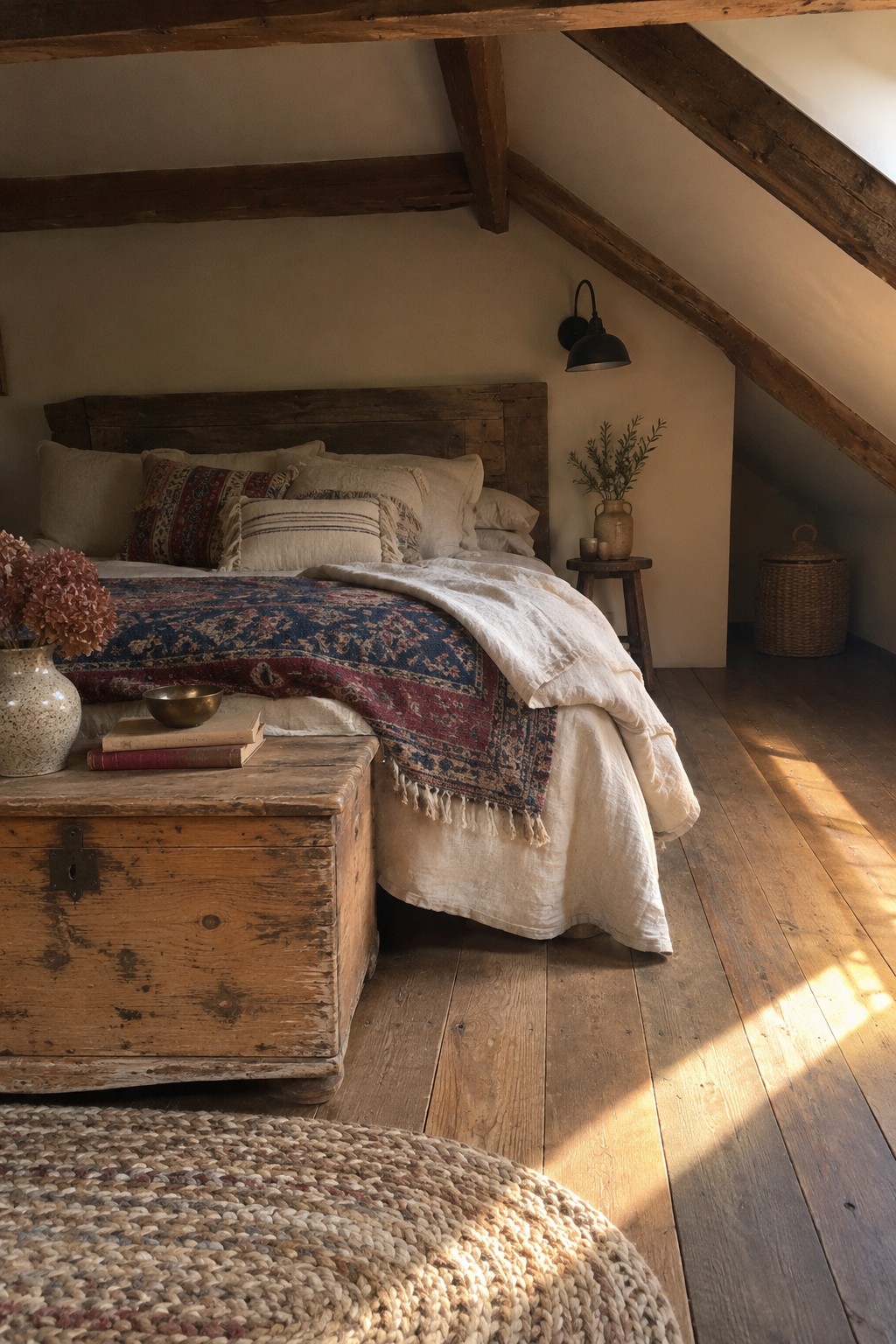
Exposed wooden beams can make a sloped attic ceiling feel like a natural part of the room rather than an awkward shape to work around. The aged timber here suits the relaxed boho bedding without needing much extra decoration.
This works especially well in older homes where the beams are already part of the structure. Keep the bedding and nearby finishes fairly simple so the ceiling remains easy on the eye.
Choose Warm Bedding for a Cozy Attic Bedroom
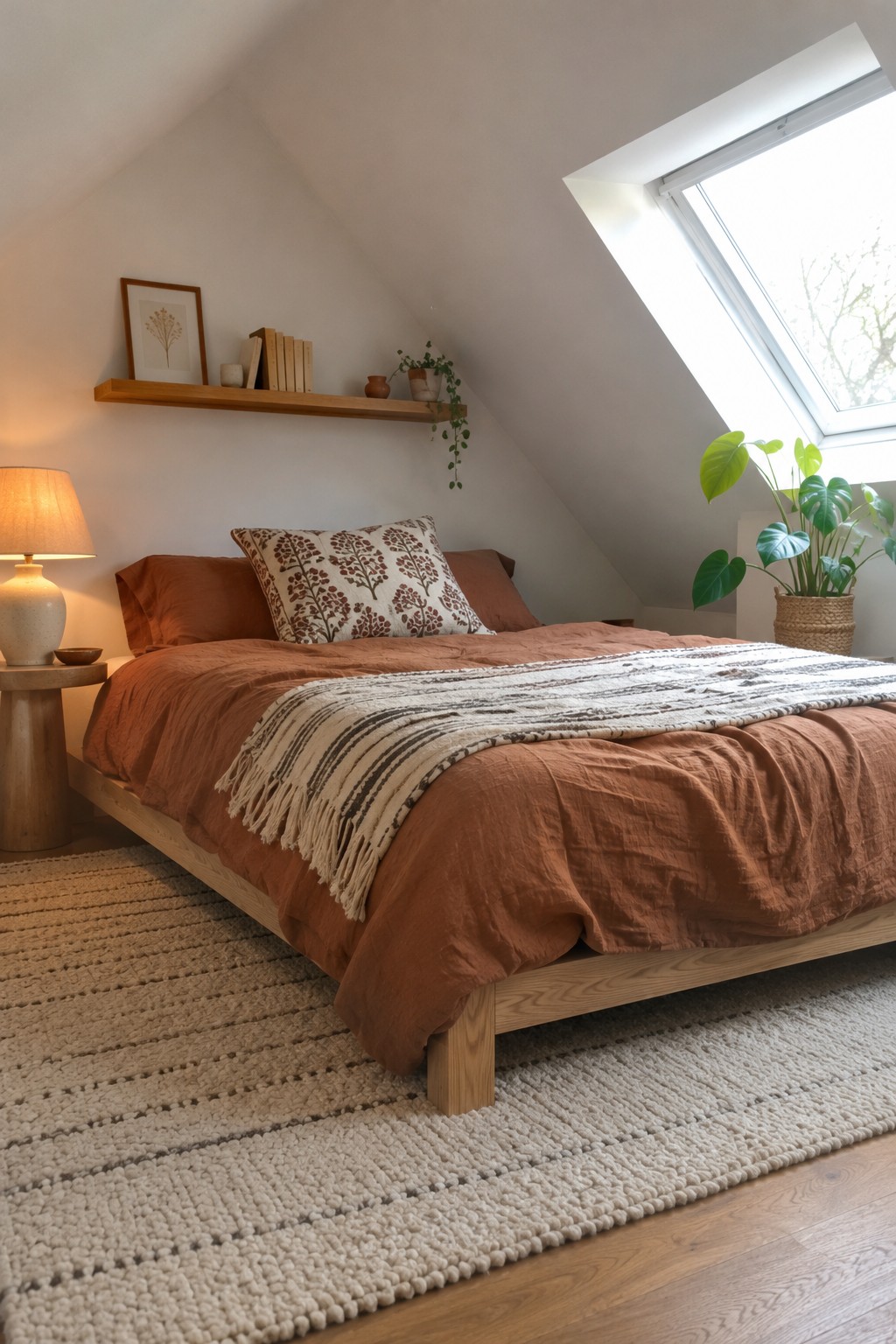
Rust-colored bedding is an easy way to make an attic bedroom feel settled and comfortable. The color stands out against pale walls, while a patterned pillow adds a little interest without making the bed feel busy.
Try this approach in a room with neutral walls and natural wood. If the space already has strong patterns, keep the bedding mostly solid so the bed remains a calm place to rest.
Use Natural Materials for a Relaxed Attic Bedroom
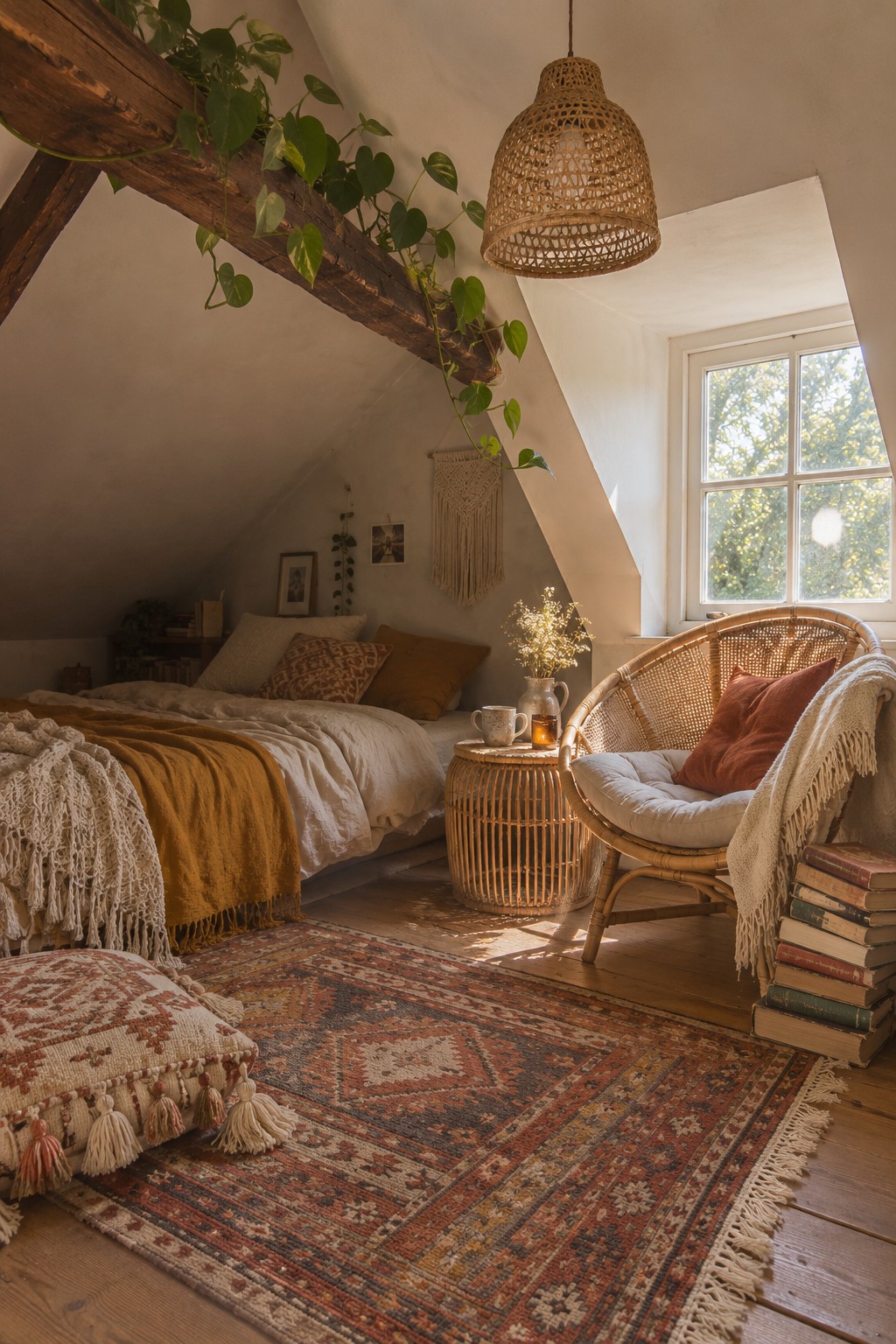
Natural materials can make an attic bedroom feel comfortable without much fuss. Woven pieces, such as a rattan chair or pendant shade, bring texture into the room while keeping the look casual.
Try this approach in a room with wood floors or exposed beams, and keep the larger furniture simple. A few woven accents are usually enough; too many can make a small attic feel crowded.
Use a Dark Accent Wall to Define the Attic Bed Area
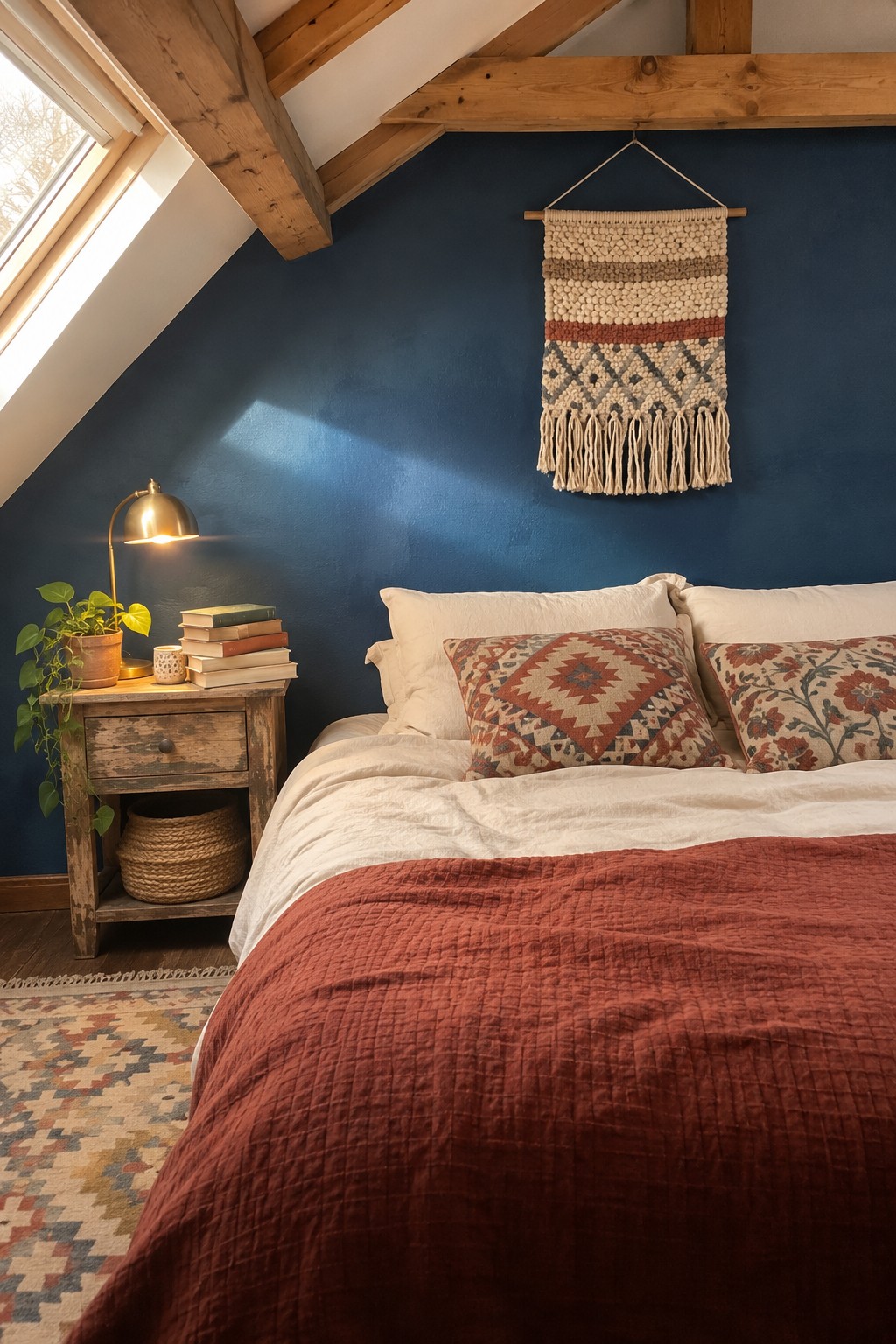
A deep blue wall gives the bed a clear place in the room, even with the ceiling sloping down beside it. It also makes the cream bedding and woven wall hanging stand out without needing much extra decoration.
This idea works well in an attic where the bed sits against a large, uninterrupted wall. Try a muted navy or blue-gray, and keep nearby fabrics lighter so the room still feels open.
Mix Floral Prints for a Cozy Attic Bedroom
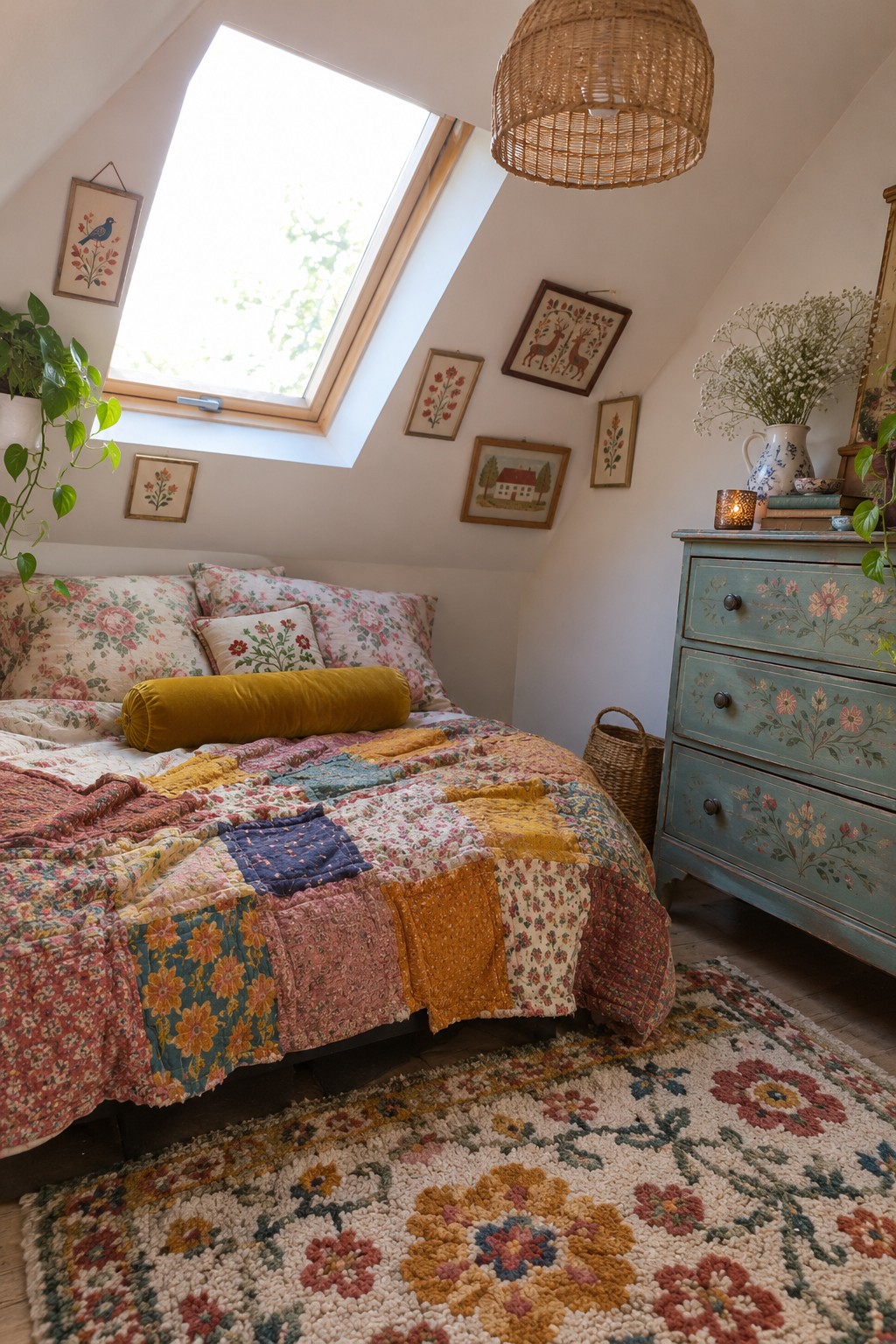
Mixing floral patterns is an easy way to make an attic bedroom feel collected and personal. Here, the patchwork quilt and matching floral pillowcases share similar colors, so the different prints feel comfortable together rather than busy.
Start with one larger print, then add smaller patterns that repeat a few of its colors. This works especially well on a bed tucked beneath a sloped ceiling, where patterned bedding can bring interest without taking up wall space. If the mix starts to feel crowded, use a plain cushion or throw to give the eye a break.
Use a Low Bench at the Foot of the Bed
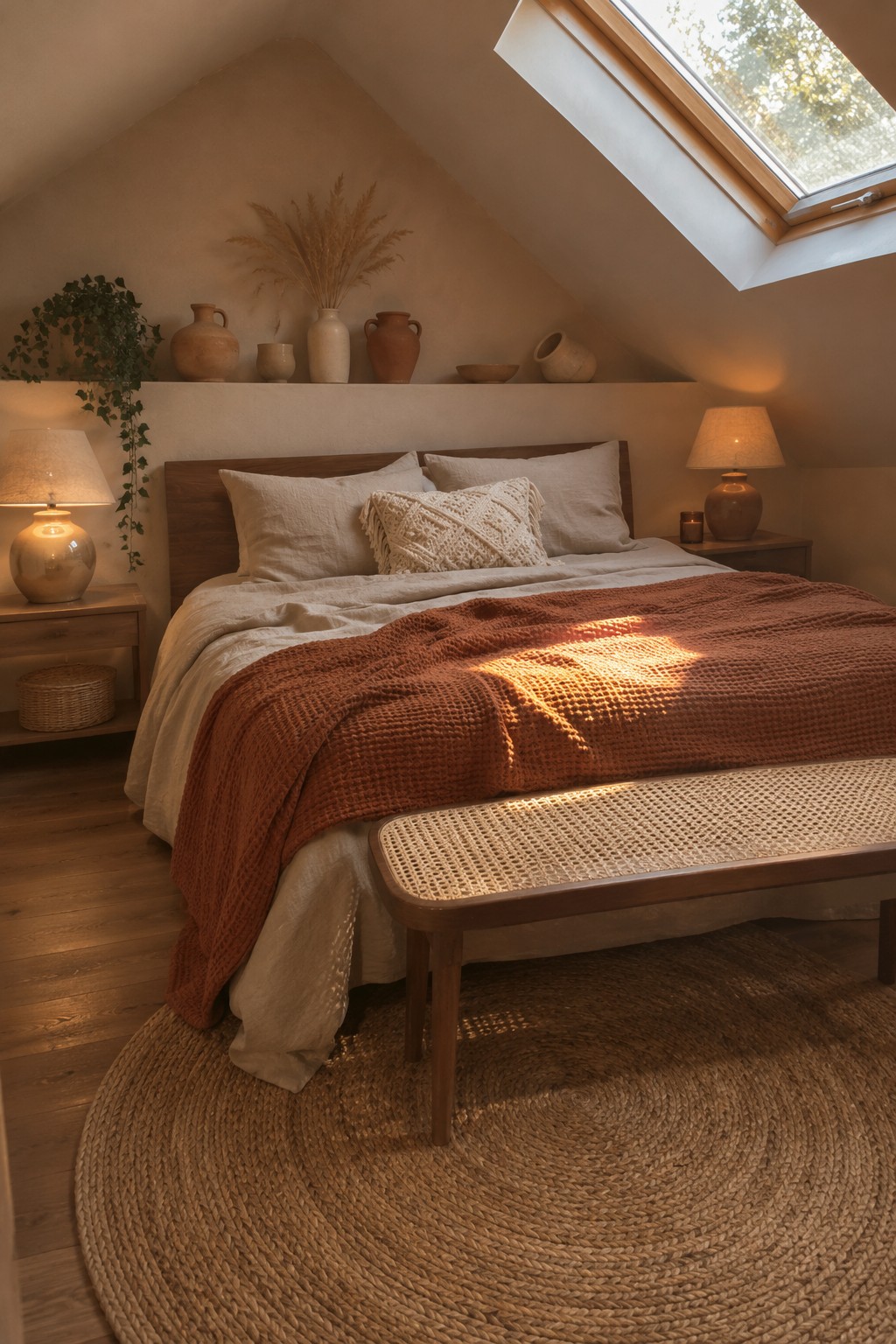
A low bench can make an attic bedroom more useful without taking up much visual space. Here, the woven seat provides a handy spot to set clothes or sit while getting dressed, and its simple shape suits the sloped ceiling.
Choose a narrow bench that leaves room to walk around the bed. A woven or wood seat works well with relaxed boho bedding, but avoid a bulky design that makes a small attic feel crowded.
Add Built-In Storage Along the Attic Wall
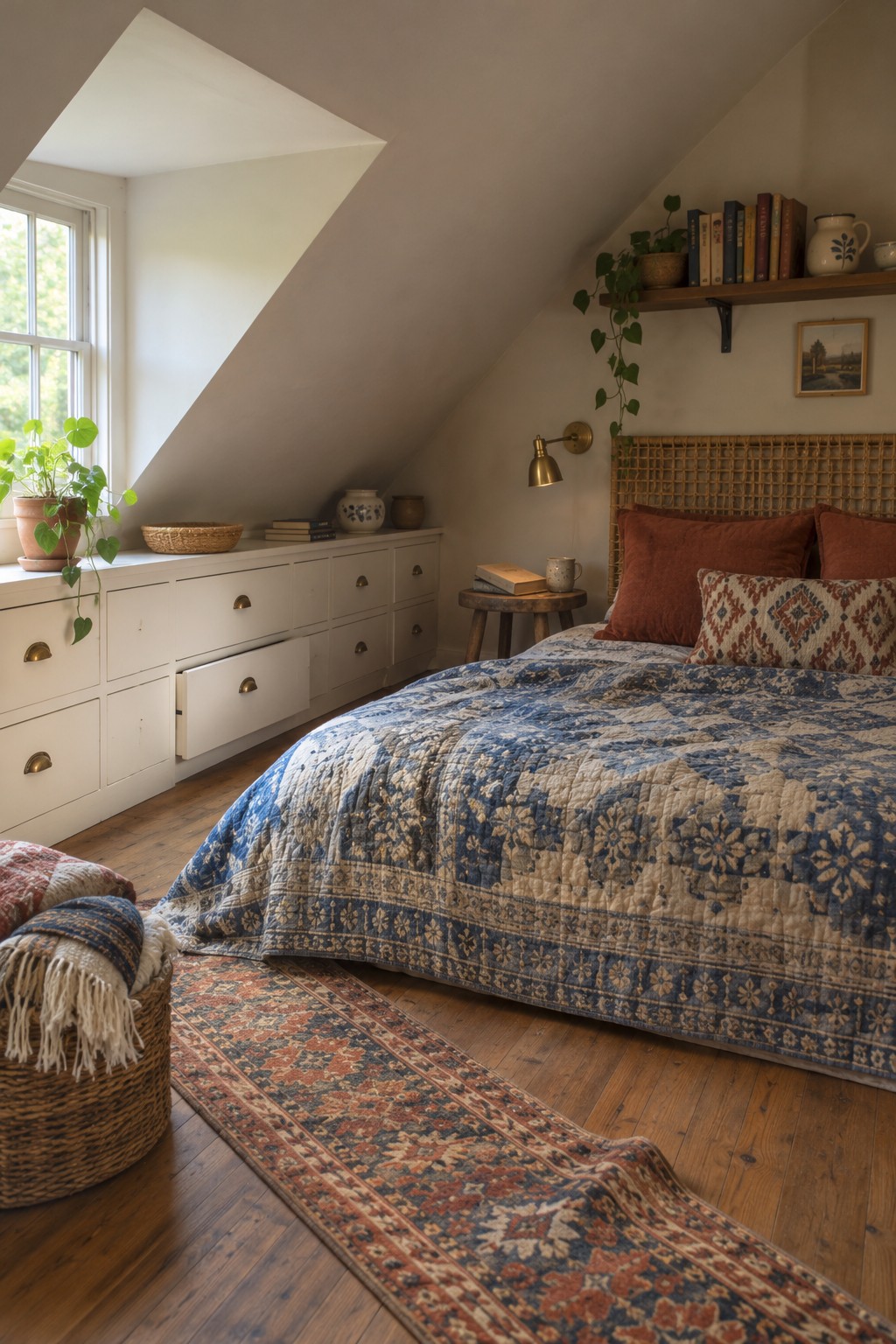
Low cabinets make good use of the short wall beneath a sloped ceiling, where full-height furniture would be awkward. They provide everyday storage while leaving the upper part of the room open, which can help an attic bedroom feel less crowded.
If you’re planning built-ins, keep them low enough to preserve usable floor space and choose a finish that suits the rest of the room. A run of cabinets beneath the eaves can work especially well for folded clothes, extra bedding, or books.
Choose a Carved Wooden Bed for Attic Character
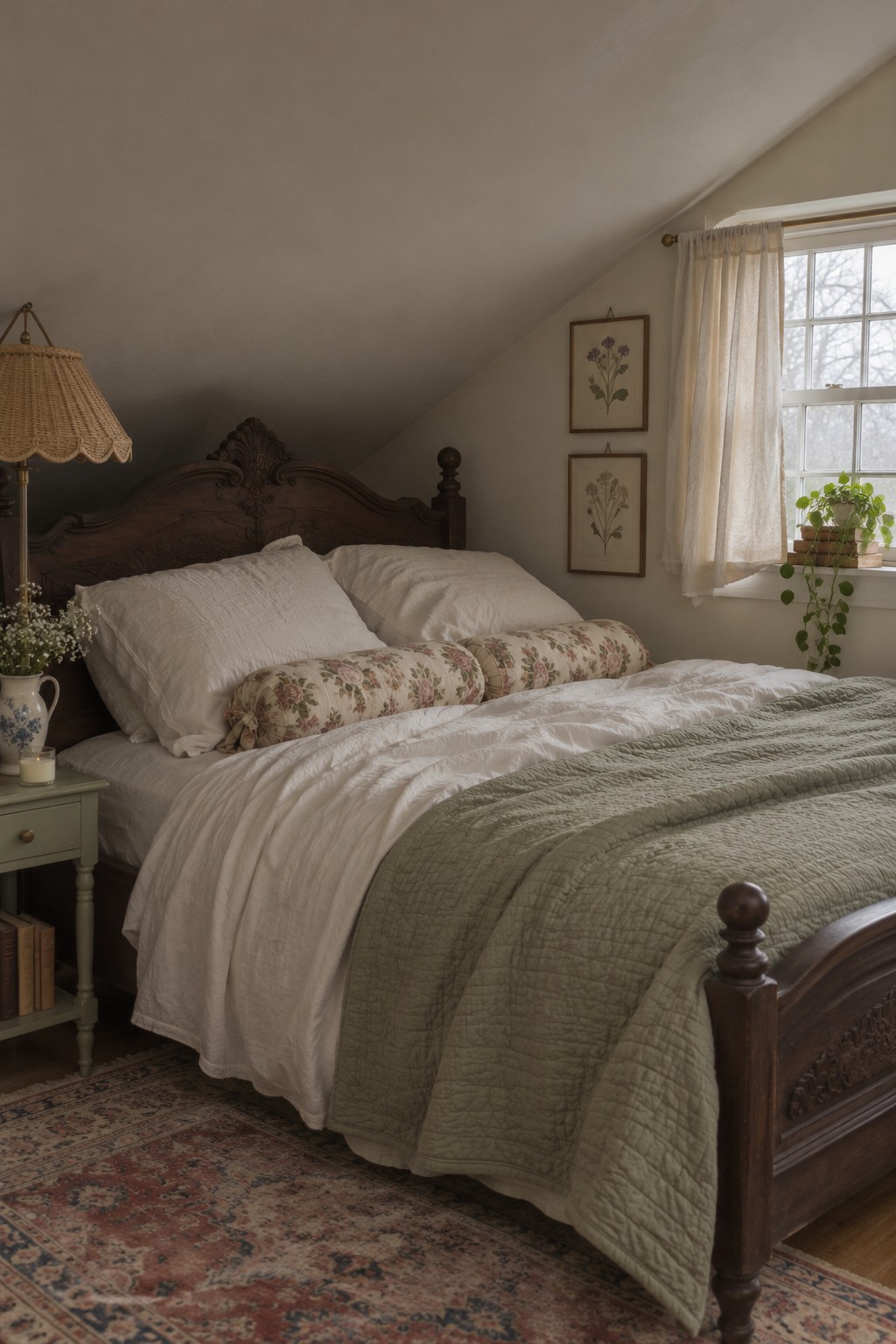
A carved wooden bed can give an attic bedroom a settled, old-fashioned feel without adding more decoration to the sloped walls. The detailed headboard brings interest to the low bed area, while simple white bedding keeps the look from becoming too busy.
This idea suits cottages and older homes, especially where the ceiling limits wall space for larger pieces of art. Pair the bed with plain linens and a muted quilt so its carved details remain easy to notice.
Use Moroccan Textiles to Bring Pattern Into an Attic Bedroom

Moroccan-inspired textiles are an easy way to give an attic bedroom a collected, relaxed feel. A patterned bedspread brings color to the bed without needing to decorate every sloped wall.
Try one strong textile as the main pattern, then keep the pillows fairly simple so the bed still feels restful. This works especially well in a room with exposed beams and warm wood, where the fabric can add color without making the space feel busy.
Use a Pendant Light to Warm Up an Attic Bedroom
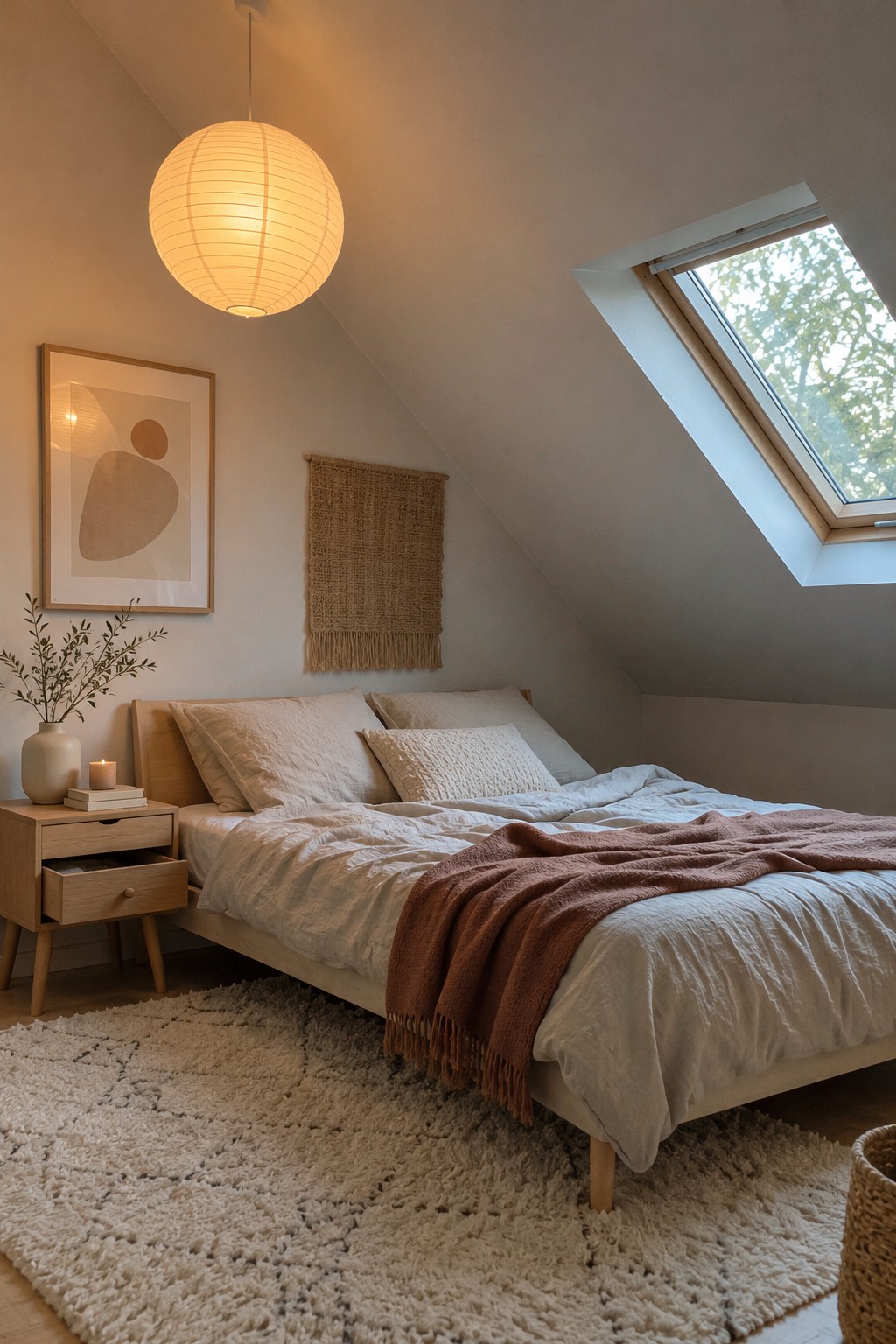
A pendant can make an attic bedroom feel cozy without taking up space on the floor or bedside table. A round paper shade gives off a gentle glow that suits a simple boho style.
Hang it where there’s enough headroom, and choose a size that won’t feel oversized in the sloped room. A dimmable bulb is handy for switching from brighter light at bedtime to a softer evening glow.
Use Rich Colors for a Cozy Attic Bedroom
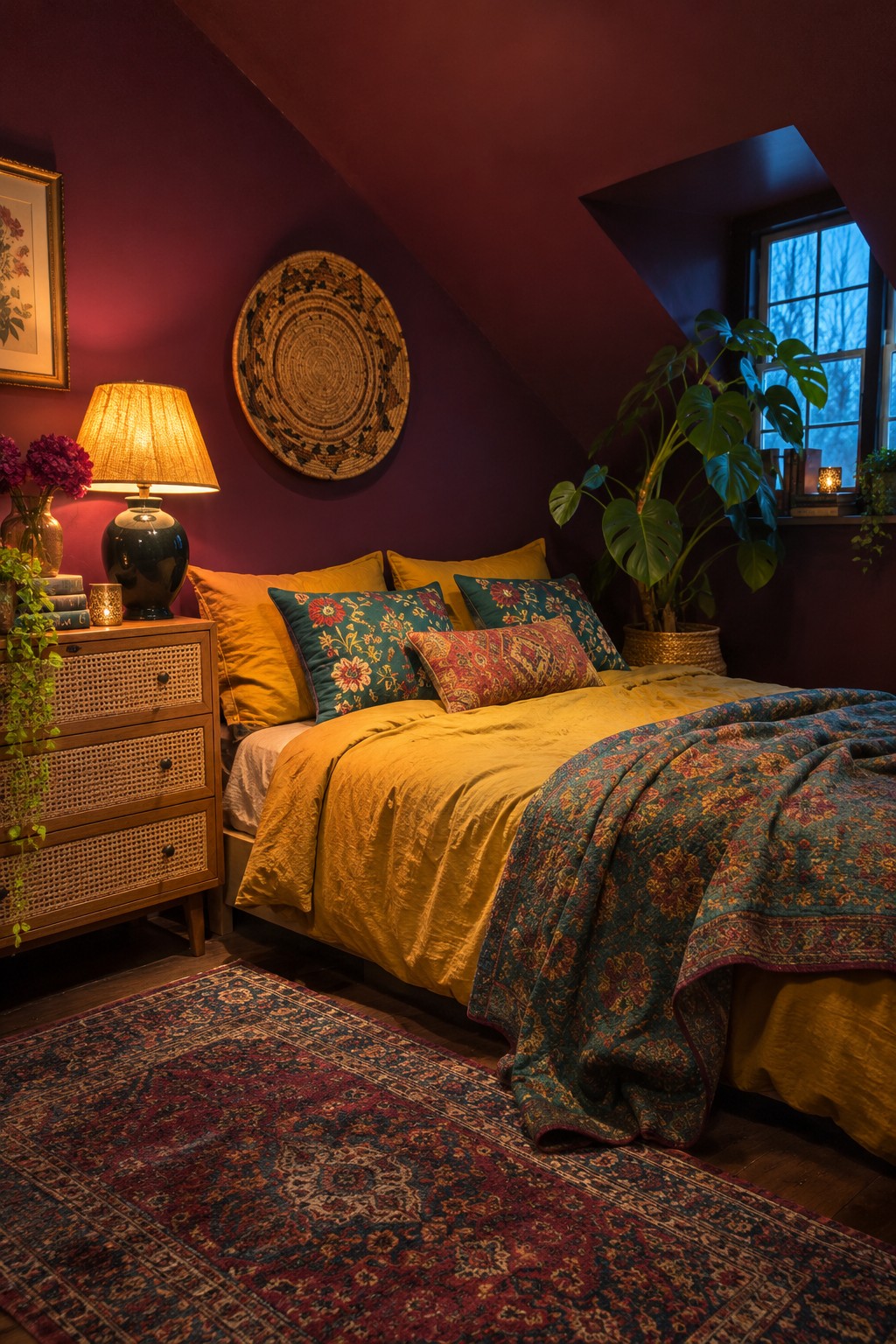
Deep burgundy walls and mustard bedding make this attic bedroom feel snug and lived-in. The warm colors suit a room with sloped ceilings, where a darker palette can make the tucked-away sleeping area feel comfortable rather than stark.
Try keeping the bedding lighter or brighter than the walls so the bed still stands out. Patterned pillows or a quilt can bring in a boho feel, but use a few repeating colors to keep the mix from getting too busy.
Make the Attic Window a Place to Sit
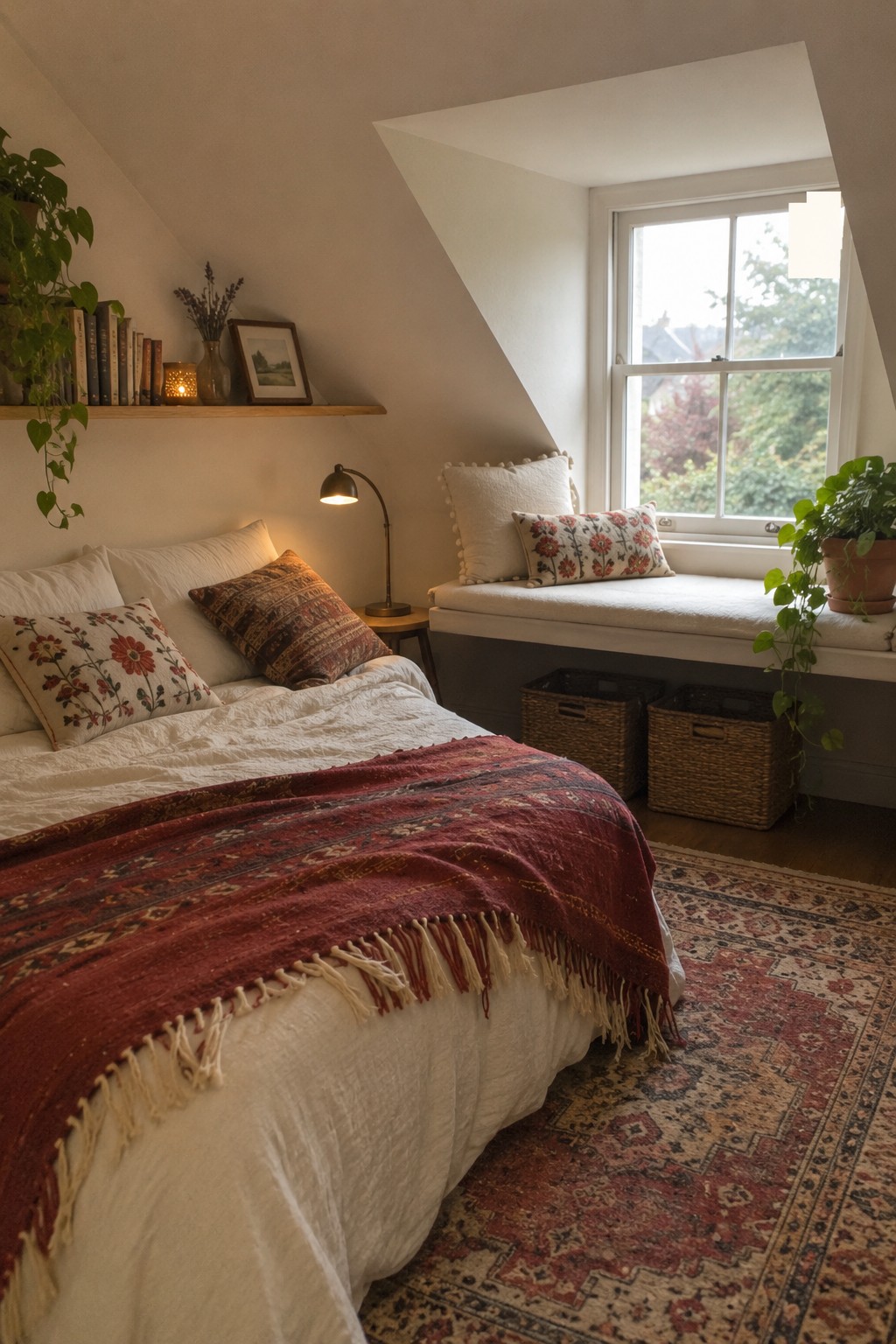
A window bench makes good use of the low space beneath a sloped attic ceiling. It gives the room a comfortable spot to sit without taking up the open floor area needed around the bed.
A simple cushioned bench works well beneath a wide window, especially in a small bedroom where a separate chair may not fit. Add a couple of pillows, and keep the seat low enough that it does not block the view or crowd the window.
Use Attic Beams to Define the Sleeping Area
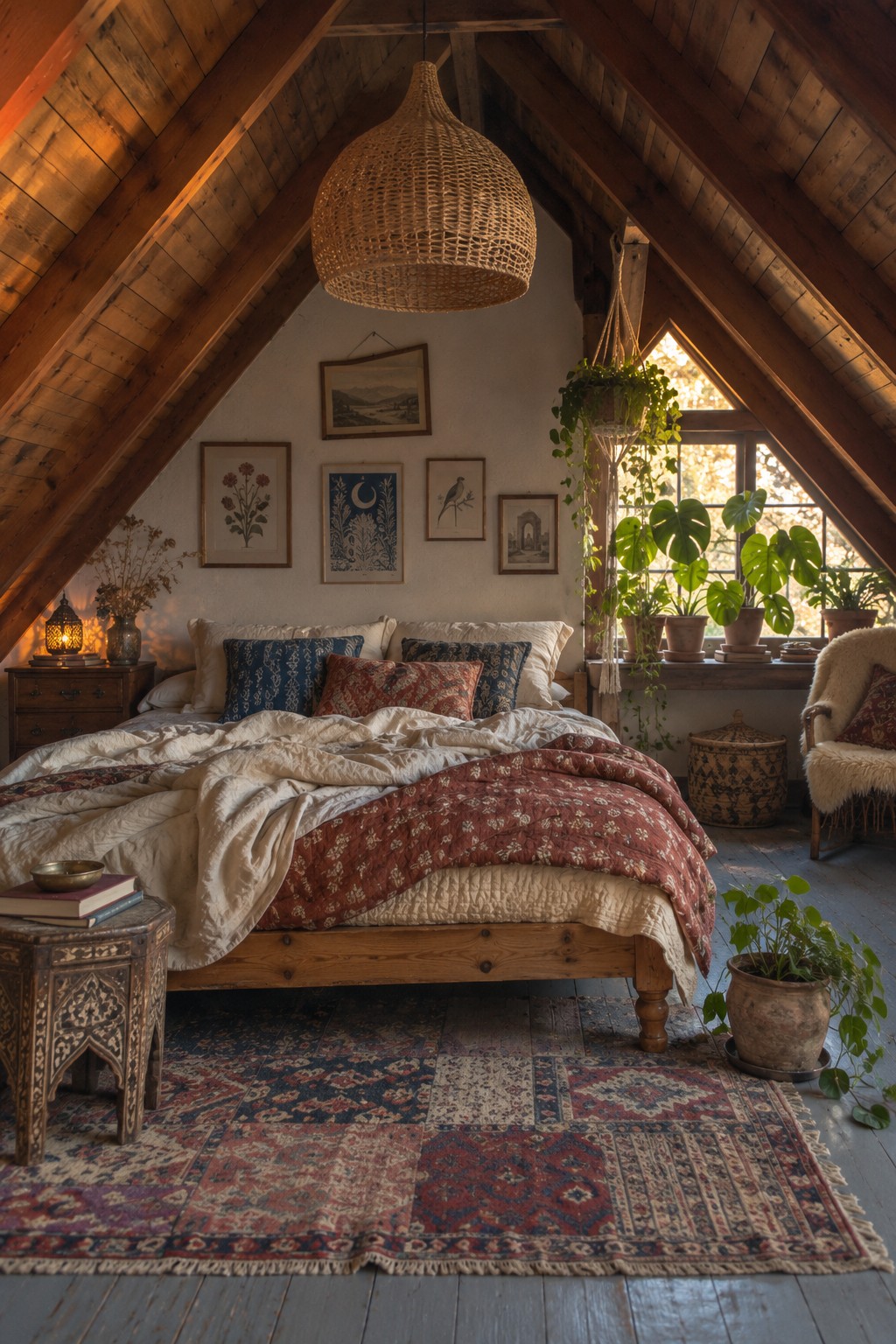
Exposed wooden beams can give an attic bedroom a natural sense of structure. Here, the sloped roof and timber framing make the bed feel settled into its own part of the room without adding a partition.
This works especially well in older homes where the beams are already visible. Keep the bed low and the furnishings simple so the ceiling remains the main feature, and use a few warm-toned textiles to tie the wood into the room.
Frequently Asked Questions
Q: How do I arrange furniture under a sloped ceiling without making the room feel cramped?
A: Put the bed or a low dresser beneath the lowest part of the ceiling, and keep taller pieces near the highest wall. Leave a clear path through the room so the cozy layout still feels easy to move around in.
Q: What colors work well in a boho attic bedroom?
A: Warm whites, muted greens, terracotta, and sandy shades all pair nicely with natural wood and woven textures. If the room is small, use lighter colors on the walls and bring in deeper tones through pillows or a throw.
Q: How can I add storage when there’s little room for a wardrobe?
A: Use under-bed drawers or baskets, and look for low storage that fits neatly along the eaves. A few hooks on a full-height wall can handle bags and hats without taking up floor space.
Q: How do I make a slanted ceiling feel like part of the design?
A: Try a soft fabric canopy, a strand of warm lights, or a few lightweight prints arranged along the slope. Keep the rest of the decor simple so the ceiling detail gets a chance to shine.
