

Coastal boho rooms can feel calm and relaxed, but they still need a layout that works for everyday life.
I find the sand-and-sea-glass palette easiest to live with when warm neutrals anchor the room and cooler colors appear in smaller touches, like a cushion, a lamp, or a painted side table.
The first thing I notice is often how light moves across the space, so sheer curtains, open sightlines, and natural textures can make as much difference as the furniture.
Too many pale surfaces can leave a living room feeling flat, while a few varied woods, woven pieces, and soft patterns add depth without crowding it.
I’d save the ideas that balance color and comfort, then adapt the details to the light, storage, and seating a real home needs.
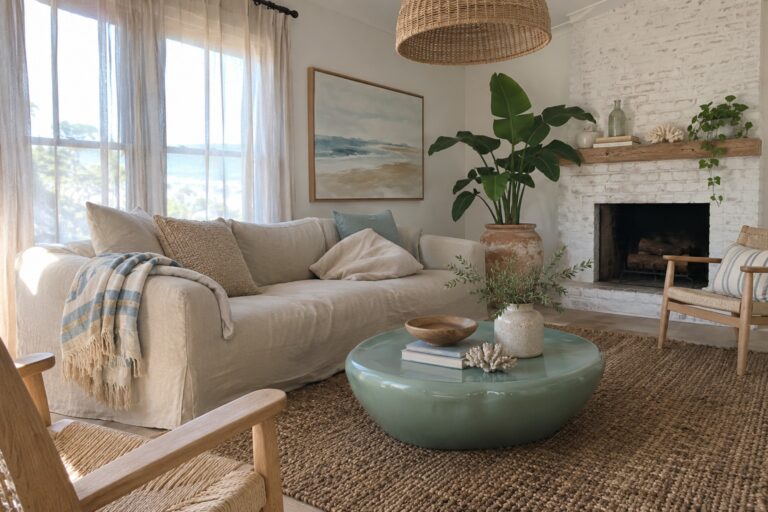
Choose a Rounded Coffee Table for an Airy Living Room

A low, rounded coffee table can make a living room feel easier to move through. Its curved shape suits a relaxed seating area, and a sea-glass color brings in a gentle coastal note without taking over the room.
Try this style in front of a sofa with straight, simple lines. Leave enough space around the table to walk comfortably, and keep the tabletop fairly clear so its shape and color can stand out.
Use Natural Materials For A Relaxed Coastal Look

Natural materials can make a living room feel casual without looking unfinished. Here, a woven pendant and a reclaimed wood coffee table bring texture into the room while keeping the colors quiet.
This approach suits a coastal or boho home, especially when the main furniture is simple and light. Start with one or two pieces in wicker or weathered wood, then keep nearby finishes understated so the room does not feel busy.
Make Built-In Seating Work Harder

A window seat can give a living room useful seating without taking up extra floor space. The built-in bench also makes an awkward stretch beneath a window feel purposeful, while cushions keep it comfortable for everyday use.
This idea suits a small living room or a sunny corner that needs a little more seating. Choose durable upholstery, and keep the cushions easy to move so the bench can be used without fuss.
Make a Plaster Fireplace the Focal Point
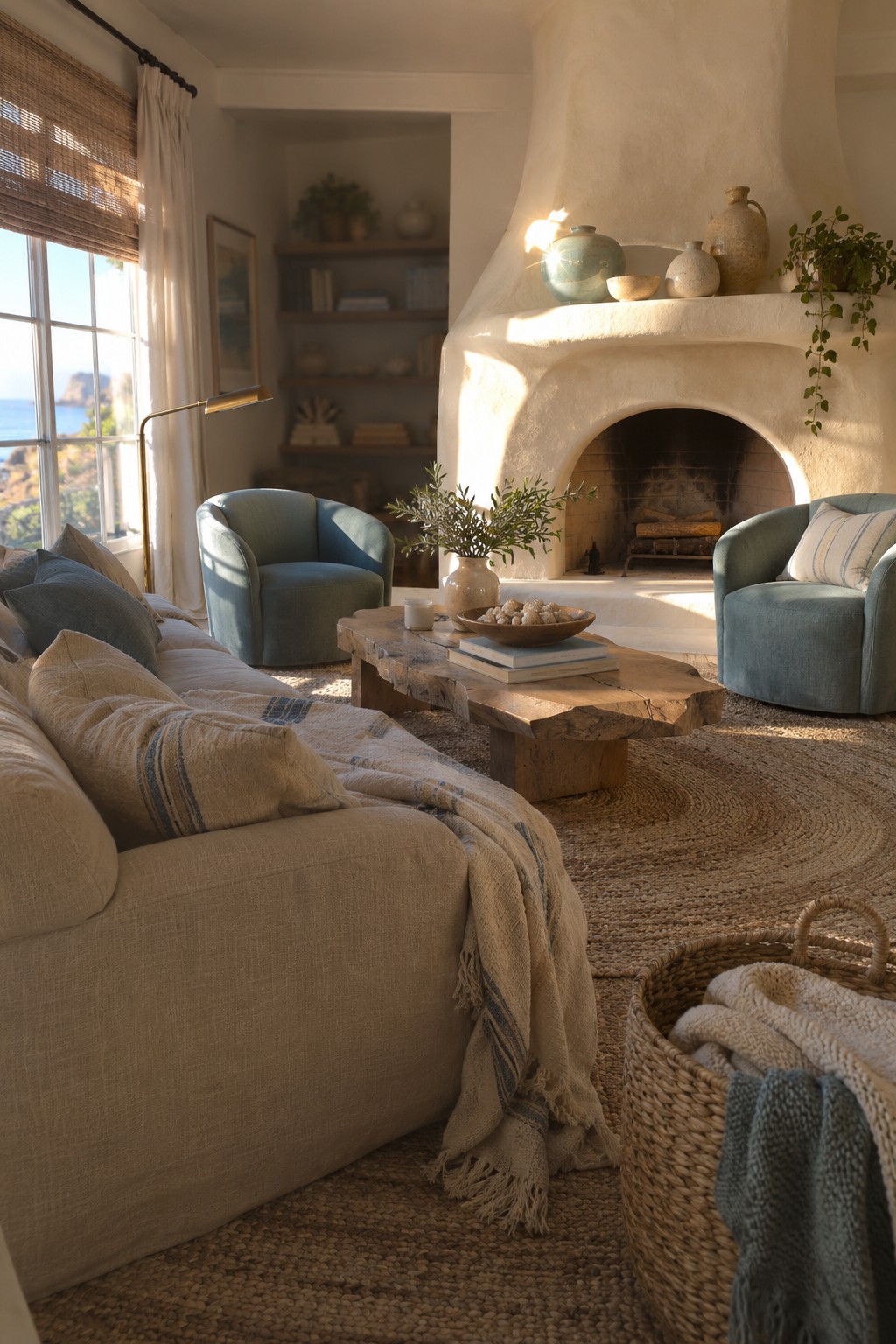
A plaster fireplace can give a living room a softer, more relaxed feel than a sharp-edged surround. Its curved shape stands out without needing much extra decoration, and a sandy finish fits easily with pale fabrics and sea-glass blue seating.
This idea works especially well in a room with simple walls and natural materials. Keep the mantel styling fairly sparse so the fireplace shape stays clear, and choose a finish that suits the rest of the room rather than making it look like a separate feature.
Use Woven Wall Decor for Coastal Character
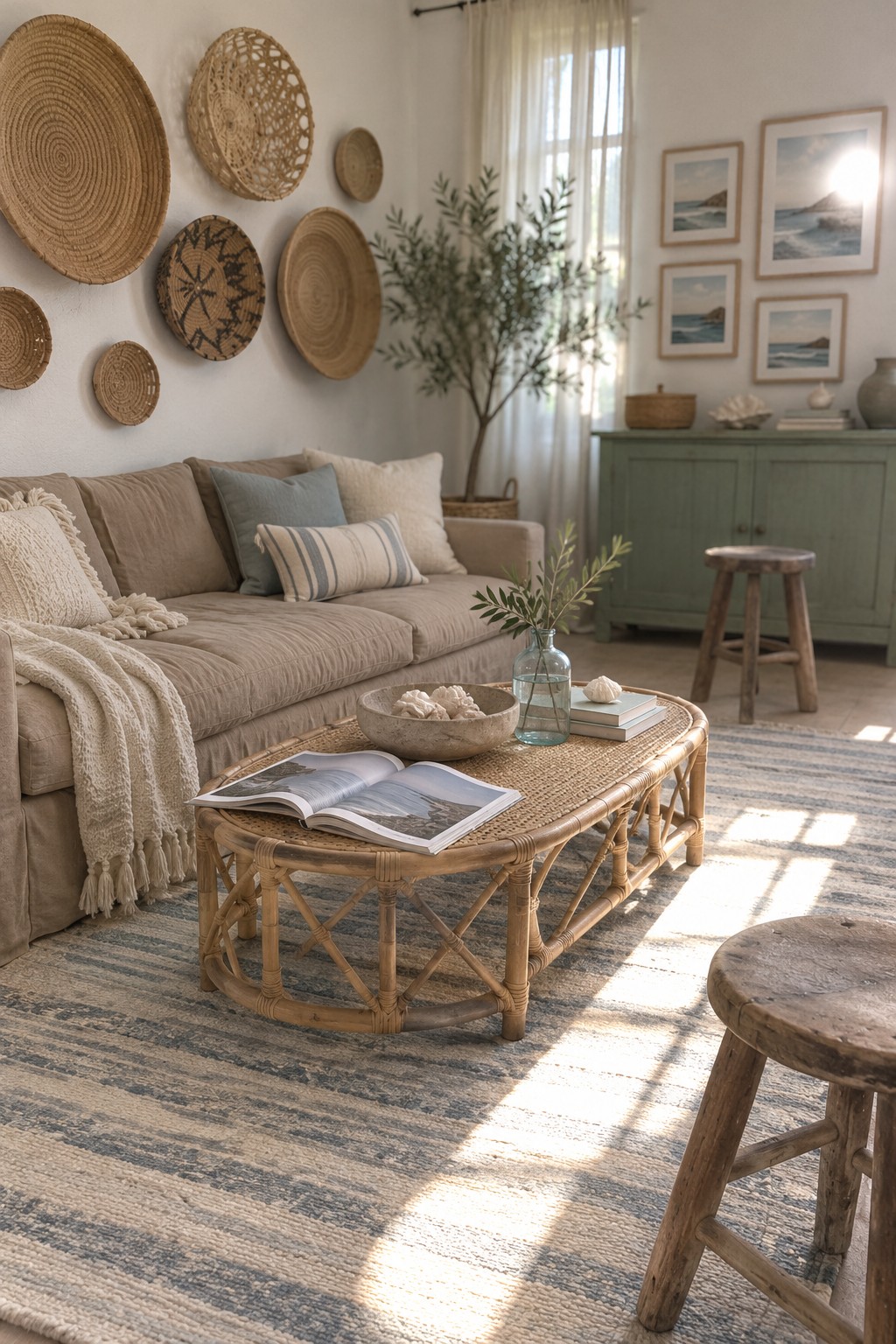
Woven wall pieces bring texture to a living room without taking up floor space. A few baskets in natural, sandy tones suit a coastal boho style and look especially good against a simple pale wall.
Hang pieces of different sizes in a loose grouping, keeping enough space between them so the wall doesn’t feel crowded. This works well above a sofa, where the woven texture can add interest without introducing another strong color.
Use Light Upholstery to Keep the Room Airy
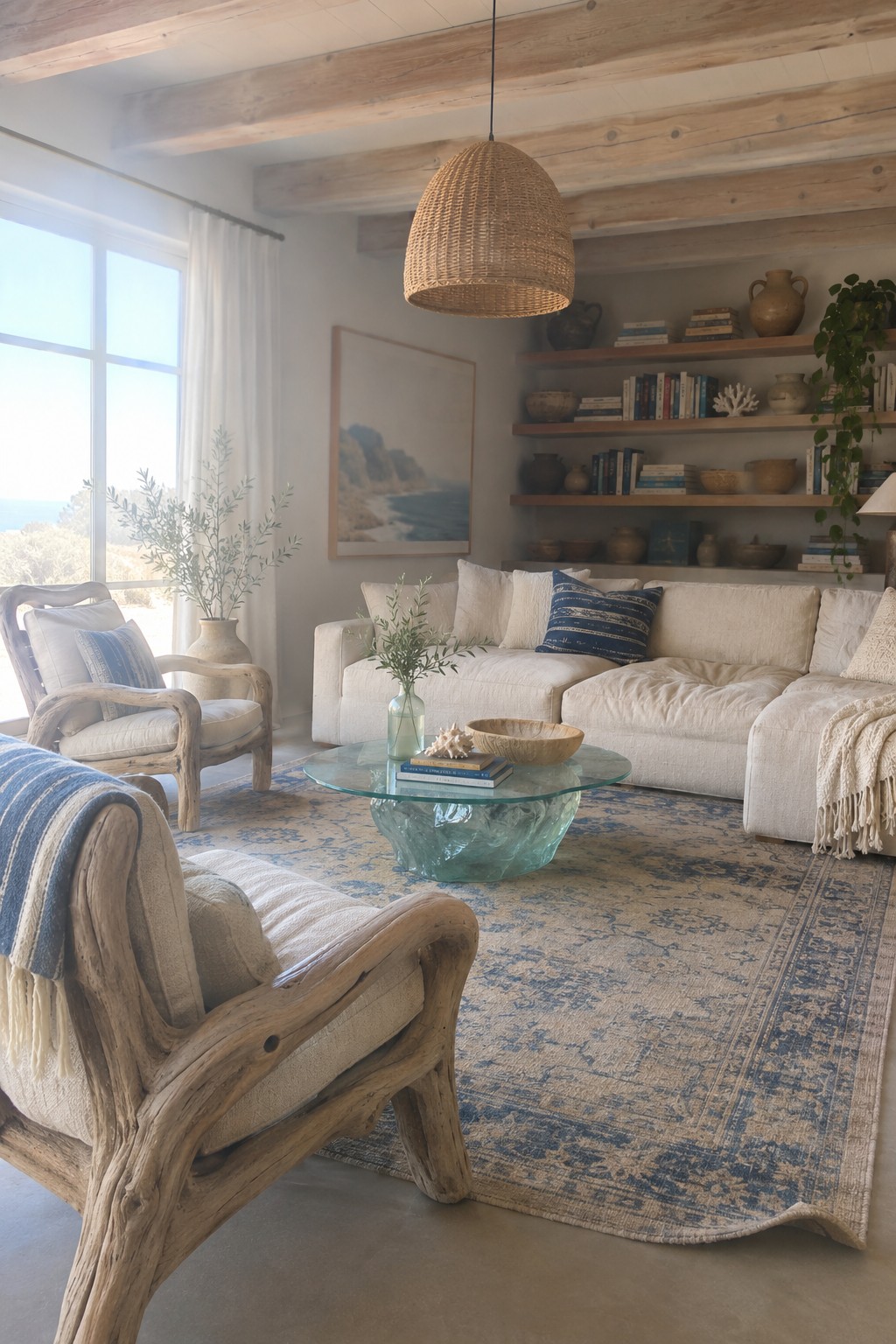
A large, light-colored sofa can make a living room feel open while still giving everyone plenty of room to sit. Here, the simple cream upholstery lets the blue accents stand out without making the seating area feel busy.
This works especially well in a room with a substantial sofa or sectional. Choose a durable, washable fabric if the sofa gets daily use, and bring in color through a few cushions or a rug.
Use a Low Bookcase for Living Room Storage

A low bookcase can add useful storage without making a coastal living room feel closed in. Books and a few simple objects keep the shelves practical, while the open top leaves room for plants or artwork.
This works especially well along a long wall behind the seating area. Keep some space between stacks and decor so the shelves don’t look crowded, and choose a finish that suits the room’s other natural materials.
Use Sheer Curtains to Keep a Room Bright
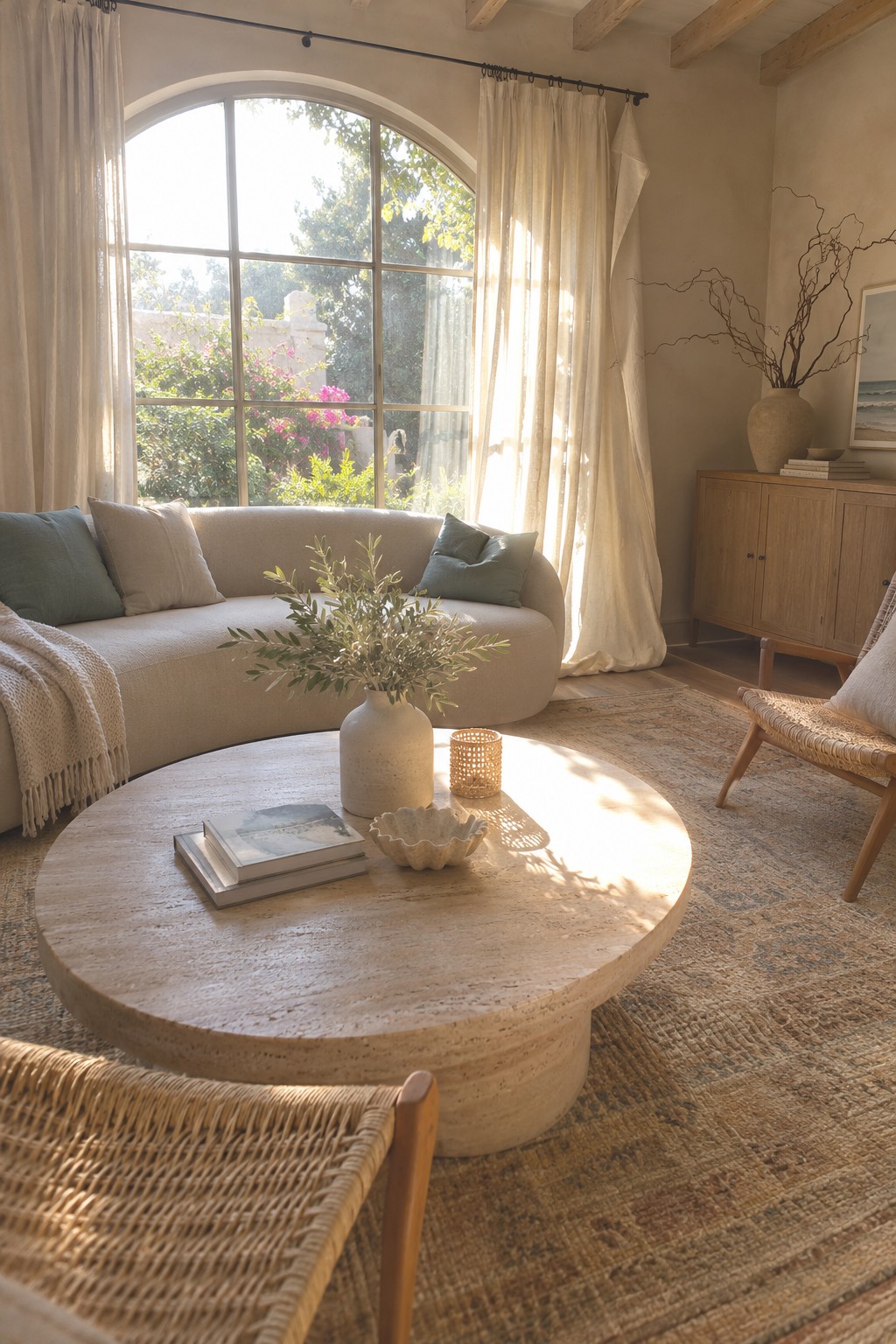
Light, sheer curtains offer privacy without blocking much daylight. They suit a living room where you want the windows to feel softer but still enjoy the natural light coming through.
Hang the panels high and let them fall close to the floor for a simple, relaxed look. Linen or cotton in a warm neutral shade works well with sand and sea-glass colors.
Use Blue Patterned Textiles for Coastal Color
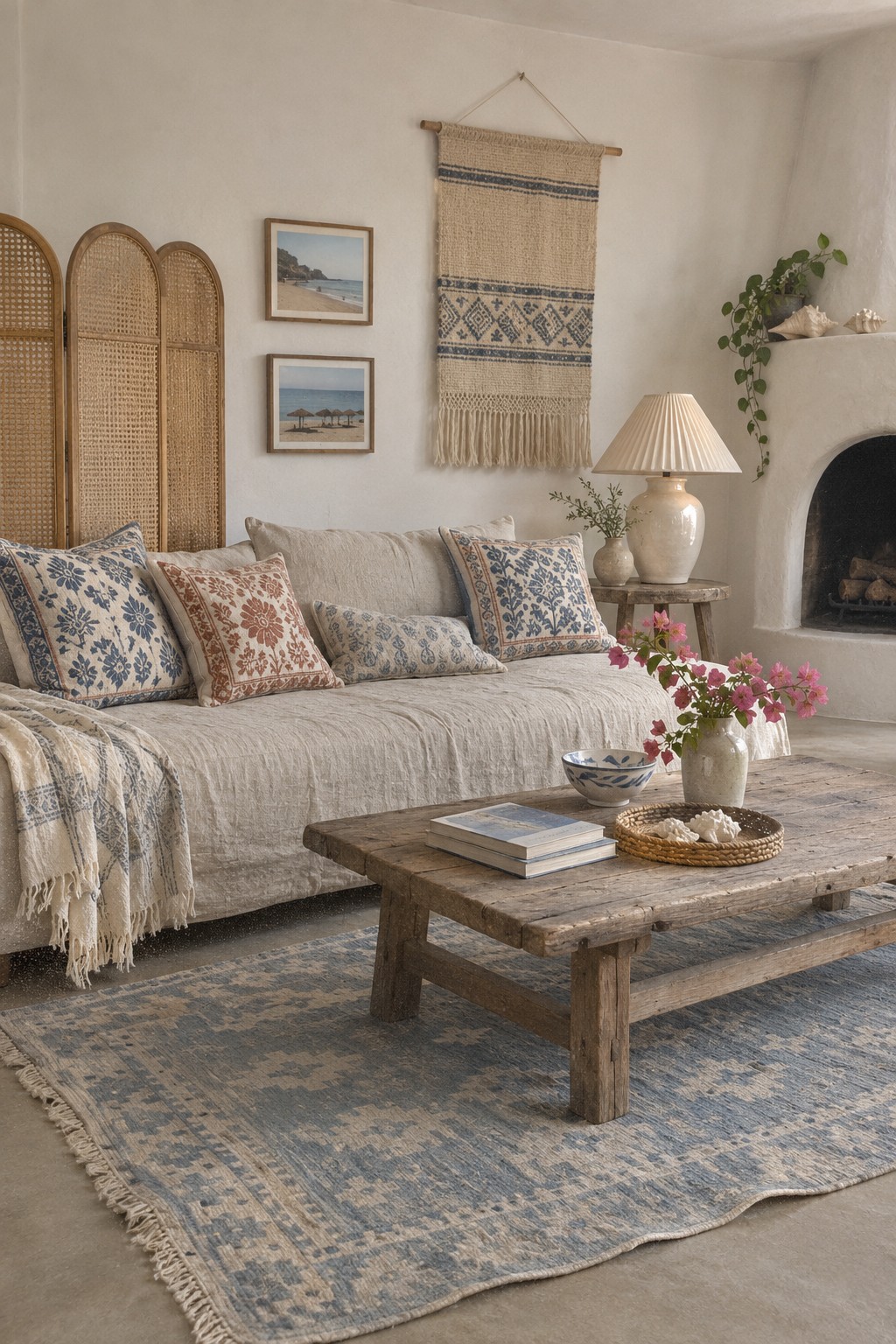
Blue patterned cushions and a faded blue rug bring sea-inspired color into a neutral living room without making it feel busy. Keeping the larger pieces in sandy, natural shades lets those patterns stand out in a comfortable way.
Try this approach on a cream sofa, and repeat the blue in just a couple of places. Smaller rooms benefit from a limited palette, so choose patterns that share a similar shade rather than adding several unrelated colors.
Use a Rug to Bring Coastal Colors Into the Room
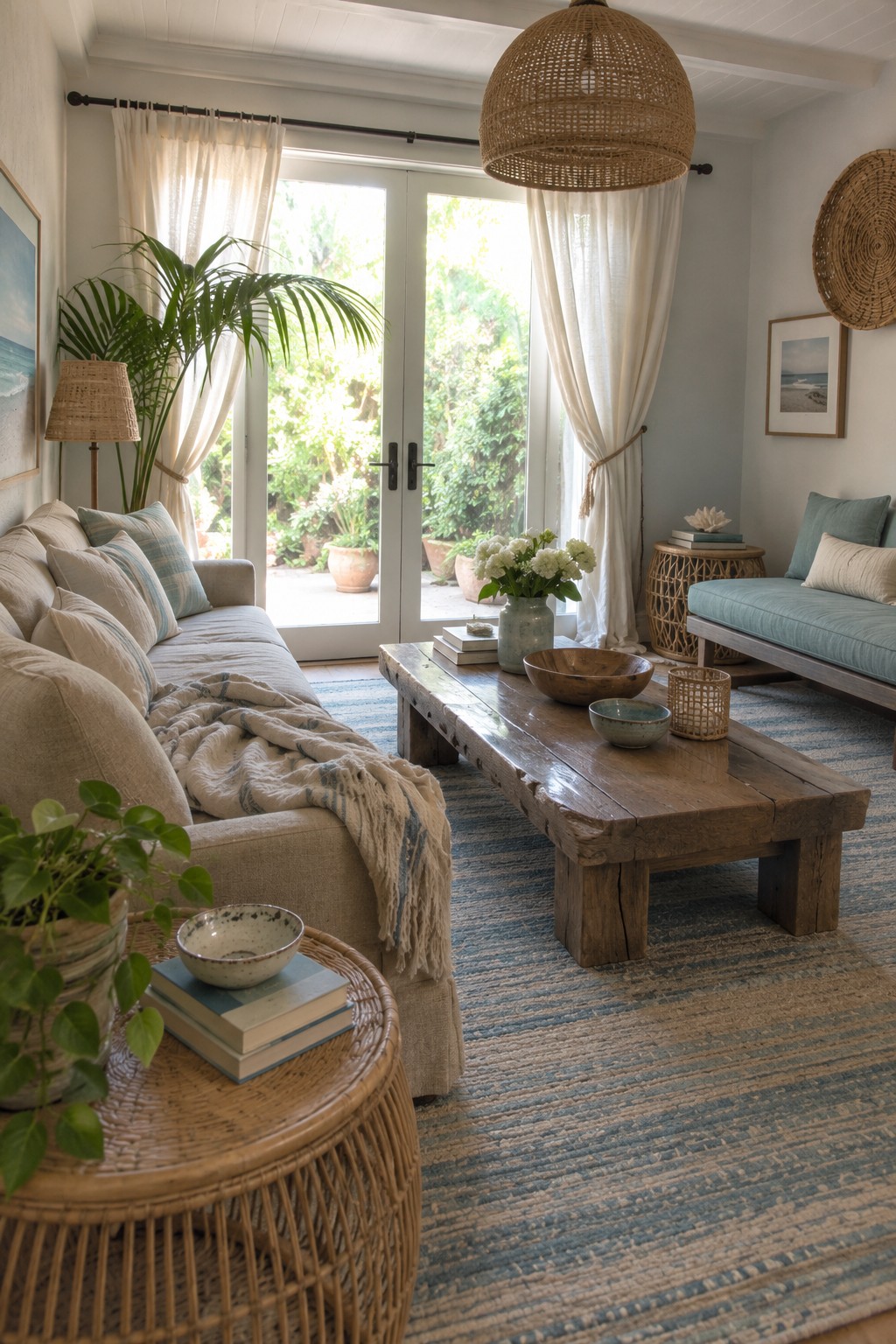
A striped rug is an easy way to bring sand and sea-glass colors into a living room without relying on lots of decorative accents. The muted blue and beige pattern gives the seating area a clear base while still letting the rest of the room feel relaxed.
This works well in a neutral room where you want a little color underfoot. Choose a rug large enough for the front legs of the seating to rest on it, and keep the pattern soft if your furniture already has plenty of texture.
Use Muted Green Built-Ins for Subtle Coastal Color

Built-in shelves painted a muted green bring a little sea-glass color into a living room without taking over. The color works especially well when the rest of the room stays light, so the shelves feel like part of the home rather than a bold accent.
This idea suits a living room that needs useful storage as well as a bit of character. Try it on shelving around a nook or along one wall, and keep the objects on display simple so the color remains easy on the eye.
Arrange Seating Around a Shared Coffee Table
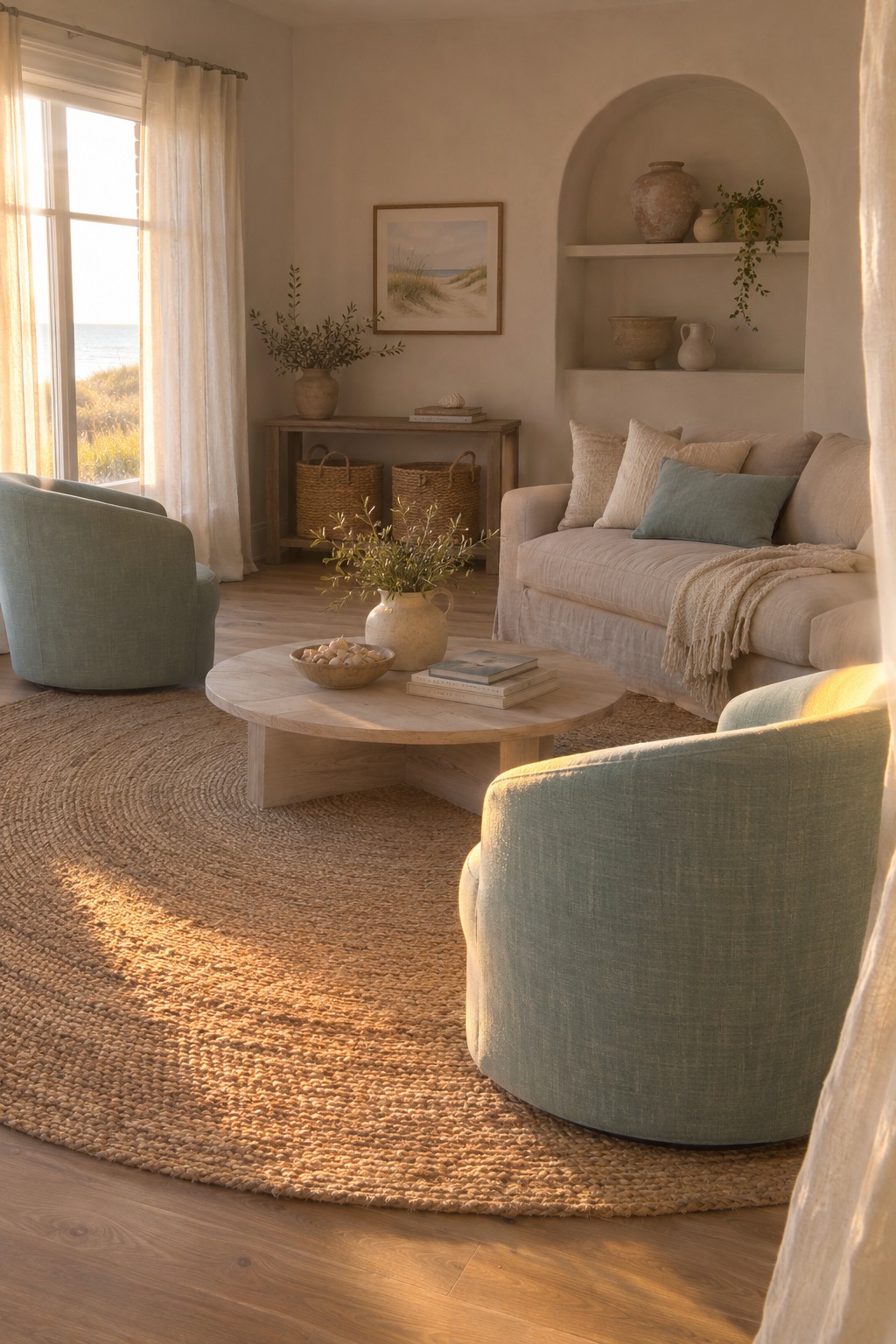
A small seating group makes a living room feel easy to use. Here, two rounded chairs face a sofa across a low coffee table, so everyone has a place to sit without the furniture feeling too formal.
This layout suits a cozy living room where conversation matters more than fitting in extra pieces. Leave enough room to walk around the table, and choose a rug large enough to hold the front legs of the main seats.
Make a Window Seat Part of the Living Room
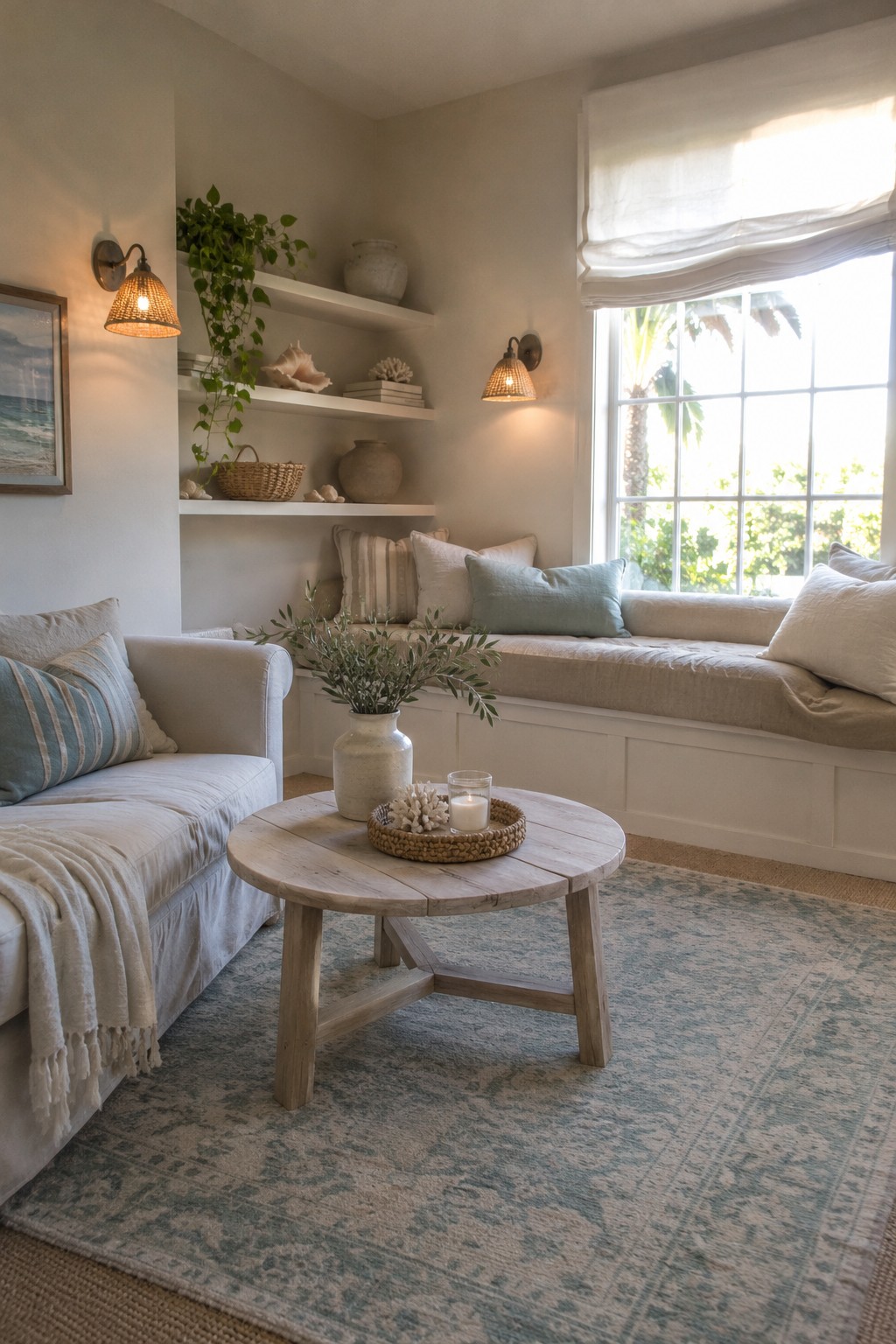
A built-in window seat gives a living room extra lounging space without taking up much floor area. It also makes a sunny window more useful, especially in a smaller room where a separate chair might feel crowded.
For a similar setup, use a durable cushion and a few pillows in muted sea-glass colors. Keep the seat depth comfortable for sitting, and consider adding drawers below if the room needs a little extra storage.
Let Natural Wood Set the Tone

A live-edge wood coffee table brings an easy, beach-house feel to a living room. Its uneven shape and visible grain add character without needing a lot of extra decoration.
This idea works well with simple upholstered seating and a woven rug, where the table can stand out without crowding the room. Choose a sturdy piece with enough surface space for everyday use, and leave room to walk around its irregular edges.
Use a Glass Coffee Table to Keep the Room Open
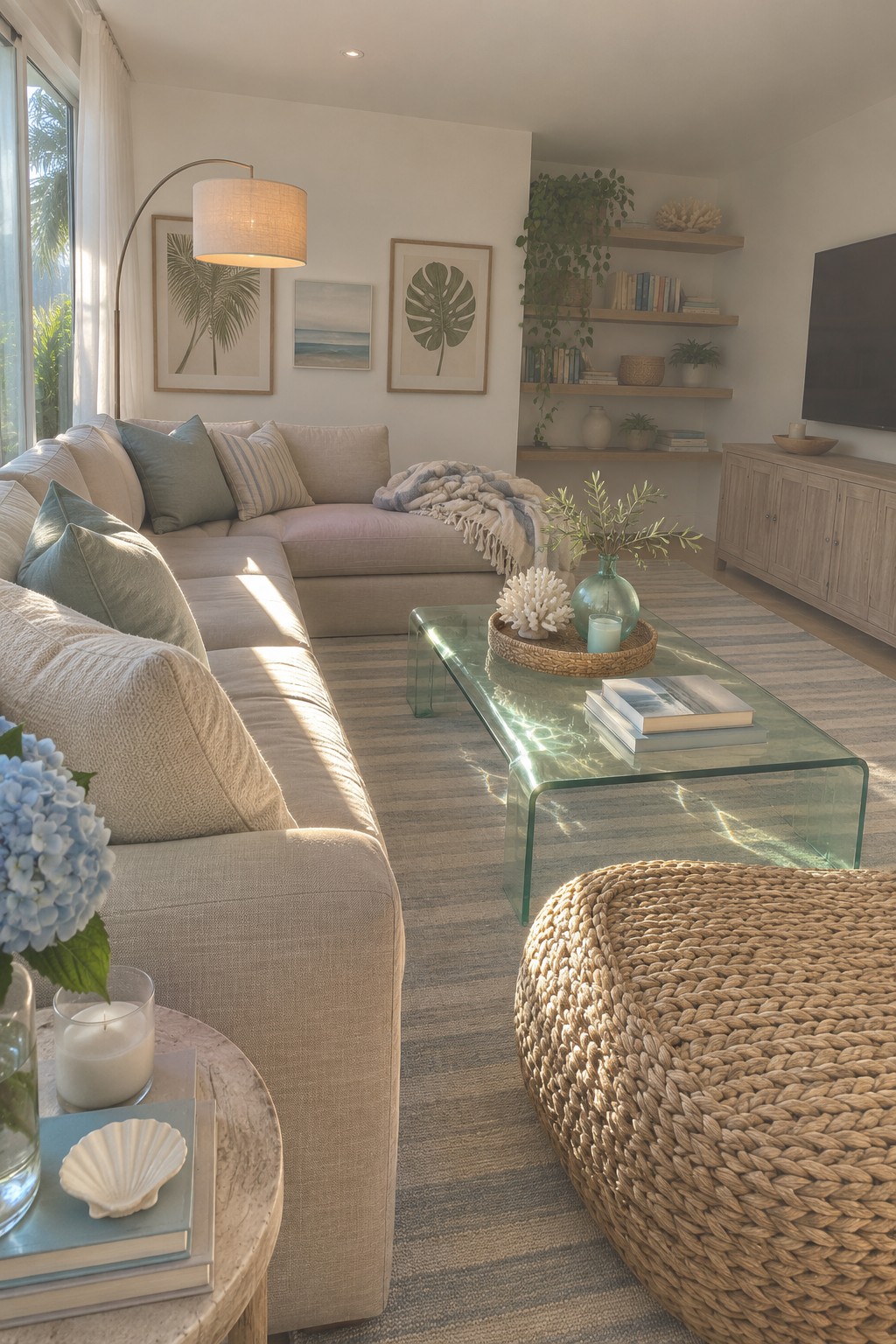
A clear coffee table is a good choice when a living room has a large sectional or other substantial furniture. It gives you a useful surface without taking up much visual space, so the seating area can still feel open.
Look for a simple glass design with smooth edges, and keep the tabletop styling fairly light. It works especially well in smaller rooms or spaces where you want woven and upholstered pieces to remain the focus.
Use Woven Screens to Add Texture
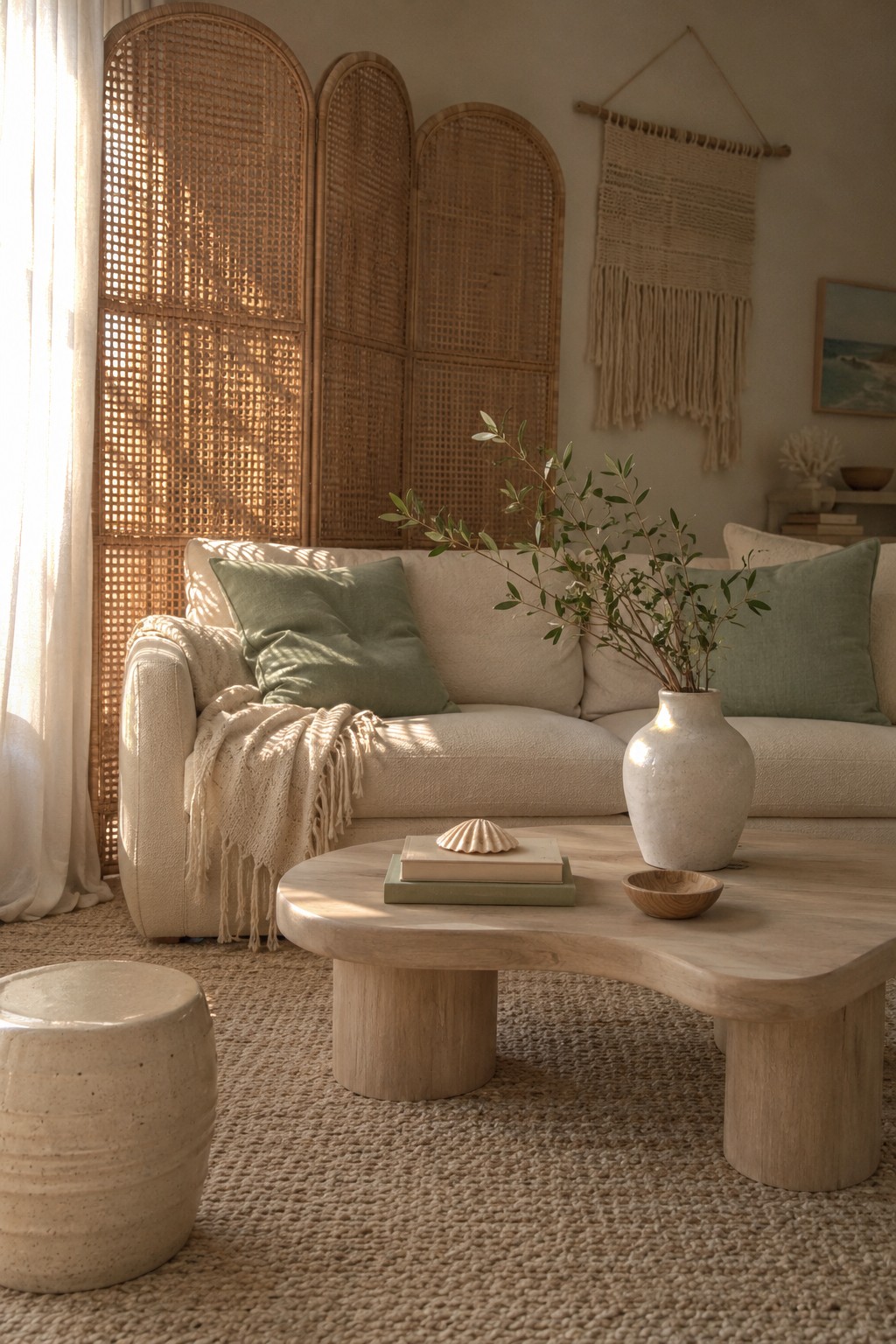
A folding woven screen can bring natural texture to a living room while giving a plain wall a little more character. Its open pattern keeps the look lighter than a solid divider, and the warm wood suits a sandy coastal palette.
Try one behind a sofa or in a quiet corner that needs some definition. Choose a screen that fits the wall without crowding nearby furniture, and let its texture stand out rather than adding several competing woven pieces.
Use a Round Coffee Table to Keep Seating Open

A round coffee table makes it easier to move around a living room, especially when the seating sits close together. Its curved edge also feels less bulky than a square table in a room with a large sofa.
Choose a low table in a pale wood or stone finish to suit a coastal boho style. Leave enough room to walk around it, and keep the tabletop simple so it stays useful for everyday living.
Use a Round Coffee Table to Make Room for Easy Conversation
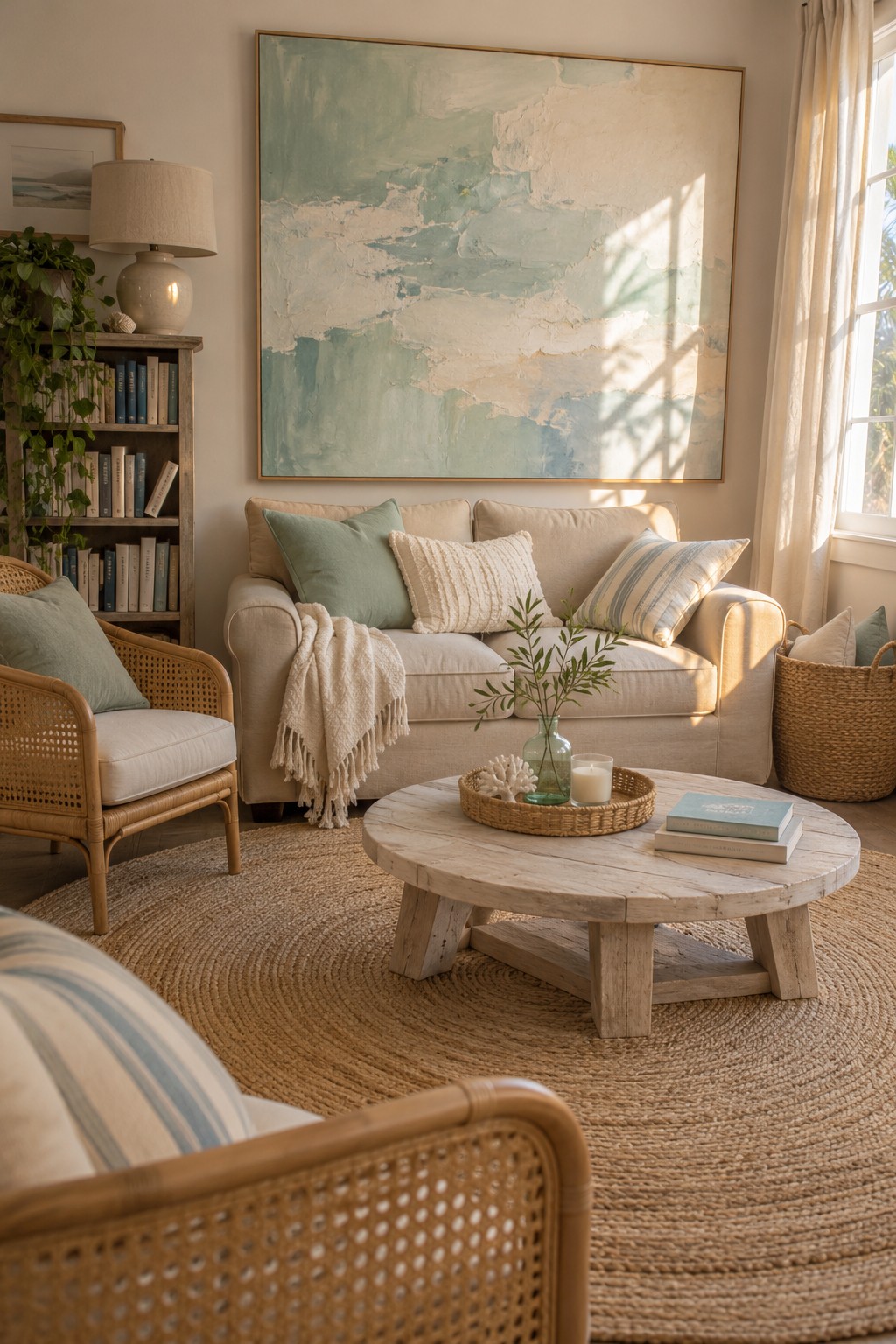
A round coffee table is a practical choice when seating faces toward the middle of the room. Its curved shape makes it easier to move around than a table with sharp corners, and it gives everyone a place to set down a drink or book.
Look for a sturdy wood table that sits comfortably below the sofa cushions. It works especially well in a smaller living room or one with a circular rug, where a bulky square table might interrupt the flow.
Bring Coastal Art Into a Relaxed Living Room

Coastal artwork is an easy way to give a living room a clear seaside feel without leaning on beach-themed decor everywhere. A few framed ocean scenes on simple wood shelves add color and interest while keeping the walls fairly open.
This works well in a neutral room where you want a little blue without committing to a bold wall color. Choose a small group of prints in similar tones, and leave some space between them so the display feels calm rather than crowded.
Use Open Shelves for Coastal Living Room Storage

Open shelves offer a practical way to store everyday pieces while keeping a living room from feeling closed in. Here, simple wood shelves display pottery and books, leaving the pale wall visible between them.
Use this approach when you have a clear stretch of wall above a cabinet or sofa. Keep the objects you display to a manageable number, and leave some open space so the shelves stay easy on the eye.
Choose a Rustic Coffee Table for a Relaxed Coastal Living Room

A solid wood coffee table gives a coastal boho room a practical center without making it feel too formal. Its worn, natural finish works well with pale upholstery and blue-green textiles, bringing a little variation to the softer colors.
Look for a low table with a simple shape and enough surface space for everyday use. In a smaller room, leave clear paths around it so the table feels useful rather than bulky.
Use a Long Cabinet for Living Room Storage

A low cabinet along one wall gives a living room useful storage without making it feel crowded. The muted green finish brings in a quiet coastal color, while the long, simple shape keeps the wall looking orderly.
This approach works well in rooms with open wall space and can hold books, games, or extra linens behind closed doors. Choose a cabinet that leaves enough room to walk around the seating area, and keep the top fairly clear so it stays practical.
Use a Built-In Niche to Display Coastal Decor
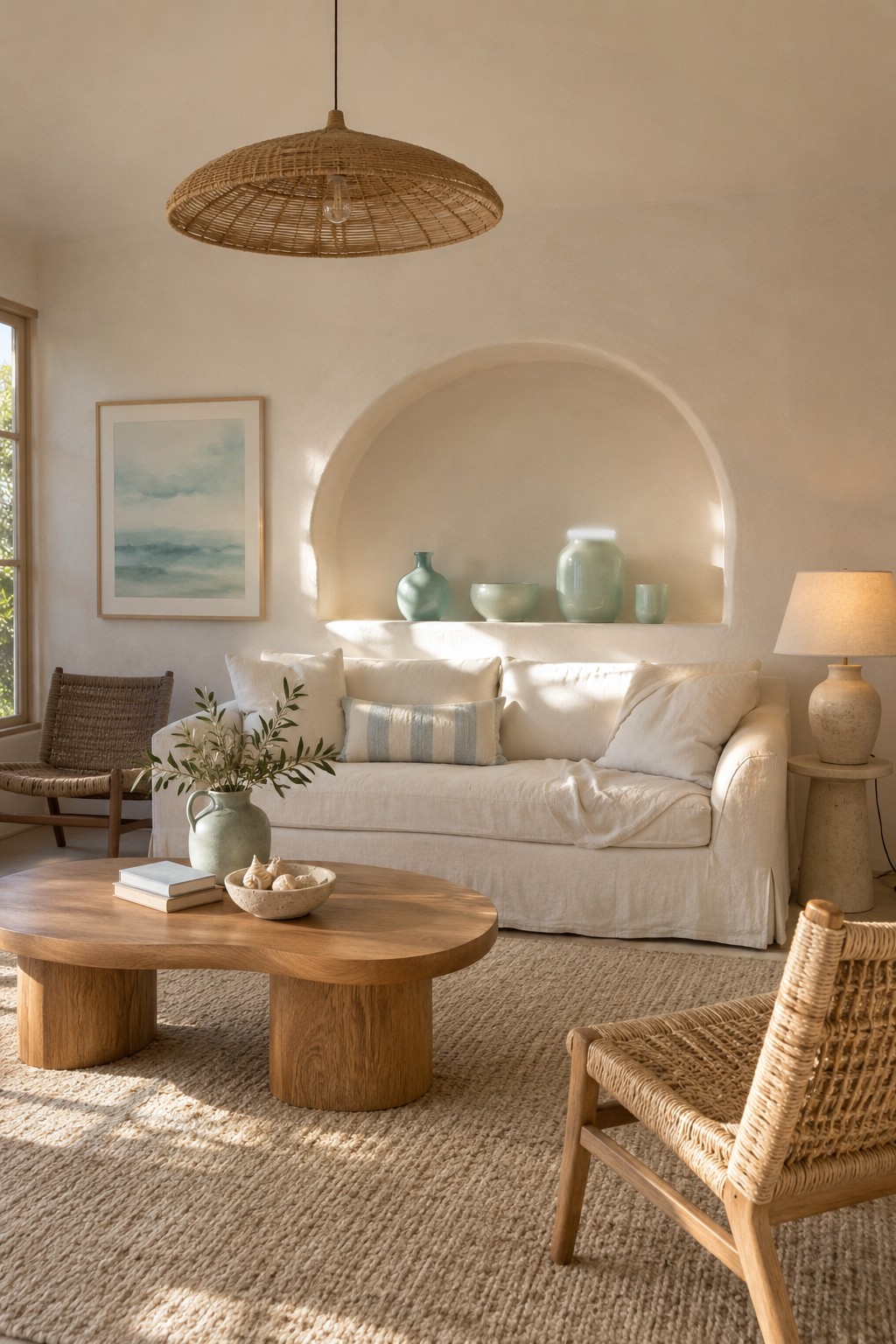
A recessed wall niche gives a living room a place to display a few favorite pieces without adding another cabinet or shelf. Its curved shape suits a relaxed coastal style, and pale green ceramics bring in a quiet sea-glass color.
This idea works especially well in a plaster wall or beside a sofa, where the niche can add interest without taking up floor space. Keep the display simple so the built-in detail remains easy to notice.
Use a Built-In Niche for Open Storage
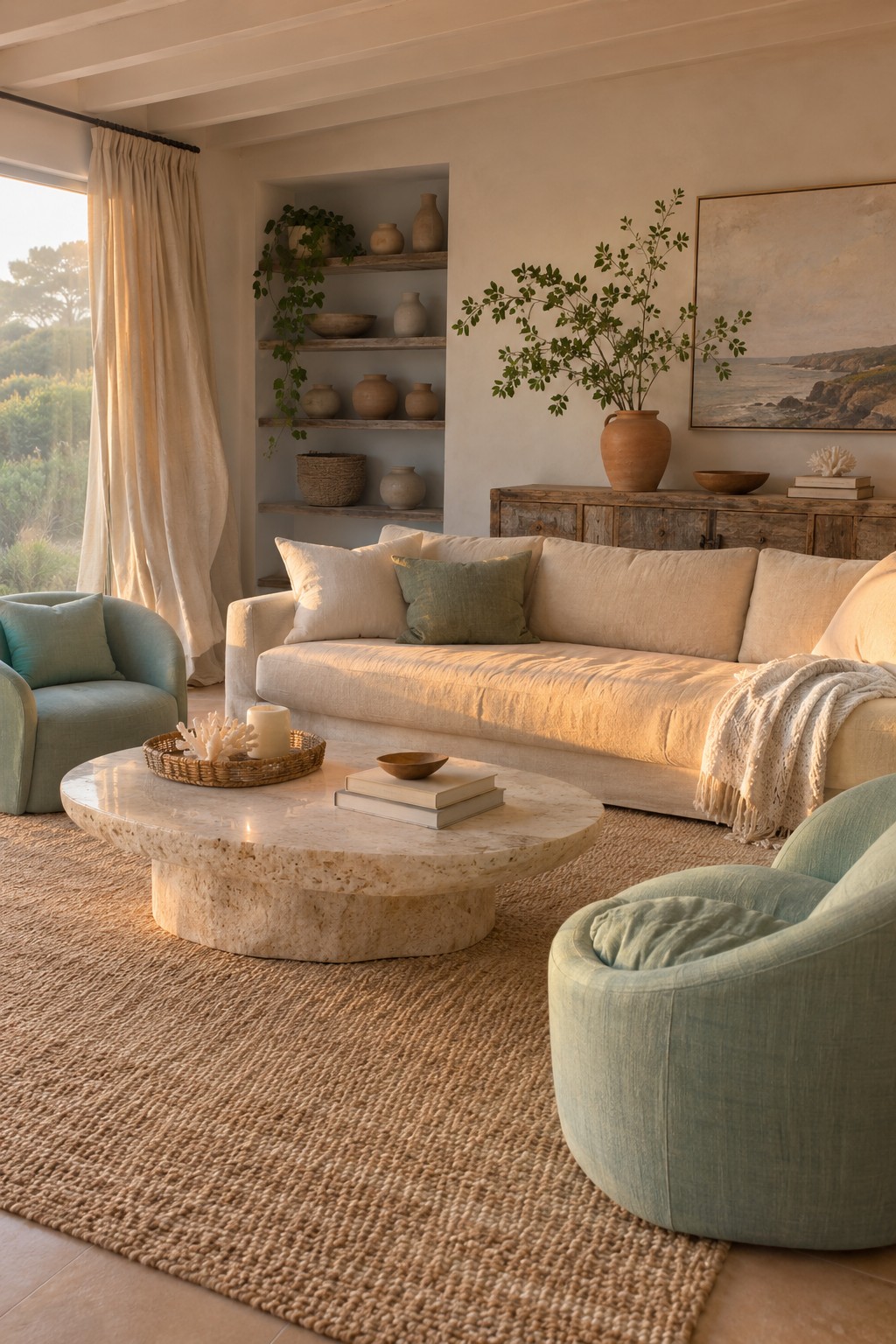
A recessed wall niche gives a living room useful storage without adding a bulky cabinet. Open shelves keep the area feeling light, while pottery and a trailing plant make the built-in feel at home in a relaxed coastal room.
This works especially well where a wall recess is already available. Keep the shelf contents simple and leave a little open space so the niche stays easy on the eye.
Frequently Asked Questions
Q: How do I keep sand and sea-glass colors from making the room feel washed out?
A: Add a few deeper accents, like warm wood, a navy pillow, or a charcoal lamp. They give the soft colors something to play against without making the room feel heavy.
Q: Can I bring in coastal boho style if my living room is small?
A: Yes. Try a pale base, a woven rug, and one or two natural textures rather than filling every corner with decor. A mirror can also help bounce light around the room.
Q: What kind of rug works well with this palette?
A: A flat-woven jute or a low-pile rug in a sandy tone fits naturally and is easier to live with than a thick shag. If you want more color, look for a subtle sea-glass pattern.
Q: How do I make the room feel coastal without using lots of shells and nautical decor?
A: Lean on texture instead: linen, rattan, weathered wood, and soft, sun-faded colors. That gives the room a seaside feel without making it look themed.
