


An Afrohemian bedroom can feel layered and personal, but it still needs to work for the way you rest, get dressed, and move through the room each day.
I find that the textiles usually catch my eye first, so their colors and patterns need room to stand out without making the whole space feel busy.
African-inspired fabrics can bring warmth to bedding, wall hangings, or a simple accent chair, especially when their details connect with the wood, lighting, and other textures around them.
Small choices matter: a quieter wall color or a more open bedside area can give bold patterns space to breathe.
I’d save the ideas that suit your room’s layout and try one textile-led change at a time.
Make African Textile Art the Main Bedroom Feature

A large African textile can give a bedroom its character without needing much extra wall decor. The bold geometric pattern above the bed works as a focal point, while its earthy colors sit comfortably with simple bedding.
Choose a textile large enough to suit the wall, and let its pattern lead the room’s color choices. In a smaller bedroom, keeping nearby fabrics fairly simple can help the artwork stand out without making the space feel busy.
Make African Textile Art the Bedroom’s Main Feature

A large textile can give a bedroom its character without requiring much extra decoration. Here, the orange-and-black patterned fabric across the canopy and behind the bed makes a strong focal point, while the carved wood bed keeps the look tied to natural materials.
In a room with this much pattern, keep the bedding fairly simple and repeat just a few colors in the cushions or throw. This idea suits a bedroom with a tall bed or a generous wall, but a smaller textile above the headboard can work just as well.
Use African Textile Art As A Bedroom Accent

A single textile pattern can give a bedroom a clear Afrohemian feel without covering every surface in print. Here, a dark patterned runner stands out against plain bedding, while matching artwork carries the motif onto the wall.
Try this approach with neutral sheets and one or two accent pieces that share a similar pattern. It works well when you want the textile art to stand out, but too many competing prints can make the room feel busy.
Use African Textiles As Bedroom Wall Art

An African textile can give a bedroom a clear focal point without adding more furniture. A large patterned cloth behind the bed brings color and cultural character to the room, while letting the rest of the bedding stay fairly simple.
Hang one textile from a slim rod or mount it on a backing so it sits neatly behind the bed. This works especially well in a room with plain walls, where the pattern has room to show. Choose colors that already appear in your bedding, such as rust or ochre, for an easy connection.
Let a Patterned Quilt Set the Bedroom Palette

A richly patterned quilt can give an Afrohemian bedroom its color and character without needing much else on the bed. The teal and ochre design here stands out against simple cream bedding, so the pattern feels clear rather than busy.
Use a quilt like this as the starting point for the room’s colors, then keep nearby bedding fairly plain. It works especially well when the bed is the main focus, but choose a pattern that leaves enough space for the room to feel restful.
Use Mudcloth Art To Set The Bedroom’s Color Palette

African textile art can give a bedroom a clear starting point for its colors. Here, the burgundy wall hanging relates to the patterned rug and plum throw, while the mustard bedding keeps the mix from leaning too dark.
Choose one textile as your guide, then repeat a couple of its colors in smaller pieces around the room. This works especially well when you want to mix patterns without making every surface compete. Keep larger items in simpler colors so the room still feels restful.
Use a Patchwork Textile as a Bedroom Headboard

A large patchwork textile can take the place of a traditional headboard and give a bedroom its main point of interest. Its varied colors and patterns bring character to the wall, while simple bedding lets the artwork stand out.
Hang the textile securely behind the bed, leaving enough room around it so it does not feel cramped. This works especially well in a bedroom with plain walls, and smaller patterned pillows can echo the design without competing with it.
Use African Textiles to Bring Pattern Into the Bedroom

African textile art can give a bedroom a clear focal point without adding more furniture. Hanging a few patterned cloths above the bed, as shown here, brings color and pattern to a large stretch of wall.
For a similar look, choose textiles that share a few colors with the bedding, then let their patterns vary. This works especially well above a simple headboard. Keep the rest of the wall fairly quiet so the display can stand out.
Use Mudcloth As a Bedroom Backdrop

A large mudcloth panel can give a bedroom a clear focal point without adding another piece of furniture. Its repeated geometric pattern brings character to the wall, while a mostly solid bedding color keeps the look comfortable for everyday use.
Hang the textile behind the bed, leaving enough of the pattern visible above the pillows. Olive or other muted bedding works well with black-and-cream cloth, but keep nearby patterns simple so the wall remains easy to take in.
Use Mudcloth Behind the Bed

A large mudcloth-inspired panel behind the bed gives the room a clear focal point without needing much extra wall decor. The dark fabric and repeating symbols stand out against the pale plaster, while the ochre details pick up the room’s earthy colors.
For a similar look, hang a textile above the bed or use a fabric panel inside a shallow alcove. Keep the bedding fairly simple so the pattern stays easy to read, and check that the fabric is secure and protected from direct sunlight.
Let Bold Wax Print Lead the Bedroom
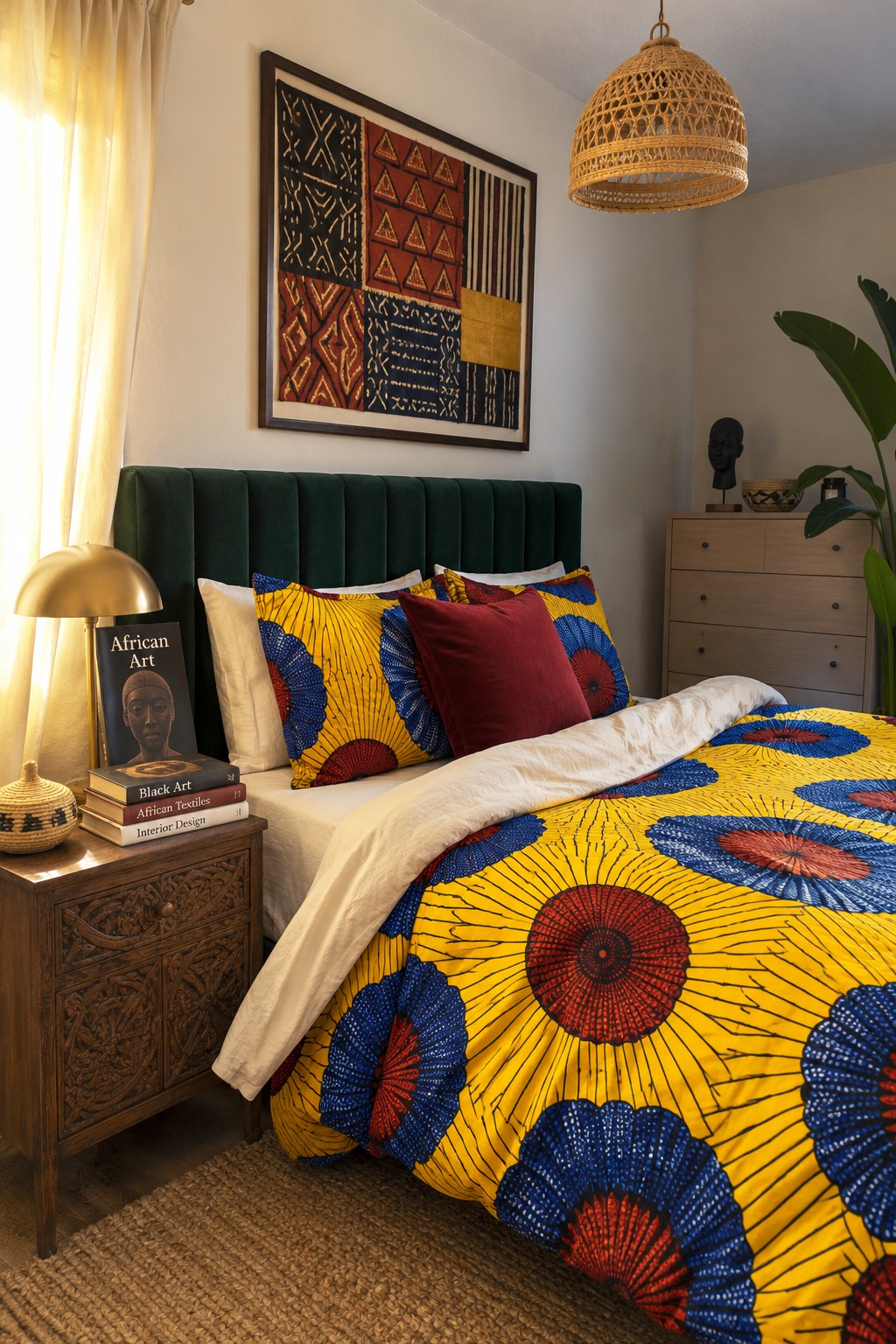
A vivid wax-print duvet can give a bedroom its main color and pattern, so the rest of the decor can stay fairly simple. The yellow, blue, and red fabric here makes a strong statement without needing several competing prints.
Use a large-scale print on the bed, then repeat just one or two of its colors in the pillows or nearby decor. This works especially well when the room has neutral walls and bedding, which gives the pattern room to stand out.
Use a Mudcloth Wall Hanging to Add Pattern

A tall mudcloth-style hanging brings African textile art into the bedroom without covering every wall. Its repeating geometric pattern gives the bed area a clear focal point, while the dark rust and black tones work naturally with simple, earthy colors.
Hang a large textile above or behind the bed, and keep nearby bedding fairly quiet so the pattern has room to stand out. This approach suits a neutral bedroom, especially when you want character without adding more furniture or small decorative pieces.
Use a Four-Poster Bed to Display African Textiles

A carved four-poster bed gives African textile art a natural place to stand out. A large cloth above the headboard works almost like a built-in backdrop, while the bed’s dark wood gives the patterns a clear edge.
This approach suits a bedroom with enough space for a substantial bed. Choose one main textile for the wall, then repeat a couple of its colors in the bedding rather than mixing many competing prints.
Use a Textile Wall Hanging to Set the Bedroom’s Style

A large textile wall hanging gives a bedroom a clear focal point without needing paint or a busy gallery wall. Its earthy pattern can guide the colors of the bedding and smaller accents, so the room feels connected without matching everything exactly.
This works especially well above a bed, where a fabric piece brings pattern to a broad, otherwise plain wall. Choose a hanging that leaves some breathing room around it, and repeat just one or two of its colors in the pillows or blanket.
Use a Textile Canopy to Define the Bed

A fabric canopy can give the bed a clear place in the room and bring a bold pattern into the bedroom without covering every wall. Here, the dark patterned cloth hangs behind the bed and drapes overhead, making the bed feel like its own little zone.
This idea works especially well in a bedroom with high ceilings or a simple bed frame. Use a lightweight textile and secure it carefully, since heavy fabric needs sturdy support. Keep the bedding fairly quiet so the canopy remains easy to notice.
Use a Patterned Textile to Tie the Bedroom Together

A large geometric textile can give a bedroom a clear focal point and help set the room’s color direction. Here, the red, black, and cream pattern stands out against quieter bedding, so the wall art feels intentional without making the whole room busy.
This works well above a bed with simple linens and natural wood. Choose a textile with colors already used in the room, and keep other patterns more restrained so the main piece can shine.
Use Mudcloth Pillows to Bring Pattern to the Bed

Mudcloth-style pillows are an easy way to bring African textile art into a bedroom without covering every surface in pattern. The mix of black, ochre, and rust designs stands out against plain cream bedding while keeping the bed comfortable and relaxed.
Start with two larger patterned pillows, then add a smaller accent cushion if you like. This works especially well when the rest of the bedding stays simple. If the prints vary, repeat one or two colors so the arrangement feels connected rather than busy.
Use Mudcloth to Give a Bedroom a Strong Focal Point

A large mudcloth hanging can give a bedroom one clear focal point without adding more furniture. Its bold, repeated pattern stands out against a simple wall and brings handmade character to the space.
Hang a textile above the bed, leaving enough room around it so the pattern can read clearly. Dark bedding and a few earthy colors can complement the cloth, but keep other patterns quieter to avoid visual clutter.
Use a Patchwork Quilt to Bring Pattern Into the Bedroom
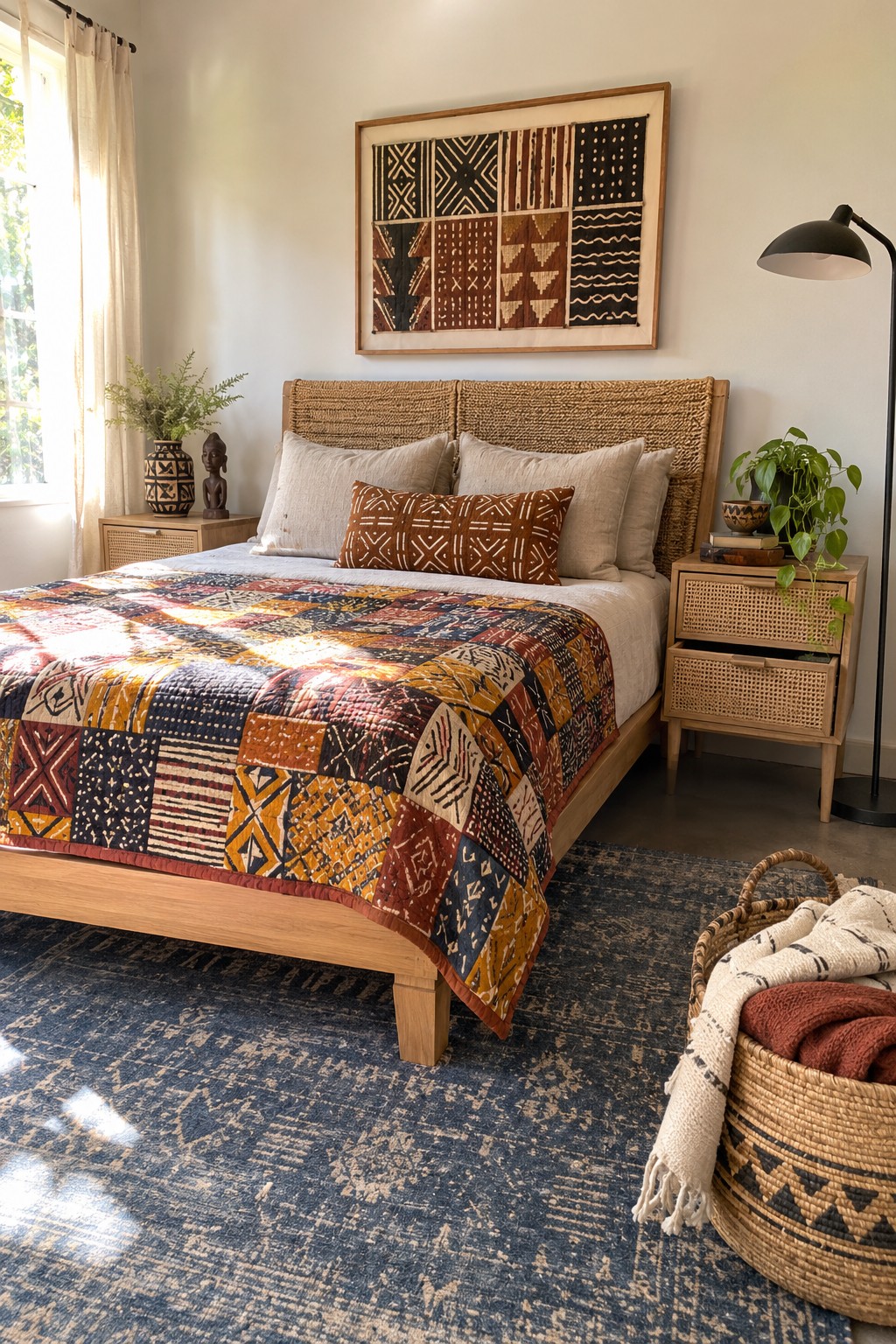
A patchwork quilt can bring African textile patterns into a bedroom without covering every surface in print. The mix of rust, ochre, cream, and dark blue gives the bed a clear focal point while leaving room for simple bedding around it.
For a similar look, keep the sheets and larger pillows fairly quiet, then let the quilt carry most of the pattern. This works especially well with natural wood and woven textures. If the quilt already has many colors, repeat just one or two elsewhere in the room.
Let a Patterned Bed Throw Guide the Bedroom Colors

A bold textile at the foot of the bed can give the rest of the room a clear color direction. Here, the rust and dark blue pattern stands out against muted green bedding, so the bed feels coordinated without every fabric matching.
Try this approach when you want to use a colorful African textile but keep the larger pieces simple. Choose one or two shades from the throw for pillows or small accents, and leave the sheets and duvet mostly solid so the pattern has room to show.
Use Woven Baskets As Bedroom Wall Art

Woven baskets can bring pattern and handmade texture to a bedroom without adding another busy fabric. Grouping baskets above the bed makes that wall feel considered, while their natural tones work well with simple bedding.
Try a mix of sizes and patterns, keeping enough space between each piece so the display does not feel crowded. This approach suits a room with wood furniture and neutral linens, and a few patterned pillows can echo the baskets without competing with them.
Use a Woven Bench to Complement Bedroom Textiles
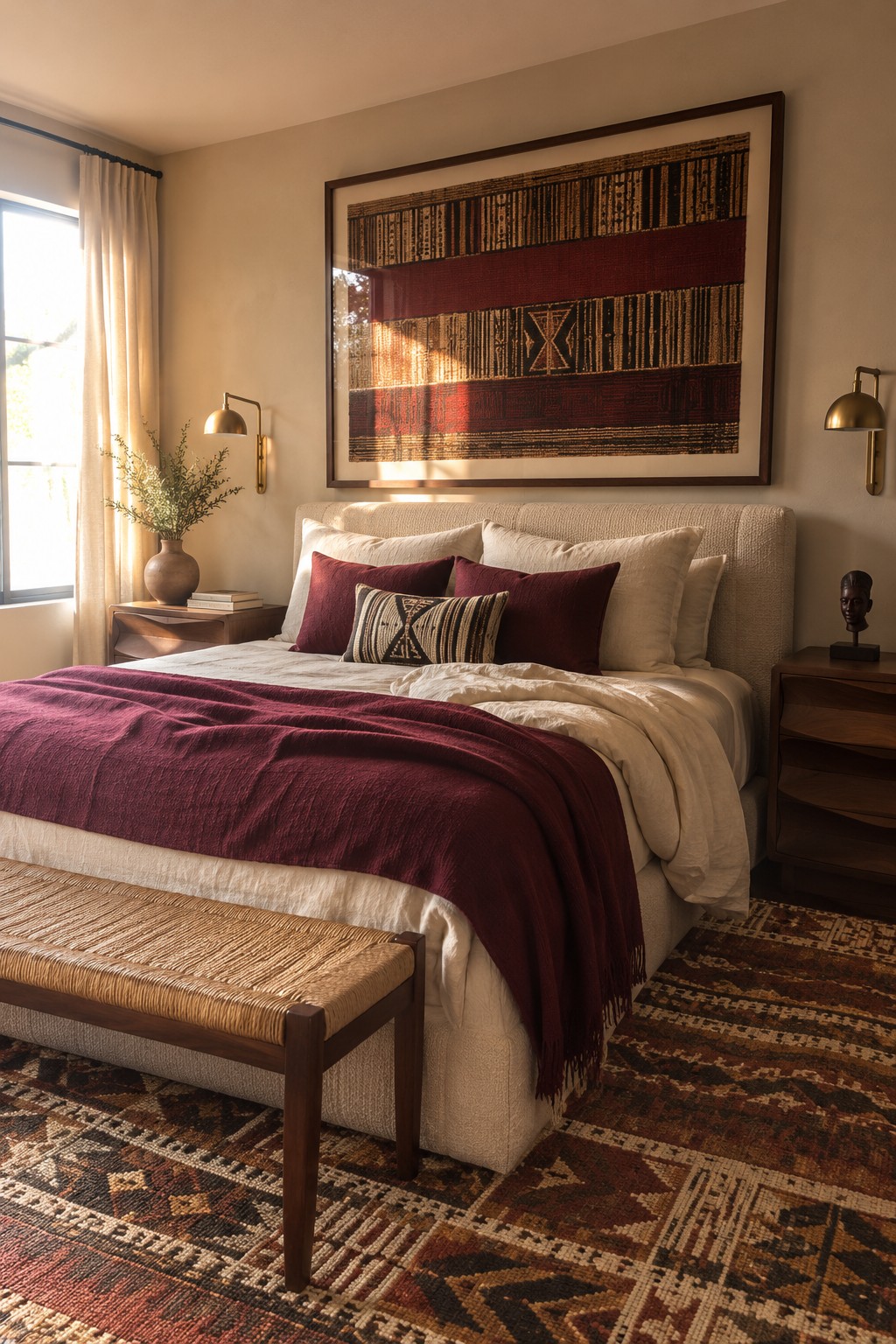
A simple woven bench at the foot of the bed can echo the texture of African textile art without competing with its patterns. It also gives the room a useful place to sit or set down a folded blanket.
Choose a bench with a natural woven seat and a sturdy wood frame, then leave enough space around it for easy movement. It works especially well in a bedroom where the bed and wall art already carry strong color and pattern.
Frequently Asked Questions
Q: How do I mix African textiles with other patterns without making the bedroom feel busy?
A: Pick one textile as the star, like a bold mud cloth headboard or patterned quilt, then keep the other patterns smaller or simpler. Repeating one or two colors across the room helps everything feel connected.
Q: What’s an easy way to bring Afrohemian style into a small bedroom?
A: Start with a few expressive touches, such as a woven wall hanging, a patterned pillow, or a colorful throw. You don’t need a full room makeover to make the space feel warm and personal.
Q: Do African textiles work with neutral bedroom colors?
A: Absolutely. Cream, sand, and warm brown walls give vivid textiles room to stand out, while still keeping the bedroom calm.
Q: How can I use textile art without hanging fabric directly on the wall?
A: Try stretching a favorite piece over a canvas frame or draping it across a headboard. That keeps the textile visible and makes it easy to switch things up later.
