

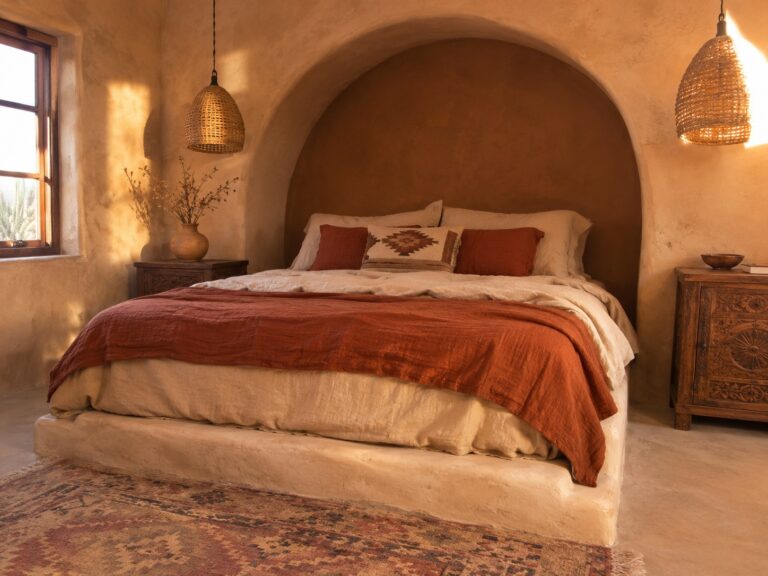
In a bedroom, sculptural adobe-inspired forms can make the space feel grounded before you add much decoration.
I find that curved niches, rounded edges, and low, substantial furniture work best when they leave enough room to move around and keep everyday essentials close at hand.
The first thing I notice is how these shapes soften the room, especially beside simple plaster finishes, woven textures, and warm wood.
Some of the ideas here could be adapted with small changes, like a curved headboard or an arched bedside niche, rather than a full renovation.
I’d start with the detail that fits the room’s layout, then let the rest of the materials build a calm desert-inspired feel.
Make the Bed Part Of The Adobe Nook

A bed tucked into a deep, rounded alcove feels more settled than one placed against a flat wall. The curved adobe-style form gives the bed a natural place in the room, while simple bedding lets the shape remain the main feature.
This approach works especially well in a bedroom with a plaster or adobe look, but the idea can be adapted with a shallow arched recess or a curved painted wall. Keep the alcove wide enough for the bed and avoid adding bulky furniture inside it.
Use an Adobe Arch as the Bedroom’s Main Feature
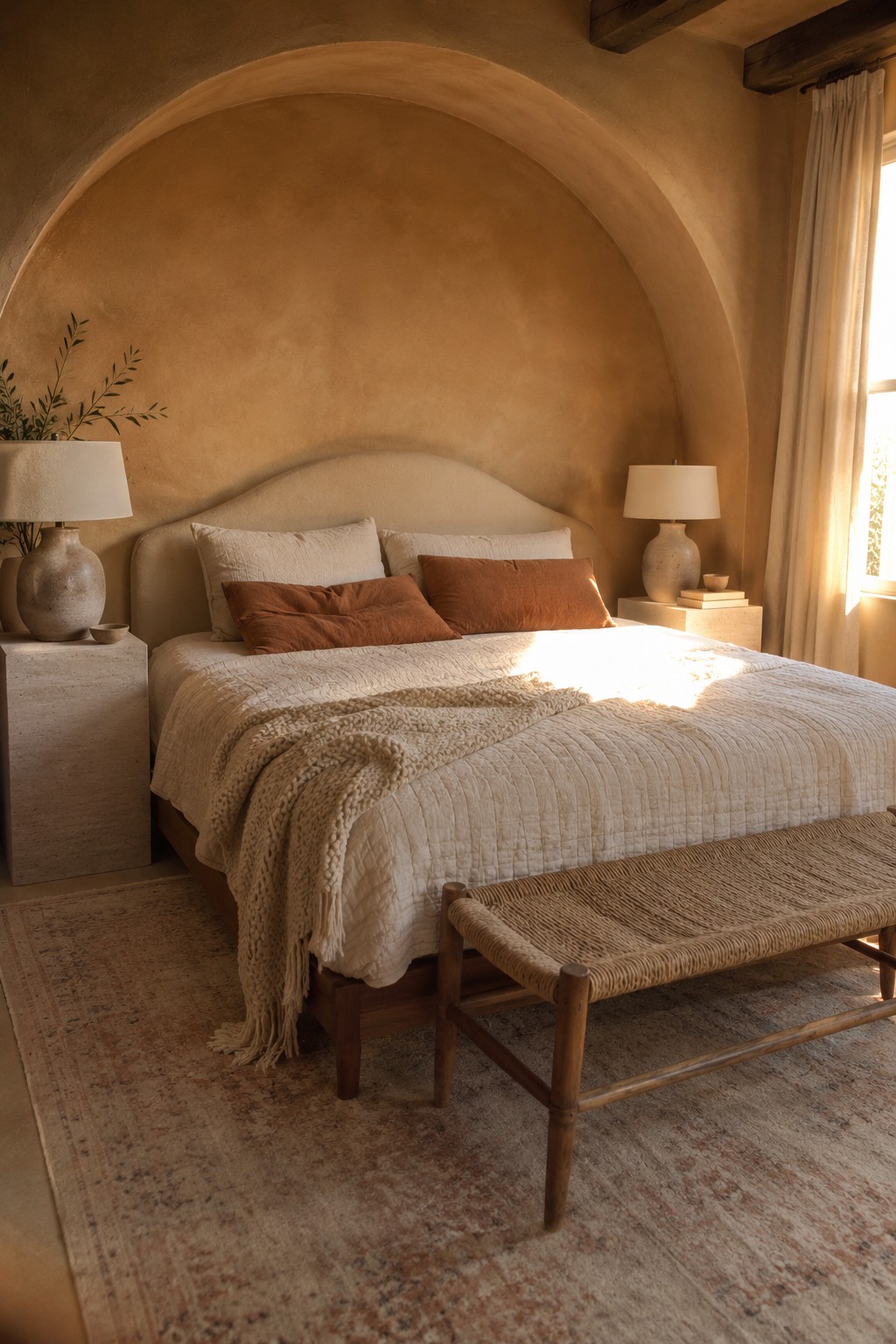
A broad adobe-style arch can give a bedroom a clear focal point without adding much decoration. Its curved shape feels softer than a flat accent wall, and a warm plaster finish makes the feature feel like part of the room rather than an added panel.
This works especially well behind a bed, where the arch can define the sleeping area in a simple way. Keep the surrounding finishes fairly quiet so the shape stays easy to notice, and make sure the curve is scaled to the wall rather than squeezed into a narrow space.
Build the Bed Into an Adobe-Inspired Nook

A recessed, rounded bed alcove gives a bedroom a cozy focal point without relying on a separate headboard. Its plastered curves make the built-in feel like part of the room, which suits adobe-style homes especially well.
For a similar look, shape the alcove wide enough to leave room for pillows and keep the curve simple. This works best when planned as part of the wall, since adding a deep recess later can take more space than a small bedroom has.
Use Adobe Curves to Shape the Bedroom
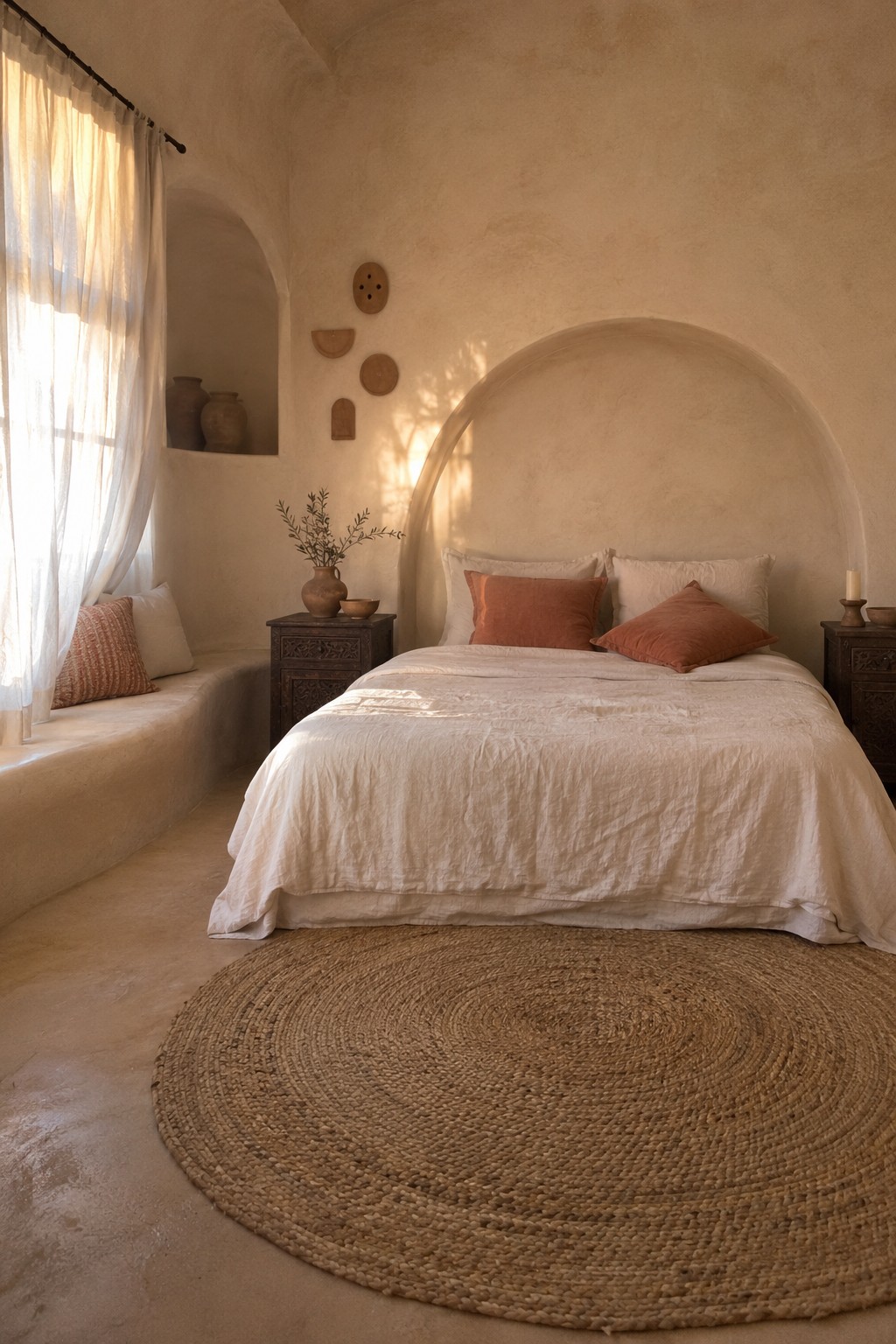
A rounded, built-in bed alcove gives an adobe-style bedroom its character without needing much decoration. The curved wall treatment makes the bed feel like a natural part of the room, rather than a piece of furniture set against a plain wall.
This idea works especially well in a new build or during a major renovation, since shaping the wall takes planning. Keep the bedding and nearby finishes simple so the alcove stays the main feature. A painted plaster finish can suggest the look without rebuilding the wall.
Use a Rounded Adobe Headboard
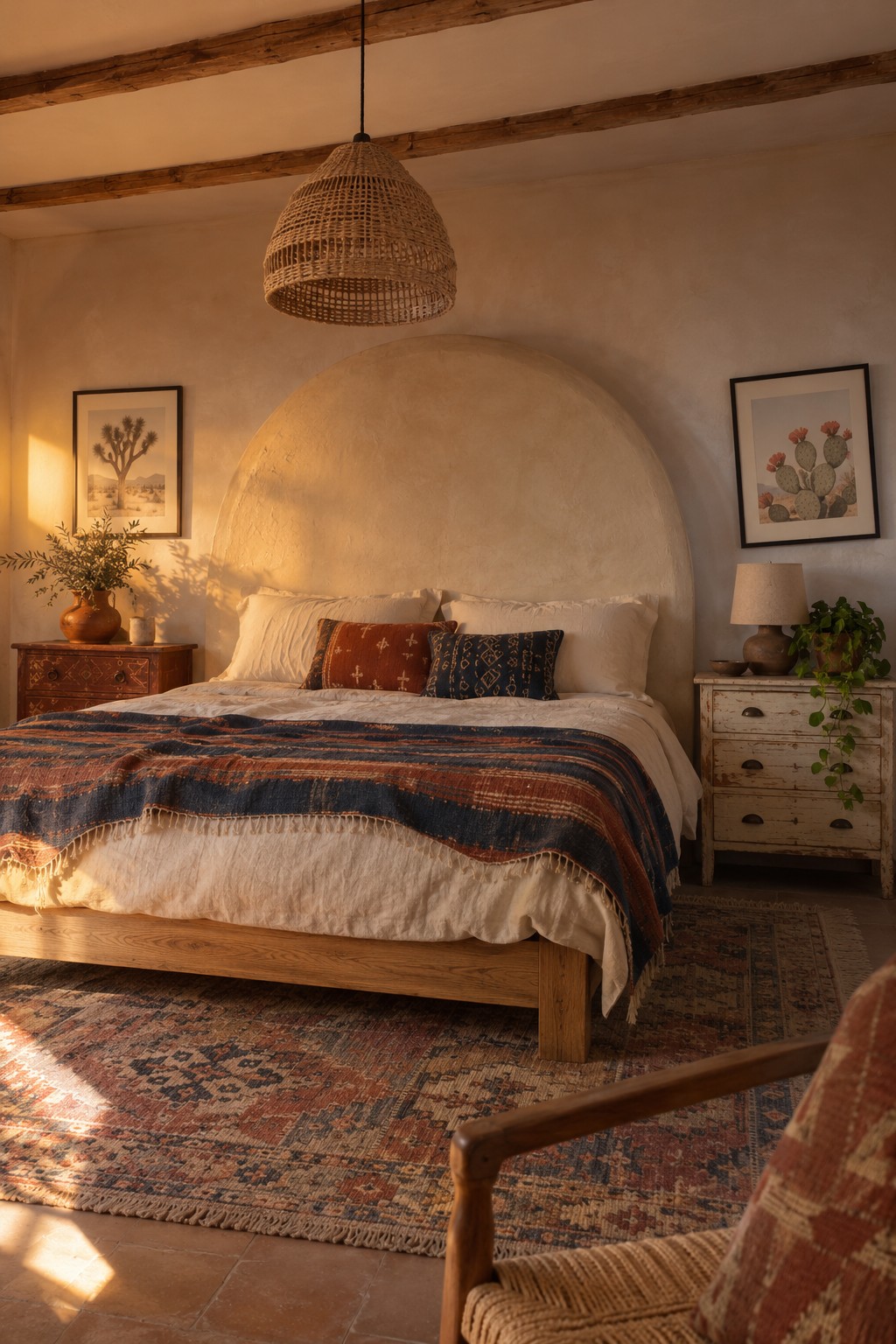
A broad, curved headboard gives the bed a built-in look without taking up extra floor space. Its simple shape is enough to make the bed feel like the natural focus of the room.
For a similar effect, use a plastered or textured finish in a warm, sandy shade. Keep the curve wide and low enough to sit comfortably behind the pillows, and let the surrounding walls stay fairly simple.
Use a Rounded Alcove to Define the Bed
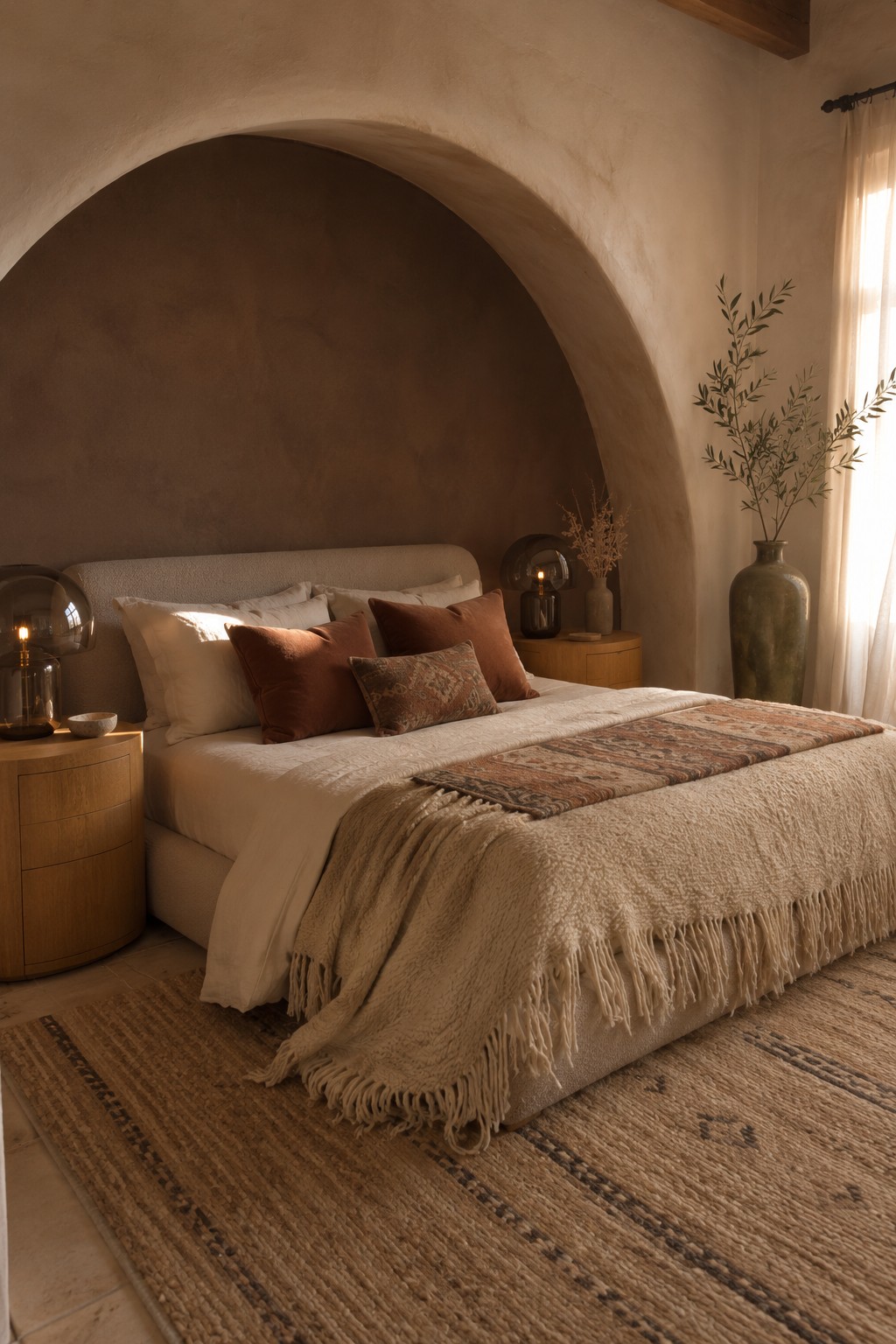
A broad, curved wall recess gives the bed its own place without adding a separate room divider. The simple shape feels at home in an adobe-inspired bedroom, and the darker plaster inside the arch makes the bed area easy to pick out.
This idea works best when the recess is wide enough to sit behind the full bed. Keep its finish simple, and use a few pillows or textiles for color rather than filling the alcove with extra decor.
Use a Soft Adobe Alcove Behind the Bed
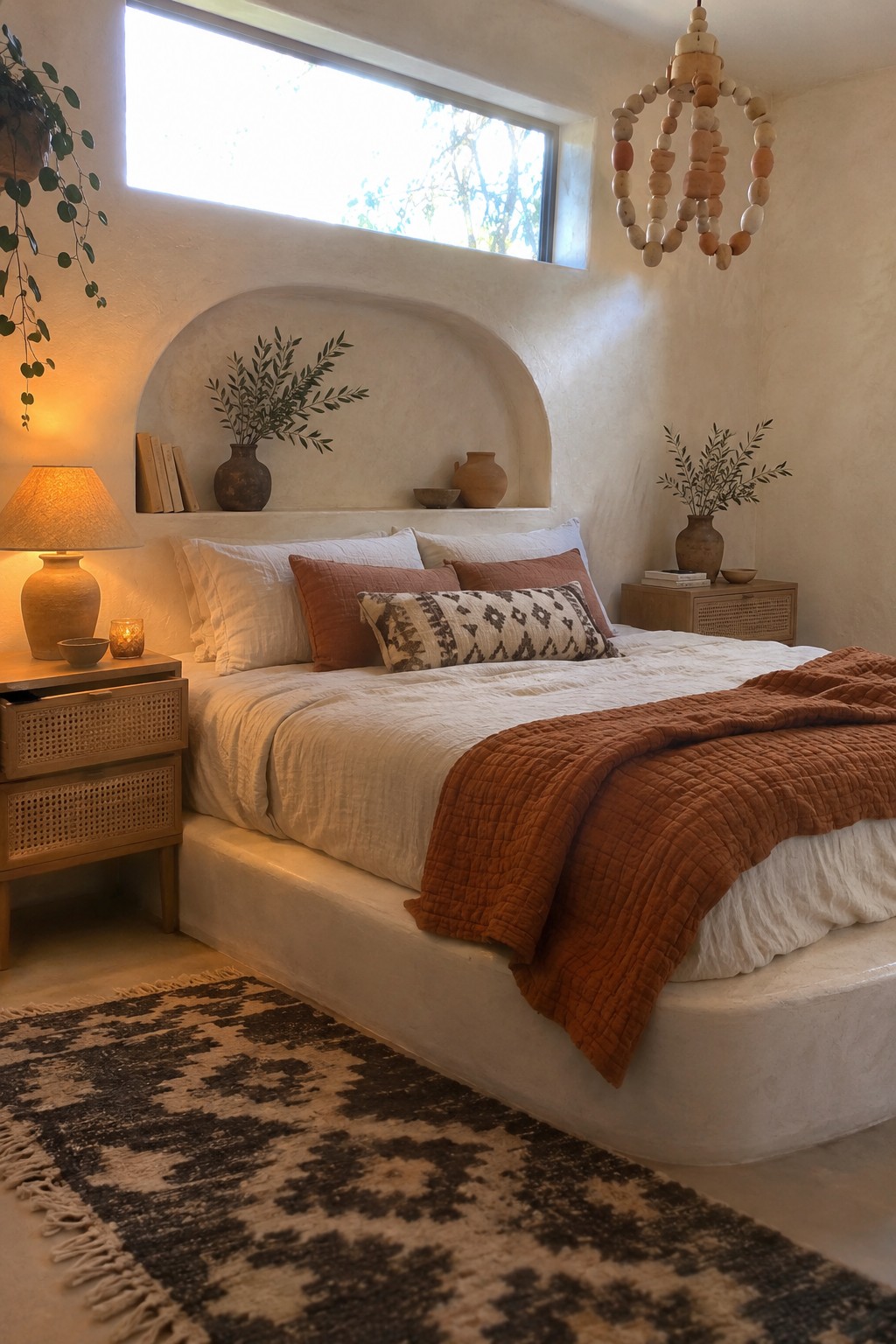
A shallow adobe-style alcove gives the bed a natural focal point without needing a separate headboard. Its rounded shape feels at home in a desert-inspired bedroom, and the built-in ledge offers a little space for simple decor.
This works especially well in a room with plaster walls or other earthy finishes. Keep the ledge fairly uncluttered so the curved form stays clear, and use cushions or bedding to bring in color and texture.
Use a Sculpted Adobe Fireplace as a Bedroom Feature
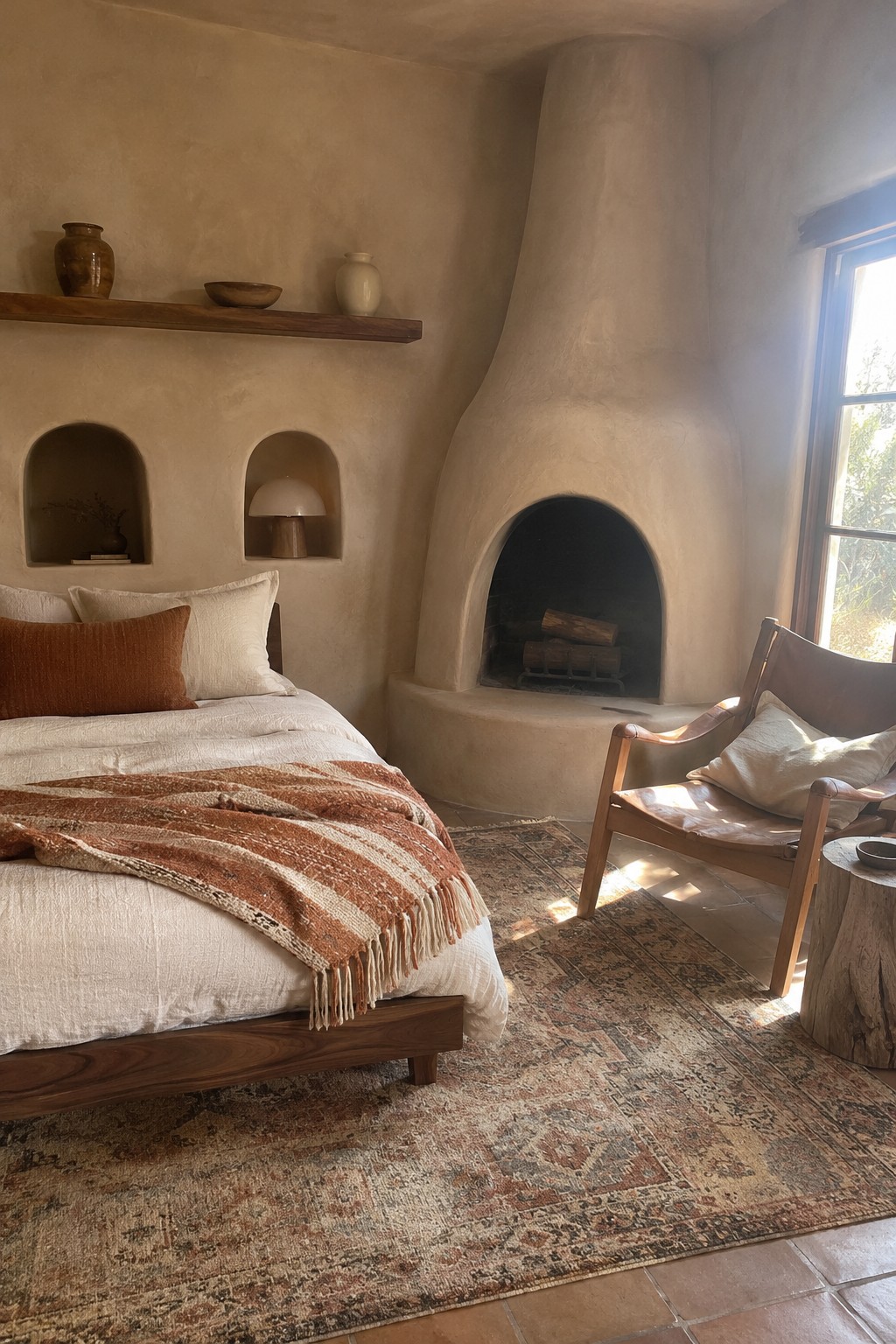
A rounded adobe fireplace can give a bedroom the same built-in character as an alcove, without making the bed part of the architecture. Its broad plaster shape stands out against simple walls, while the curved opening keeps the form from feeling too heavy.
This idea suits a bedroom with enough room for a separate sitting area. Keep nearby furnishings modest so the fireplace remains the main feature, and check that the design allows for safe use and proper ventilation.
Use Built-In Niches for Bedroom Storage

Recessed wall niches make useful bedside storage without taking up floor space. Their rounded openings also bring a subtle adobe-inspired shape into the room, so the walls feel considered without needing extra decoration.
This works especially well in a bedroom where space beside the bed is limited. A small shelf can hold a few books or a lamp, but keep the niches fairly simple so they do not become cluttered.
Use Plaster Curves to Shape the Bedroom
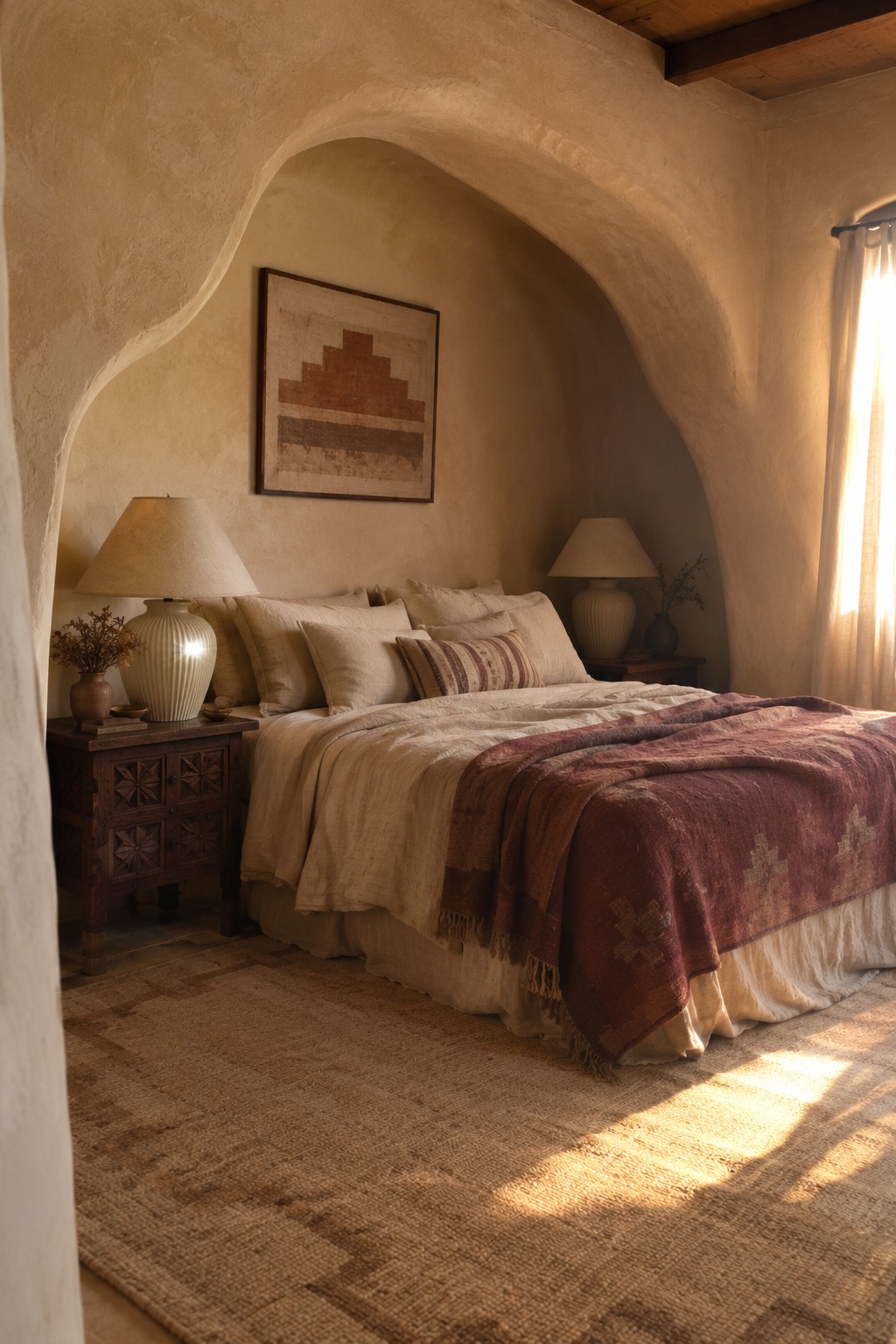
A broad, rounded plaster arch can give a bedroom a sheltered feel without adding a separate wall or bulky furniture. It makes the bed area feel like its own part of the room, while the simple finish keeps the shape from becoming fussy.
This works especially well in a bedroom with warm, natural materials. Keep the bedding and nearby furniture fairly simple so the curved wall stays easy to notice, and check that the arch leaves enough room to move comfortably around the bed.
Choose a Low Wooden Bed Frame
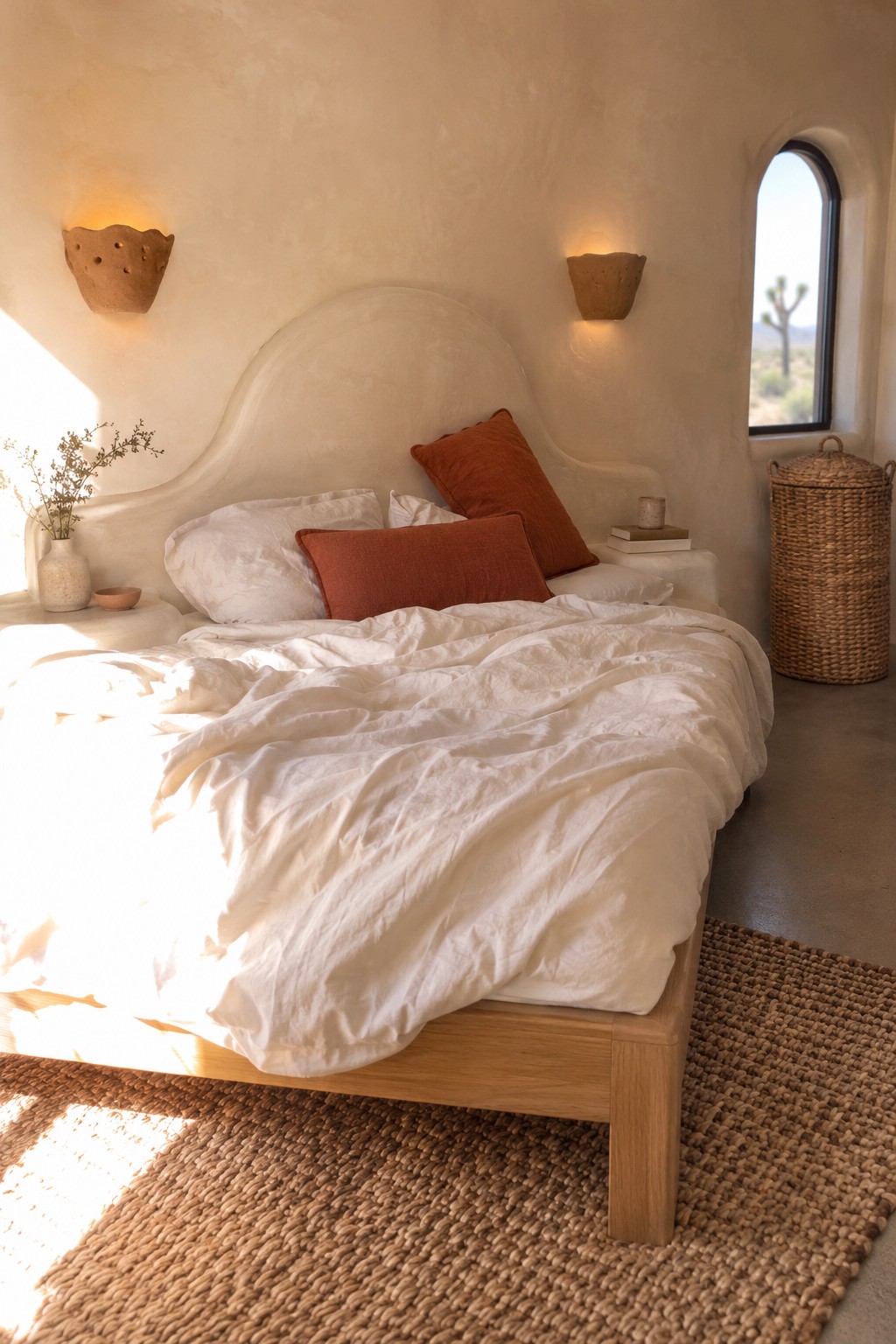
A simple wooden bed frame lets the curved adobe wall stay at the center of the room. The low profile suits the soft, built-in look and keeps the bed from competing with the rounded forms.
This works especially well in a smaller bedroom or one with sculpted walls. Choose a plain frame in a natural wood tone, and keep the bedding fairly simple so the wall remains easy to see.
Use a Terracotta Arch to Shape the Bed Area
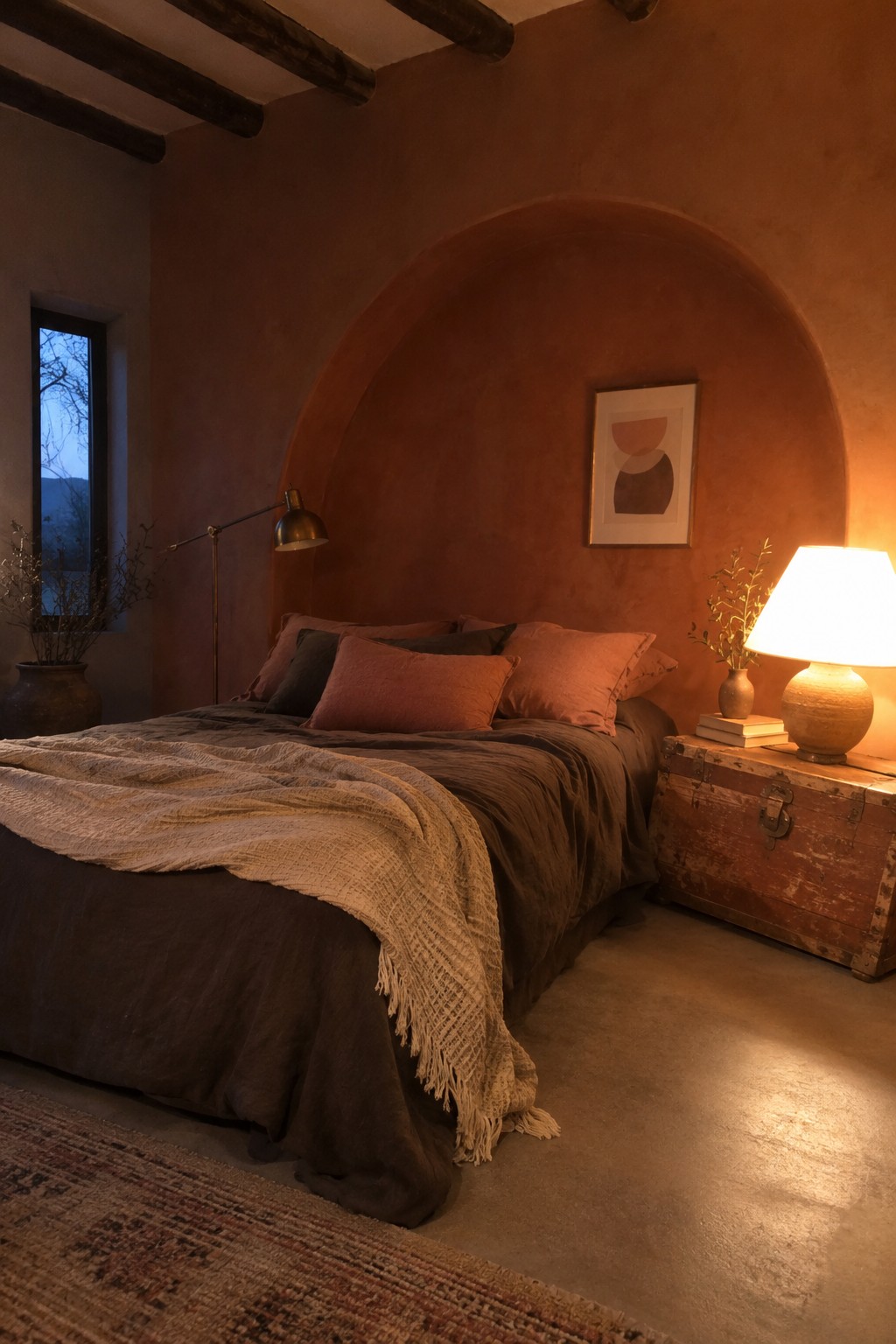
A broad adobe-style arch gives the bed its own defined spot without adding a separate screen or bulky headboard. The terracotta wall treatment makes the architectural shape easy to notice, while keeping the room’s layout simple.
This idea works well in a bedroom with a plain bed wall and enough room for the arch to extend beyond the mattress. Use a warm, matte finish, and keep the shape shallow or painted on if you do not want to build out the wall.
Use a Raised Adobe Bed Nook
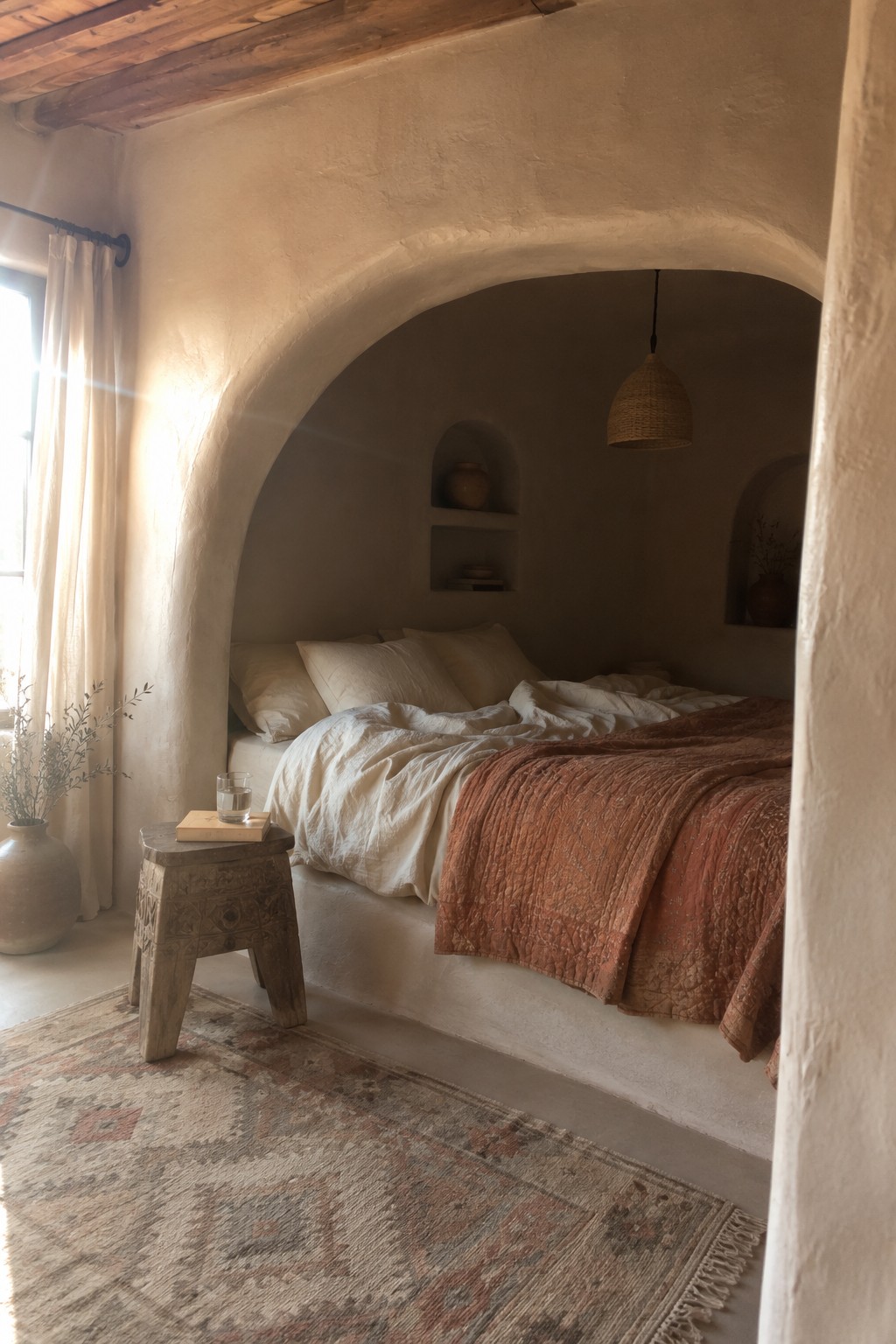
A built-in bed nook makes the bed feel like part of the room’s architecture, rather than just another piece of furniture. The thick, rounded plaster arch gives this sleeping area a sheltered feel while keeping the overall shape simple.
This works especially well in bedrooms with alcoves or a natural niche in the floor plan. Keep the bedding and finish colors quiet so the curved structure stays easy to notice, and make sure the raised platform is comfortable to step onto.
Use Sculpted Adobe Walls to Shape the Bedroom

Rounded plaster forms can give a bedroom the feeling of an adobe alcove without adding a separate screen or bulky furniture. The uneven curves behind the bed bring character to the wall while keeping the room simple.
This approach works best when the rest of the finishes stay fairly quiet. Pair the sculpted wall with a low wooden bed and plain bedding, and make sure there is enough clearance around the bed so the built-up forms do not crowd the space.
Use a Curved Opening to Separate the Bed From a Sitting Area
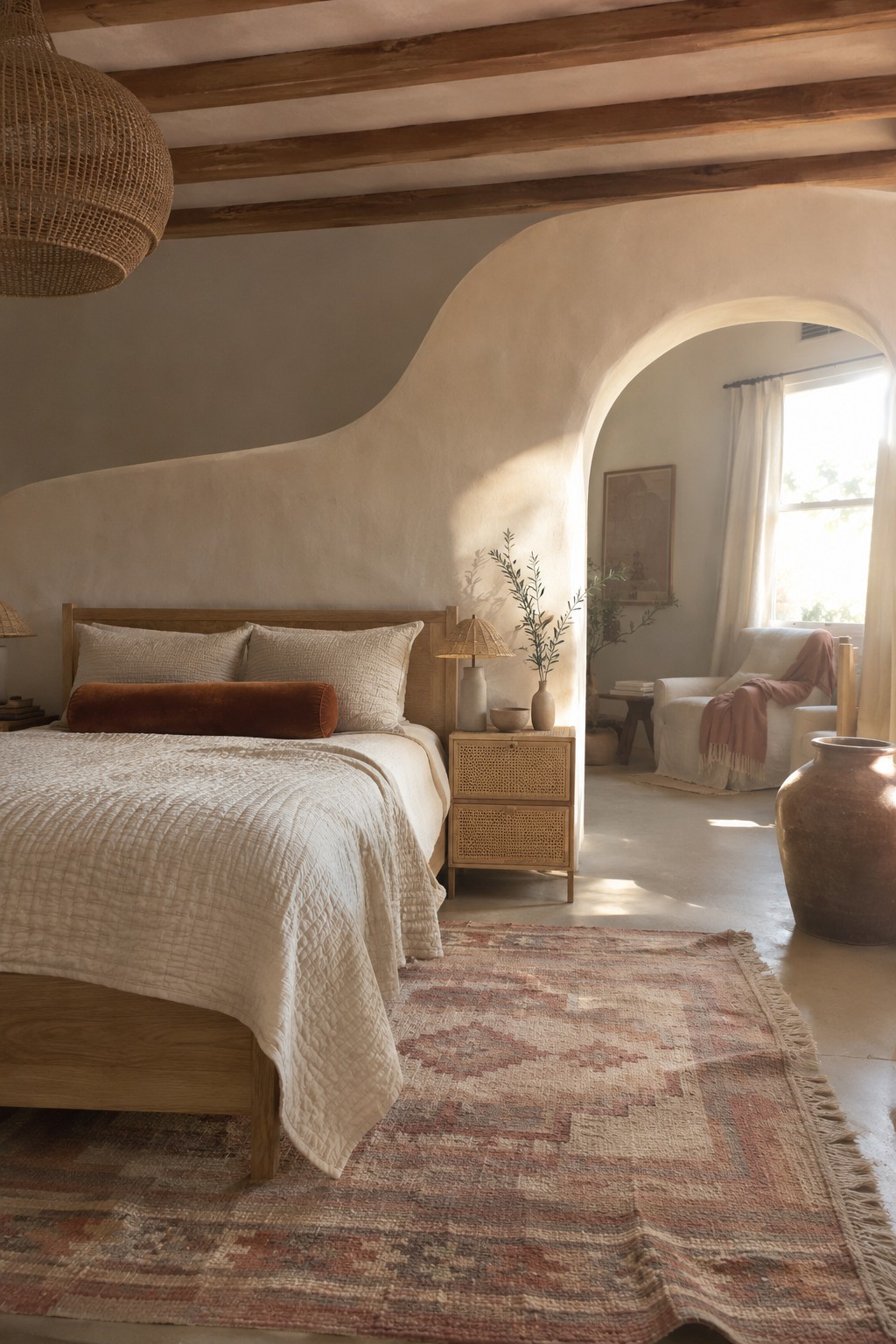
A broad plaster arch can divide a bedroom into two useful zones without closing either one off. Here, the rounded opening keeps the sleeping area connected to a small sitting space while giving the room a clear change in function.
This approach suits bedrooms with enough floor space for a chair or reading corner. Keep the opening generous so it feels easy to pass through, and use a soft wall finish to carry the curved shape through the room.
Choose a Sculptural Wooden Bed Frame

A low wooden bed frame with a curved, substantial shape can bring a softer feel to an adobe-inspired bedroom. Its rounded lines echo the gentle forms of plaster walls without making the room rely on another built-in feature.
This works especially well in a simple bedroom where the bed can stand out on its own. Choose a natural wood finish and keep the bedding fairly plain, so the frame’s shape remains easy to see.
Use Earthy Textiles to Warm Up an Adobe Bedroom

A patterned quilt is an easy way to bring color into an adobe-style bedroom without changing the walls or furniture. Here, rust and cream blocks echo the warm plaster and make a simple bed feel more personal.
Try this with a mostly neutral bed, keeping the pattern to one main layer so the room still feels restful. It works especially well in a bedroom with natural finishes, where a little color can keep the space from feeling too plain.
Use a Raised Adobe Platform to Define the Bed
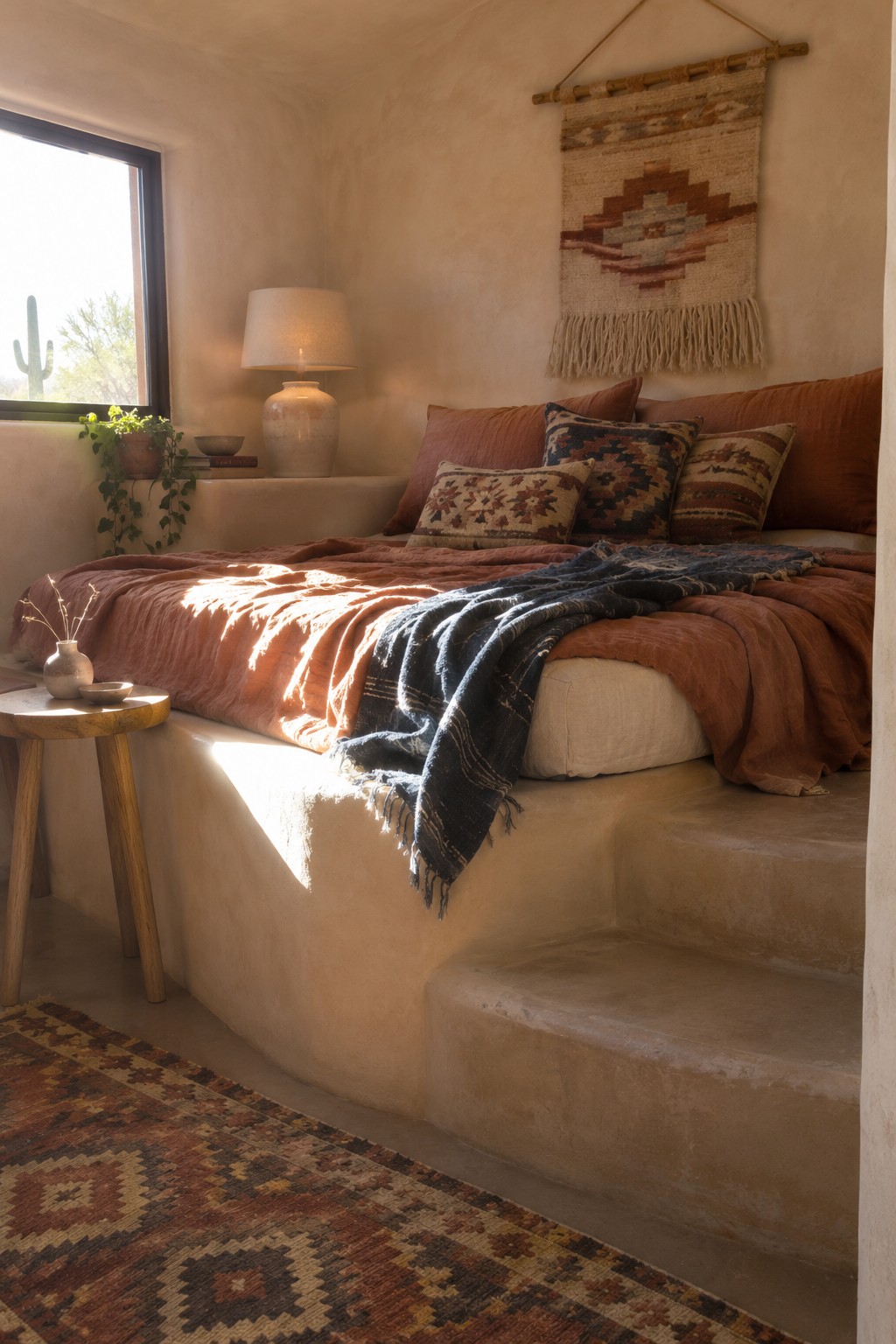
A raised adobe platform gives the bed a built-in feel and makes it the natural center of the room. Its broad, sculpted shape can replace a separate bed frame and bring a simple bedroom closer to the architecture of a desert home.
This approach works best when the room has enough floor space for a substantial base and a safe, easy step up. Keep the bedding fairly simple so the platform remains the main feature, and plan the height carefully if you want to use the space beneath it for storage.
Use a Raised Adobe Platform to Set Apart the Bed
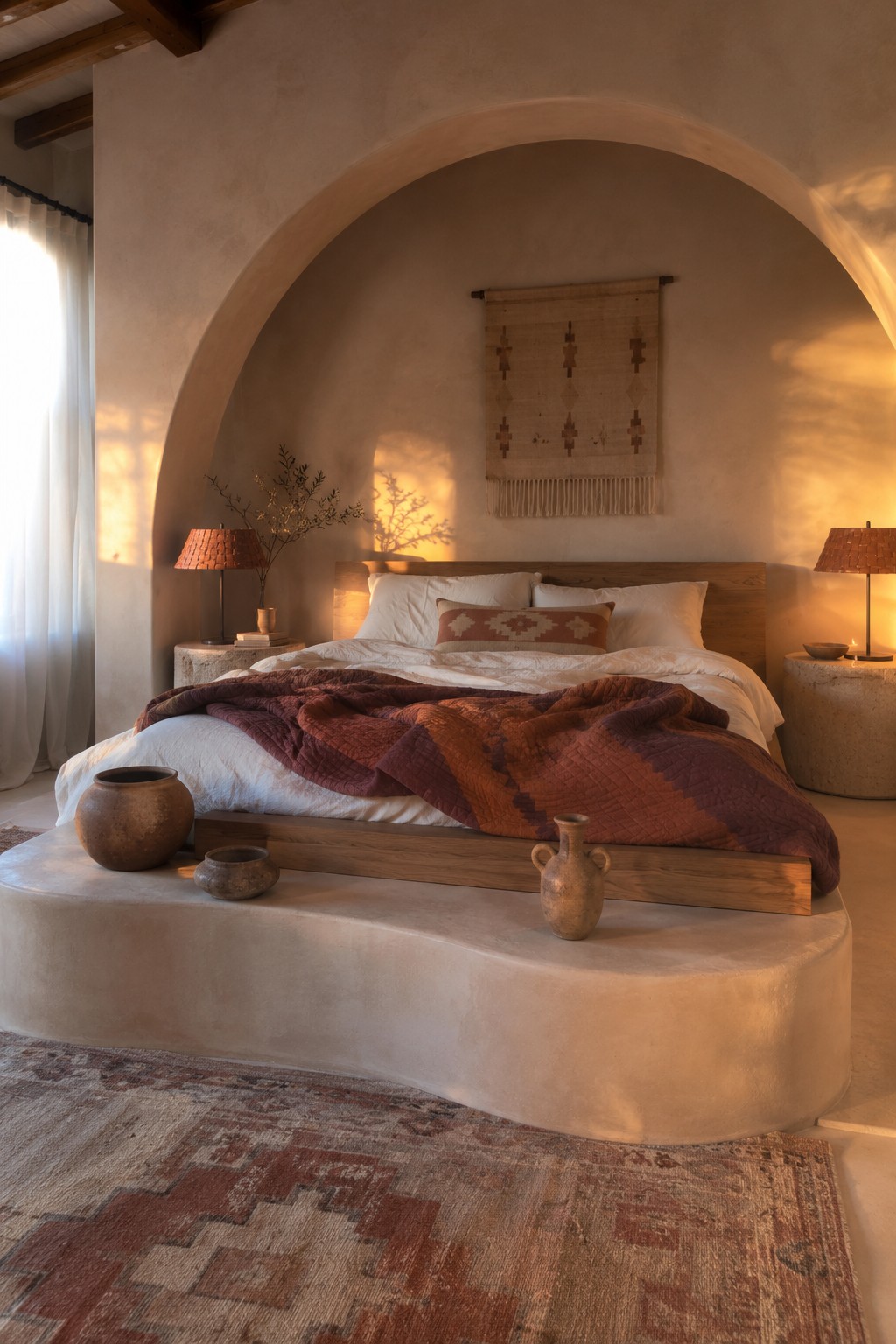
A built-up adobe platform gives the bed its own place in the room without needing a separate divider. Its rounded edge keeps the shape gentle, and the bed feels settled into the architecture rather than simply placed against a wall.
This idea works best when there’s enough floor space around the platform to move comfortably. Keep the finish simple and close to the wall color, and check the height before building so getting in and out of bed stays easy.
Frequently Asked Questions
Q: How can I get the adobe-inspired look if I can’t change my walls?
A: Give the room its sculptural feel with a rounded headboard, a plaster-look bedside lamp, or an arched mirror. Warm, matte finishes and soft curves go a long way, even against plain white walls.
Q: What colors work best with adobe forms?
A: Start with sandy beige, clay, or warm off-white, then add a darker accent like rust or deep brown. Keeping the palette earthy helps rounded shapes feel calm rather than overly decorative.
Q: How do I keep a desert boho bedroom from feeling too themed?
A: Mix in simple bedding, natural wood, and a few personal pieces instead of filling every corner with desert motifs. One striking sculptural feature usually feels more inviting than a room full of them.
Q: Can this style work in a small bedroom?
A: Yes. Choose one curved focal point, such as an arched headboard or a niche-shaped wall detail, and keep the rest of the furniture visually light.
