

A TV area can easily take over a living room, especially when cords, consoles, and everyday clutter are left in view.
I find that concealed storage works best when it feels like part of the room’s furniture, rather than a cabinet added just to hide the screen.
In a boho space, warm wood, woven textures, and collected pieces can soften the technology while keeping the room practical for daily use.
The layout matters too, since a screen that feels balanced with the seating and nearby storage helps the whole room come together.
I’d save the ideas that make hiding media feel natural, then adapt the details to fit the room’s size and the things you actually need to store.
Use a Low Media Console for Hidden Storage

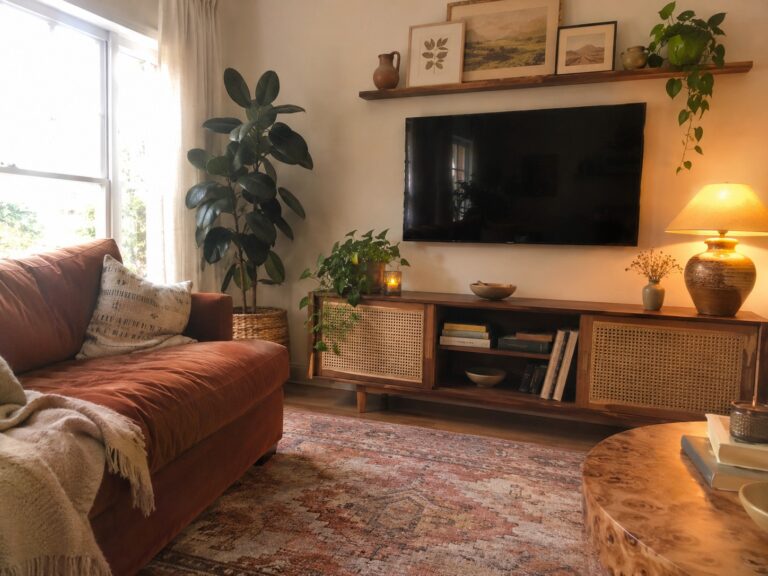
A low wooden media console can keep the TV area practical without making storage the main event. Closed cane-front doors hide everyday items, while a few open shelves leave room for books or baskets.
This approach works well in a boho living room where natural materials already have a place. Choose a console wide enough for the TV, and keep the open shelves simple so cords and small items don’t make the area look cluttered.
Use Woven Doors To Hide The TV
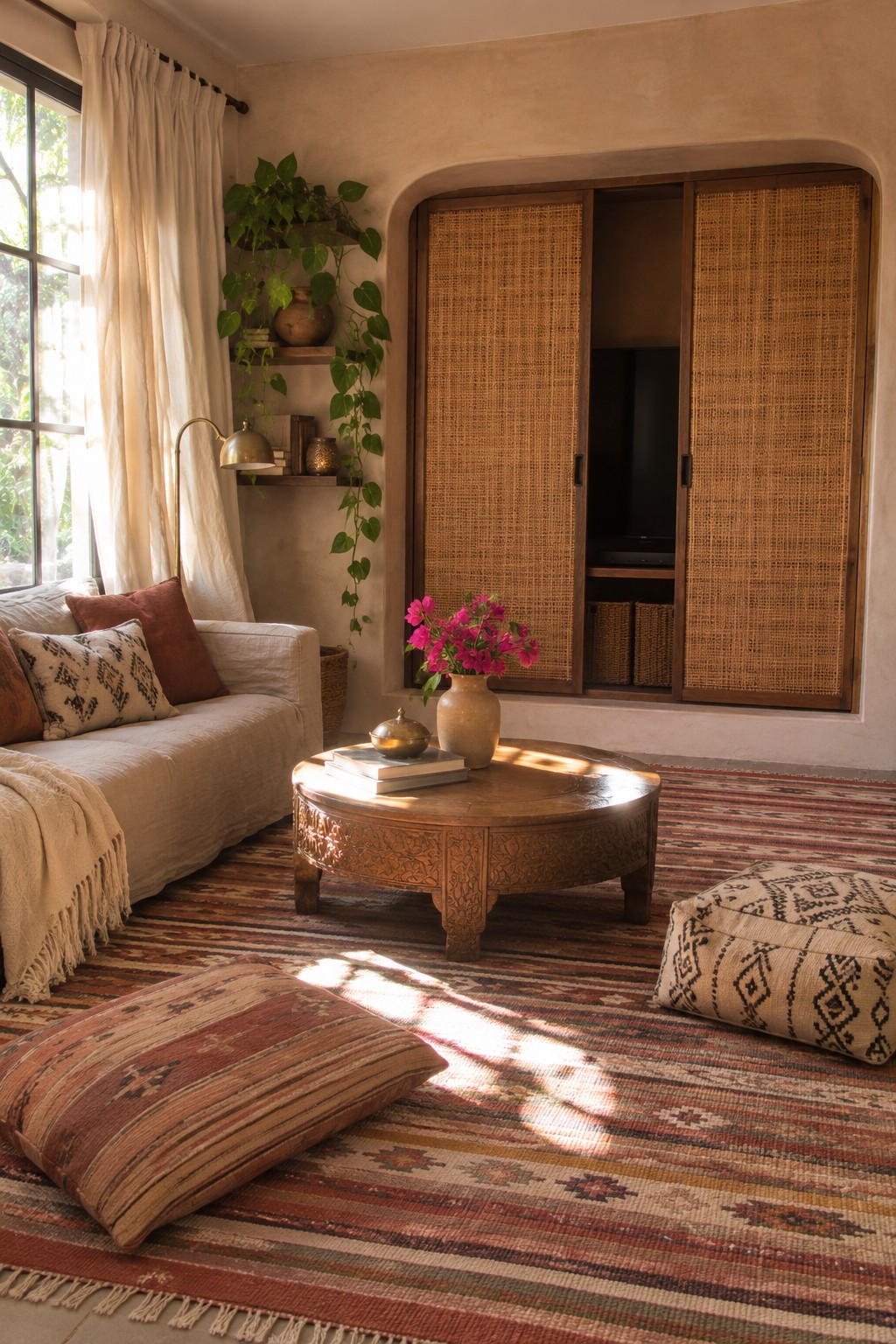
Concealing the TV behind woven doors lets a media area blend into a boho living room instead of making the screen the main feature. The natural texture gives a built-in cabinet a more relaxed look, while still keeping electronics and cords out of sight.
This idea works well in a recessed wall niche or on a wide media cabinet. Choose doors that slide easily and leave enough room for the TV and any equipment inside. Keep the finish close to the room’s other wood tones for a simple, pulled-together look.
Use a Fabric Panel to Conceal the TV
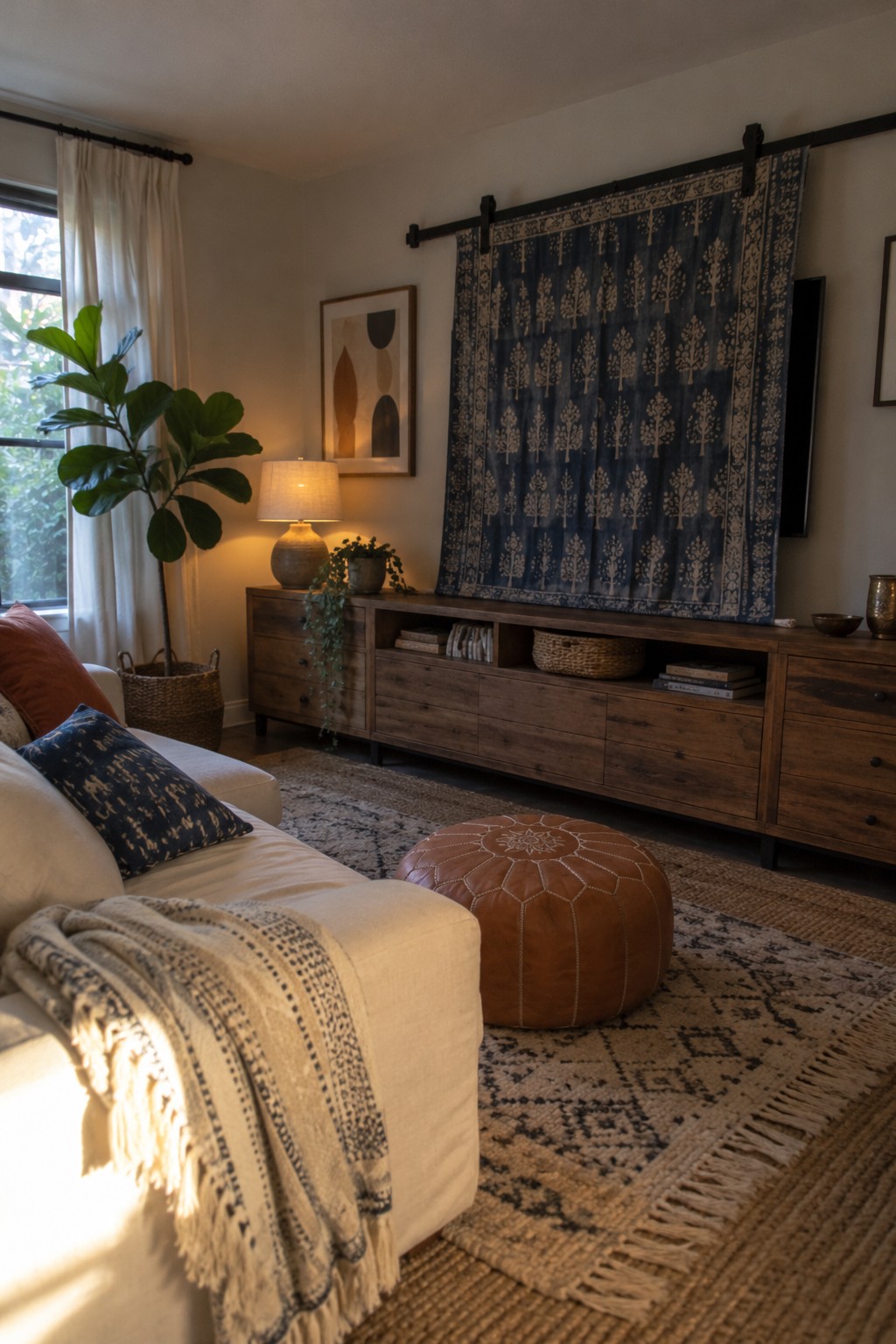
A fabric panel can hide a television when it is not in use and give the media area a more relaxed, boho feel. Here, a patterned textile hangs from a simple rail in front of the screen, making the TV less central without changing the room’s layout.
Choose a fabric that suits the room’s colors, and make sure the rail lets you move the panel easily when it’s time to watch. This works especially well above a low media cabinet, where the fabric can cover the screen while storage stays accessible.
Use Built-In Storage To Keep The TV Area Tidy

A long built-in cabinet makes the TV wall more useful without adding separate storage pieces around the room. The simple fronts keep everyday items out of sight, while the olive-green finish gives the cabinetry a relaxed, lived-in feel.
This approach works well in a living room where the TV shares space with books, games, or other household bits. Choose cabinet depth and shelf space to suit what you need to store, and leave enough room for cables and ventilation around your electronics.
Use Arched Cabinet Doors to Hide Media Storage

An arched cabinet can make media storage feel more like part of the room’s furniture than a standard entertainment unit. The curved, woven doors give the wall a relaxed boho look while keeping the contents out of sight.
This idea works well when a TV area shares space with a living room and you want the storage to blend in. Choose a cabinet with enough room for your devices, and check that the doors can open fully without blocking nearby seating.
Hide Media Equipment Inside a Floating Console

A long floating console can keep the TV area looking simple while giving everyday equipment a place to go. A lift-up compartment, like the one shown here, hides a device when it isn’t in use and keeps the top of the console clear.
This works well in a living room where you want storage without a bulky cabinet on the floor. Leave enough room inside for ventilation and easy access to cords, especially if you plan to store a game console or streaming equipment.
Let the Artwork Lead the TV Area

A large framed landscape can make a TV wall feel more like part of the living room than a spot built around electronics. Mounting the television just below the artwork keeps it available while letting the room’s decor set the tone.
This approach works best when the art is wide enough to relate to the TV and the screen can sit comfortably beneath it. Keep the console simple, and check that the artwork and TV don’t crowd each other.
Use a Fluted Cabinet to Keep Media Storage Out of Sight

A tall cabinet with fluted doors can give a TV area a calmer, less cluttered look while hiding media equipment and everyday items. The vertical grooves add texture, so the cabinet feels like furniture rather than a plain storage box.
This approach works well in a living room where you want the screen and its accessories to blend into the rest of the space. Choose a cabinet with enough room for your devices, and check that the doors allow for ventilation and easy access to cables.
Use a Carved Wood Cabinet for Media Storage

A carved wood cabinet can make the TV area feel more like part of the living room than a spot set aside for electronics. The detailed doors give the storage its own character, while keeping devices and everyday clutter out of view.
This approach works well in a boho room where natural materials are already part of the decor. Choose a cabinet with enough closed storage for your equipment, and check that it has space for ventilation and access to cables.
Use an Arched Niche to Set Apart the Media Area

A built-in arched niche can give a TV area a clear place in the room without making it feel like a large black screen is the main feature. The curved shape brings a softer look, while woven cabinet doors can conceal the screen or media equipment when they are not in use.
This idea suits a living room with a recessed wall or room for custom cabinetry. Keep the storage below the niche practical, with closed cupboards for devices and a few open shelves for books. For a simpler update, use the arched shape around a cabinet rather than building into the wall.
Make the TV Wall Feel Like Part of the Decor
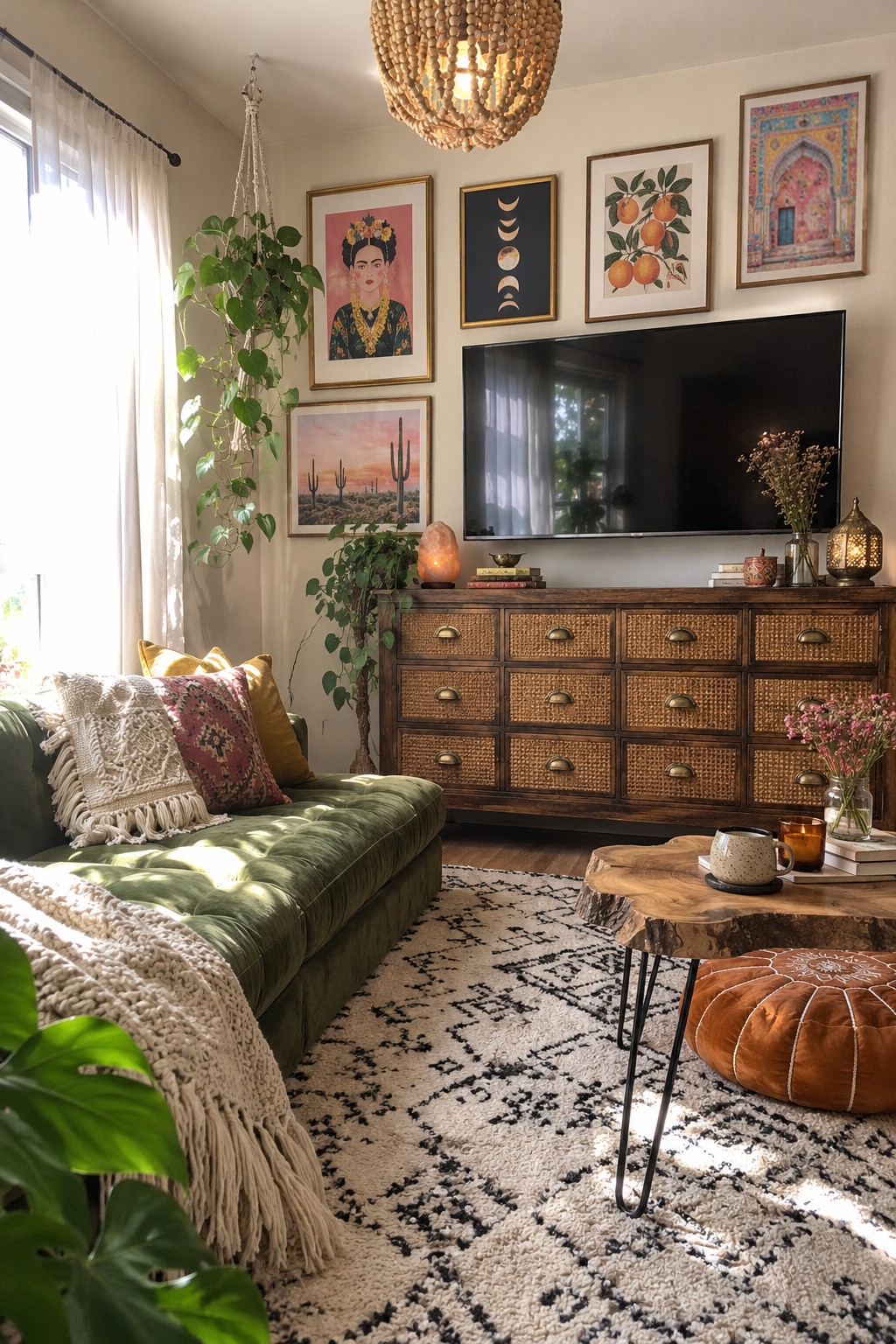
A TV can sit comfortably in a boho living room when the wall around it feels collected rather than built just for a screen. Here, framed artwork gives the area a more personal look, while a wide woven-front dresser keeps media storage tucked away behind its drawers.
Try this with a dresser that has enough surface space for a few small accessories, but leave room for the TV to remain easy to see. It suits a relaxed living room where you want practical storage without making the screen the only focus.
Use Cane Cabinet Doors for Boho TV Storage

Cane-front doors are a practical way to hide media equipment while keeping a built-in from looking like a solid wall of wood. Here, the perforated panels sit below the television, so the storage feels like part of the shelving rather than a separate cabinet.
This approach works well when you want a TV area to feel more like a living room than an entertainment center. Use cane or another breathable screen over equipment cupboards, and leave enough space inside for devices and ventilation.
Use a Tapestry to Make the TV Wall Feel More Like Decor

A large textile can give a living room wall the character of a feature wall, so a television does not have to be the main thing you notice. A patterned tapestry brings color and texture, while a low console below it can hold media equipment and keep the area tidy.
This idea suits a boho room where you want the TV area to feel less like a tech zone. Leave enough clear wall space for the screen, and choose a tapestry that can be moved aside or adjusted when you watch TV.
Use a Long Console to Keep Media Storage Tidy

A long media console gives the TV area a clear place for equipment and everyday items, while its closed cabinet doors keep the surface from looking cluttered. A fluted wood front suits a boho room without making the storage feel like a separate utility piece.
This approach works well along a wide wall, especially when you need room for books or a few small objects beside the TV. Choose a console with enough concealed space for your devices, and leave some of the top clear so it stays easy to use.
Use a Vintage Trunk as a Media Console
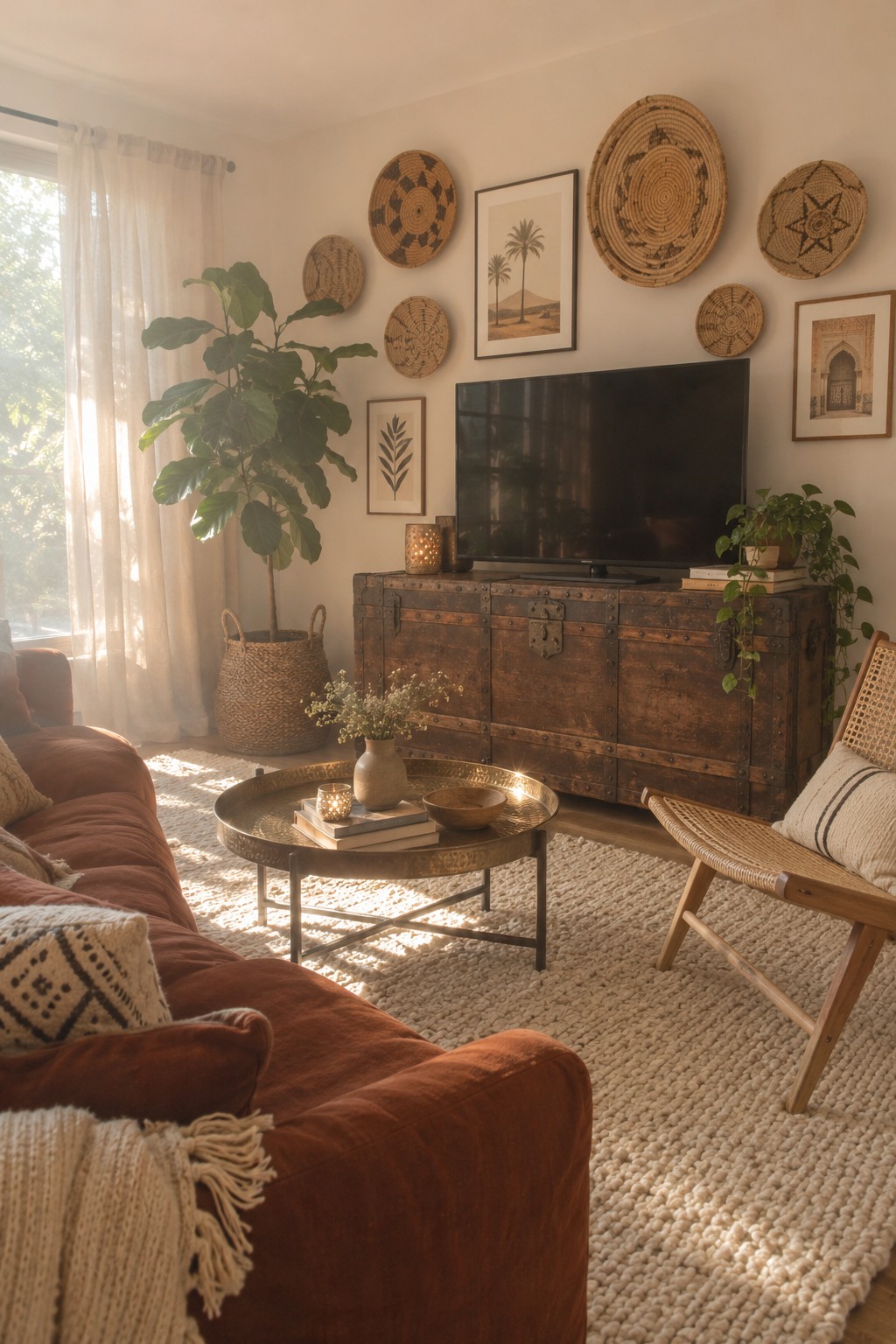
A sturdy vintage trunk can give a TV area useful storage without making it feel like a standard media setup. Its worn wood and old-fashioned hardware suit a boho room, while the broad top leaves space for the television and a few everyday items.
Choose a trunk that is low and wide enough to support the TV securely, and check that its lid or doors are easy to open. Leave room for cables and ventilation inside, especially if you plan to store electronics there.
Use a Large Wood Panel to Conceal the TV
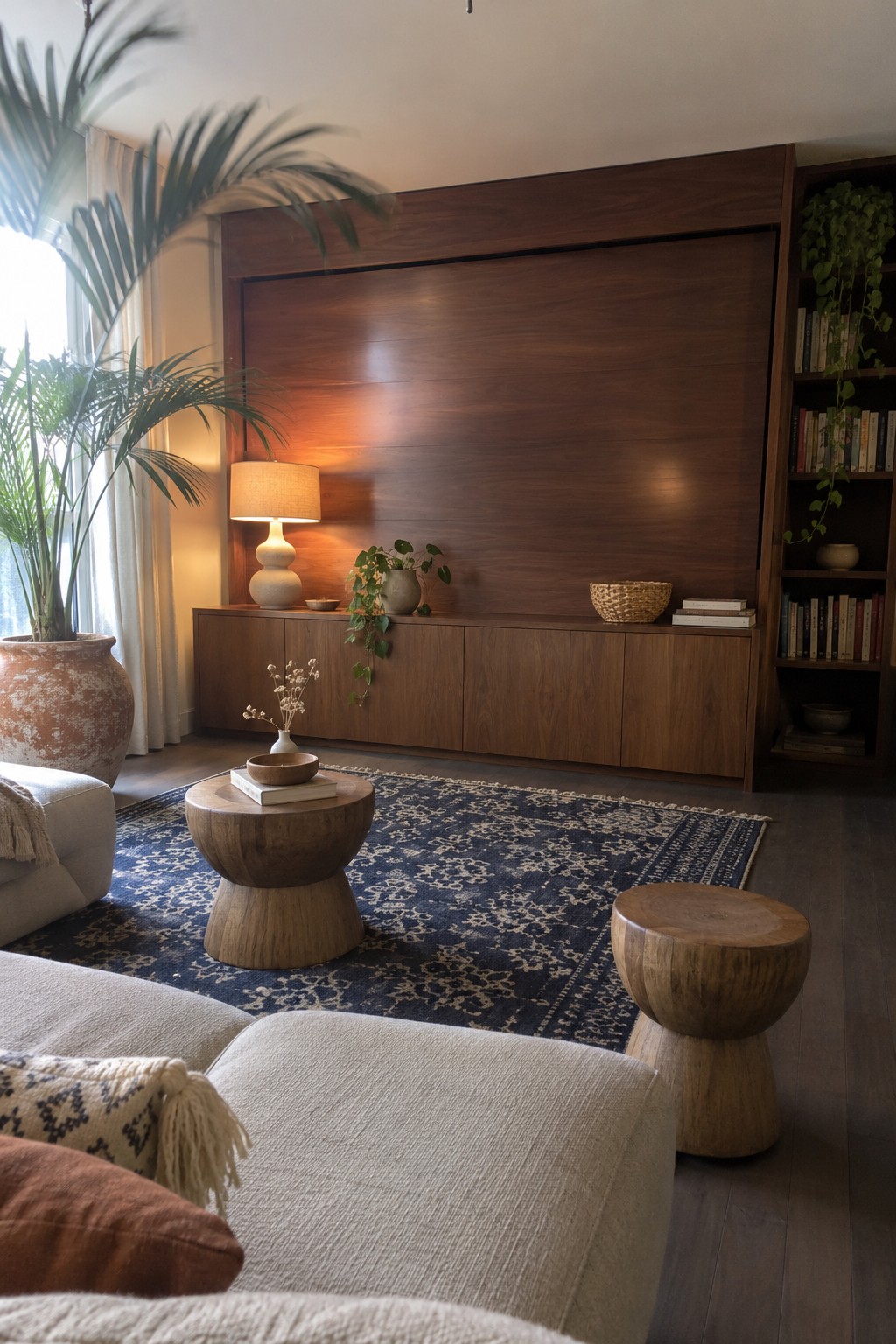
A full-height wood panel can make the TV area feel like part of the room’s built-in storage instead of a separate feature. When the screen is hidden behind a matching panel, the wall looks calmer and the media setup stays out of sight.
This approach works best when you have enough wall space for a broad cabinet surround. Keep the wood finish simple, and include closed cupboards below for devices and cords. A small gap for ventilation is useful if equipment sits inside.
Use Sliding Barn Doors to Hide the TV
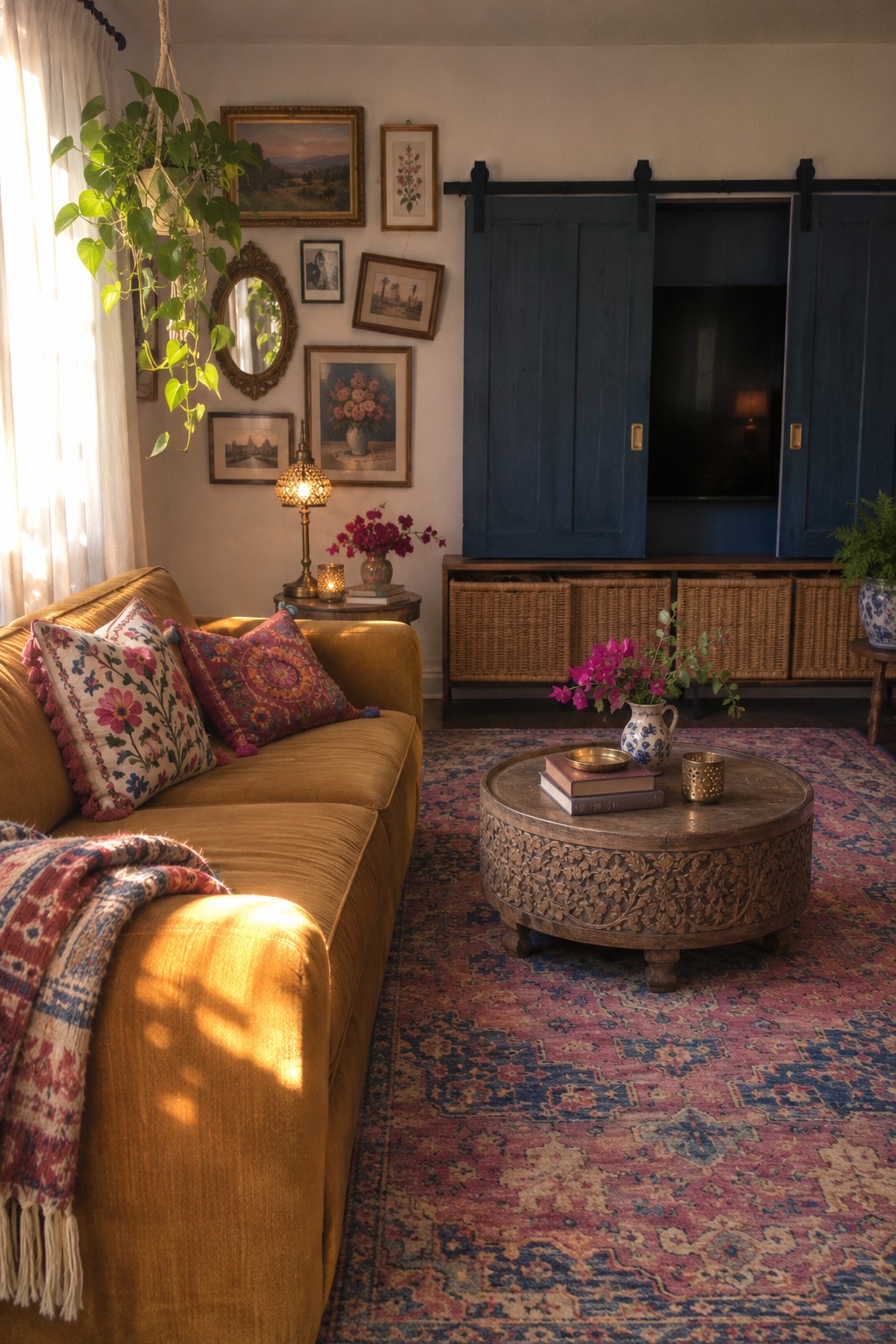
Sliding doors can cover a TV when it is not in use, so the media area feels less like the main focus of the room. Here, dark blue doors give the screen a place to disappear while keeping the storage wall useful.
This approach works well when there is room for the doors to slide across the opening. Choose a finish that suits the rest of the living room, and make sure the cabinet below has space for baskets or other media items.
Use a Cane Cabinet to Keep Media Storage Neat

A cane-front cabinet is a practical way to tuck media equipment out of sight while keeping the room’s boho style. The woven doors bring texture to the storage, so the cabinet feels more like furniture than a place to hide electronics.
Look for a cabinet with enough depth for your devices and openings or space at the back for cords and airflow. This approach works well in a living room where you want a TV area to feel less tech-focused, but check that remote controls can still reach any equipment inside.
Use Shelving to Make the TV Part of the Room

A wall of built-in shelves can give the TV a natural place to sit, instead of making it the only focus. Here, the dark wood shelves surround the screen, while woven cabinet doors below provide closed storage for media equipment and other everyday items.
This approach works well when you have room for a full-height bookcase or can add custom built-ins. Keep the shelves around the TV from getting too crowded, and use lower cupboards to tuck away anything you do not want on display.
Use a Tapestry to Keep the TV Wall Decorative

A large tapestry can make a TV area feel less like the room revolves around a screen. Choose a textile with a pattern and colors that suit the rest of the room, and hang it where it can cover the TV when it is not in use.
In a boho living room, this idea works especially well above a low media cabinet. Make sure the tapestry can be moved easily when you want to watch TV, and leave enough space around it so the fabric does not catch on the screen or equipment.
Frequently Asked Questions
Q: How can I hide the TV without making it awkward to watch?
A: Try sliding panels, cabinet doors, or a woven screen that opens fully when you’re watching. Check that the screen won’t block the view from your usual seat, and leave enough room for the TV to breathe.
Q: What’s a simple way to hide all the cords?
A: Run cords through a cable channel painted to match the wall, or route them behind a media cabinet. Keep a power strip inside the cabinet, but leave it easy to reach.
Q: Can a small living room still fit concealed media storage?
A: Yes. A low cabinet with closed doors can hide devices without taking up much visual space. Choose one that’s wider than the TV stand area only if you still have a clear path around it.
Q: How do I keep a boho TV area from looking too cluttered?
A: Give baskets, plants, and decor a little breathing room, and let the storage do most of the hiding. A few textured pieces feel more relaxed than a shelf packed with accessories.
