

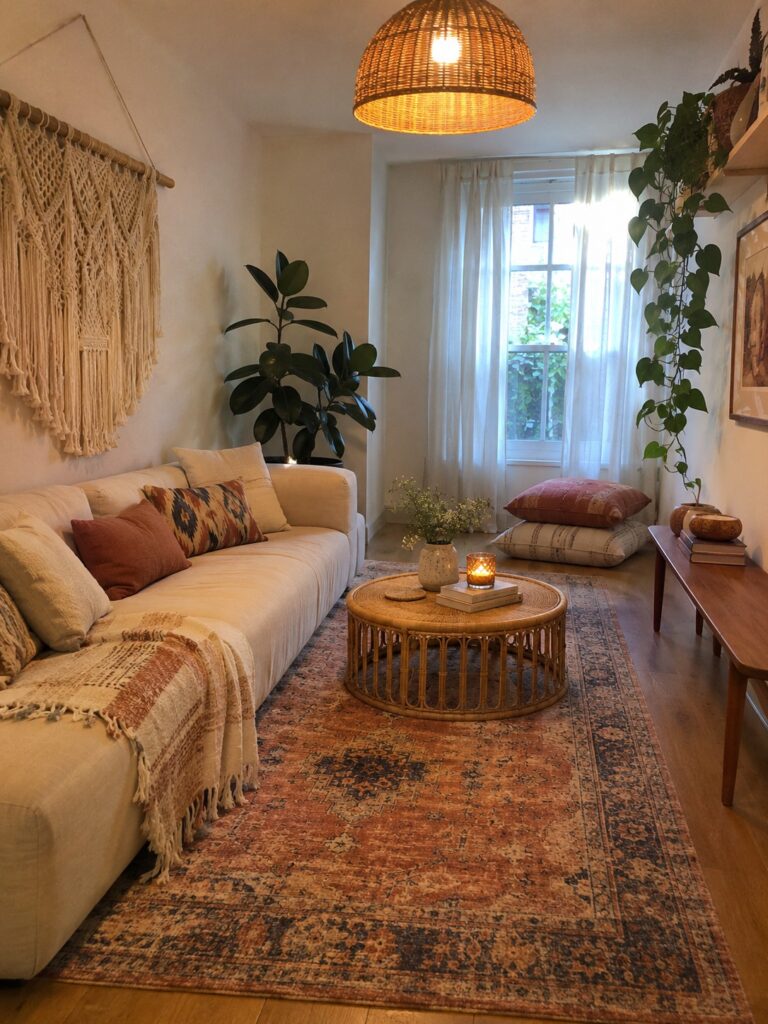
Narrow living rooms can feel awkward when the sofa blocks the path or every piece of furniture seems to compete for space.
I find that a good layout starts with keeping the main walkway clear, then letting texture and color bring in the relaxed, layered feel of boho style.
A low sofa, a rug that defines the seating area, and furniture with open legs can make a room feel easier to move through without making it look sparse.
The first thing I notice in a well-arranged room is whether it feels comfortable to enter and settle into, not how many decorative pieces it holds.
Some of these layouts are worth adapting even if your room has an unusual doorway or a radiator to work around.
Use a Long Rug to Guide a Narrow Living Room Layout

A long rug can help a narrow living room feel organized without breaking it into smaller sections. Let it run along the main seating area, leaving a little floor visible around the edges. This keeps the walkway clear and gives the furniture a natural place to sit.
Choose a pattern that suits the room’s colors, but check the rug’s size before buying. In a tight space, a rug that is too wide can make it harder to move around. A faded Persian-style rug in warm tones is one way to bring in boho character without adding bulky furniture.
Keep The Main Walkway Open

A narrow living room can feel easier to use when the sofa sits along one wall and the chairs stay to the side, leaving a clear route through the middle. This arrangement keeps the seating close without making the room feel blocked.
Choose slim chairs and a small coffee table, then leave enough space to walk between them. A long rug can help define the seating area, but avoid letting bulky furniture crowd the path.
Use Built-Ins to Make a Narrow Room Work Harder
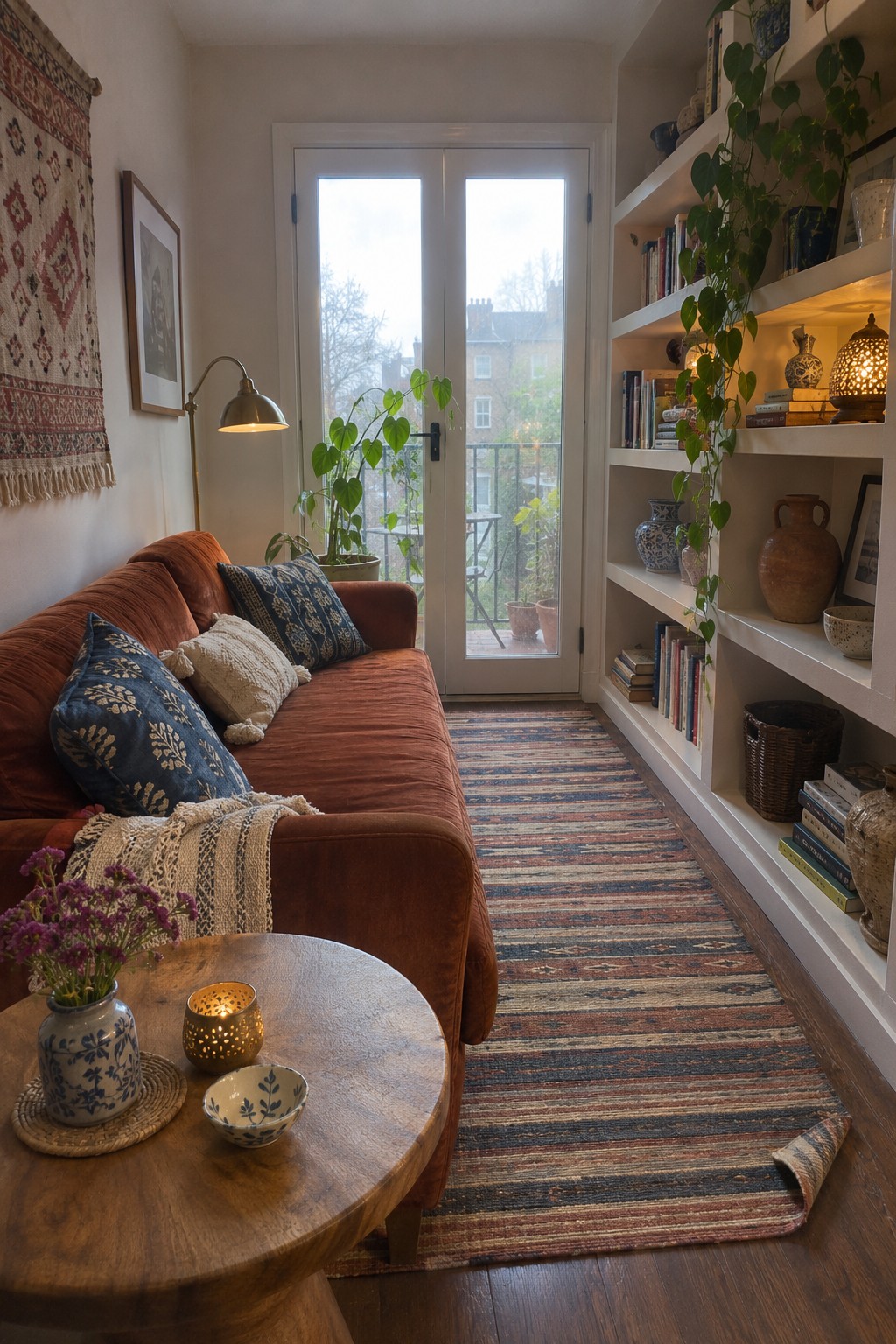
Built-in shelves can make good use of a narrow living room without taking up floor space. Here, the long shelving wall provides room for books and decor, while the sofa stays on the opposite side.
If you’re planning a similar setup, keep the shelves shallow so the walkway remains comfortable. A runner can help define the path through the room, but leave enough clear space to move around easily.
Keep the Main Path Clear
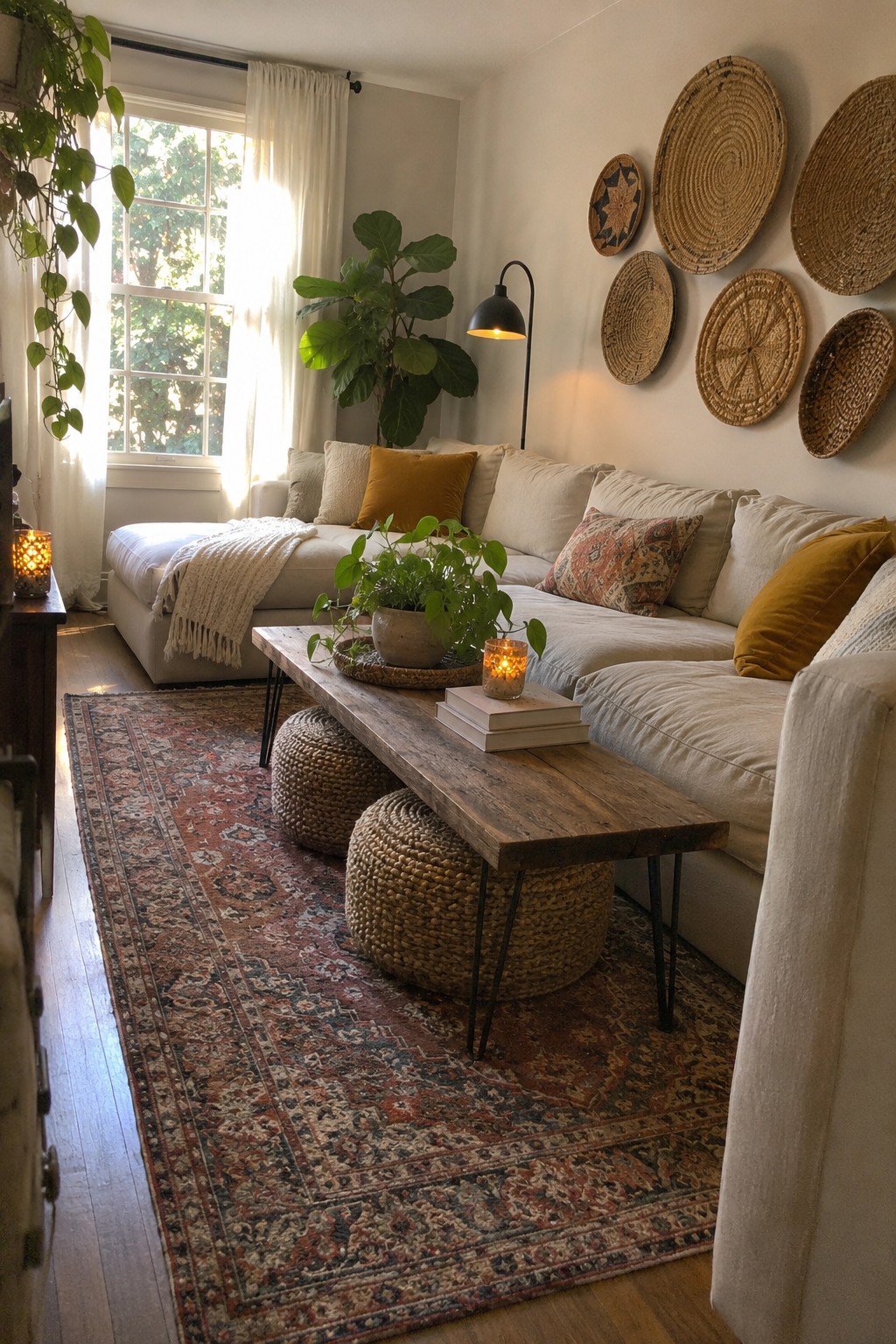
A narrow living room can still feel comfortable when the largest pieces sit along the walls and leave a clear route through the middle. A long sofa works well here, while a slim coffee table gives the room a place to set things without blocking the walkway.
Try a narrow rectangular table, and tuck small poufs beneath it when they are not in use. This arrangement suits a long room where space is limited, but leave enough room to walk past the table without squeezing.
Arrange Seating Along One Side

A sofa placed against the longer wall can leave a narrow living room feeling easier to move through. It gives the seating a clear place without breaking up the room, while patterned cushions bring in a boho look without taking up extra floor space.
Keep the coffee table modest in size so there is still room to walk around it. This arrangement suits small living rooms where the sofa needs to do most of the seating work.
Arrange Seating Along the Walls

In a narrow living room, placing the main seats along opposite walls can leave a clear path through the middle. A sofa across from a window bench makes use of the room’s length without crowding the walkway.
Keep the seats fairly shallow, and use a rug to define the shared area. This layout suits a long, compact room, but leave enough space between the furniture for people to pass comfortably.
Arrange Seating Along the Sides of a Narrow Room

Placing sofas along opposite walls leaves a clear route through the middle of a narrow living room. The seating still feels close enough for conversation, while the open center makes it easier to move between rooms.
A long rug can help define the shared area, and a small coffee table keeps the arrangement practical without taking over the walkway. Leave enough space around the table to pass through comfortably.
Use a Narrow Sofa to Keep the Room Open
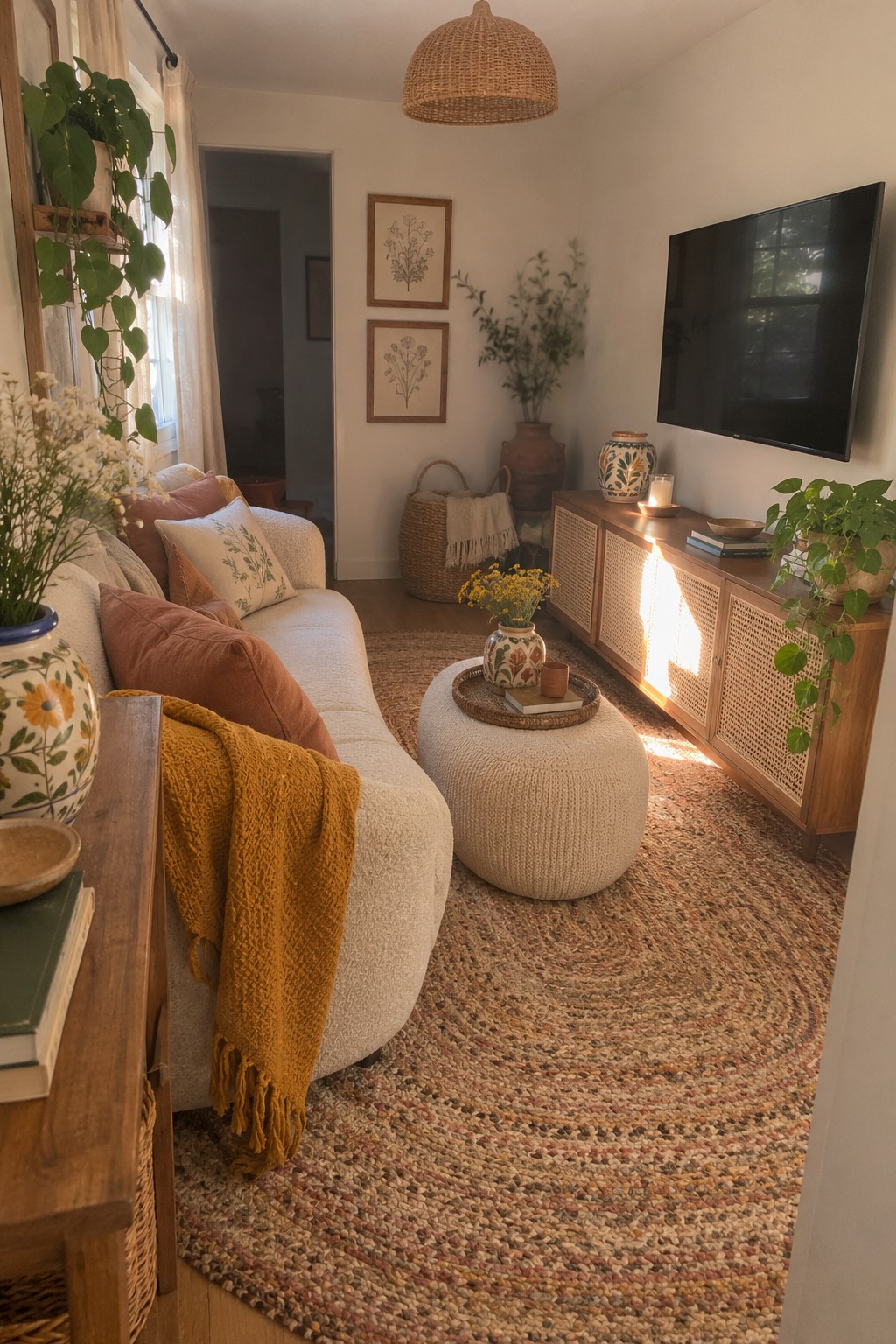
A sofa with a slim profile can make a narrow living room feel easier to move through. Here, the seating runs along one side, leaving a clear route toward the media cabinet rather than dividing the room in half.
Try this layout when the room is long and narrow, and keep the main furniture close to the walls. A rounded ottoman can take the place of a bulky coffee table, but leave enough room to walk around it comfortably.
Use a Narrow Coffee Table to Keep the Seating Area Open

A slim coffee table can give a narrow living room a useful surface without taking up too much of the walkway. Here, the long wooden table sits in front of the sofa, leaving room to move around the seating area.
Look for a table that is narrower than the sofa and easy to walk past. Keeping extra stools and floor cushions to the edges can help the center stay clear.
Use Slim Seating to Keep the Center Open

A narrow living room can feel easier to use when the chairs sit toward the edges and the middle stays open. Here, two compact chairs face the sofa across a small coffee table, leaving a clear route through the room.
Choose chairs with open sides or woven seats so they take up less visual space, and keep the table modest in size. This arrangement suits a long room where you want a conversation area without blocking the path.
Use a Window Seat to Save Floor Space

A window seat makes good use of the far end of a narrow living room. It offers extra seating without needing another chair in the main walkway, and it gives the room a clear place to gather.
If you have a bay window or a deep window alcove, a simple built-in bench can work especially well. Add a few cushions, but keep them easy to move so the seat can serve as a perch or a spot to stretch out.
Use a Daybed as Narrow Room Seating
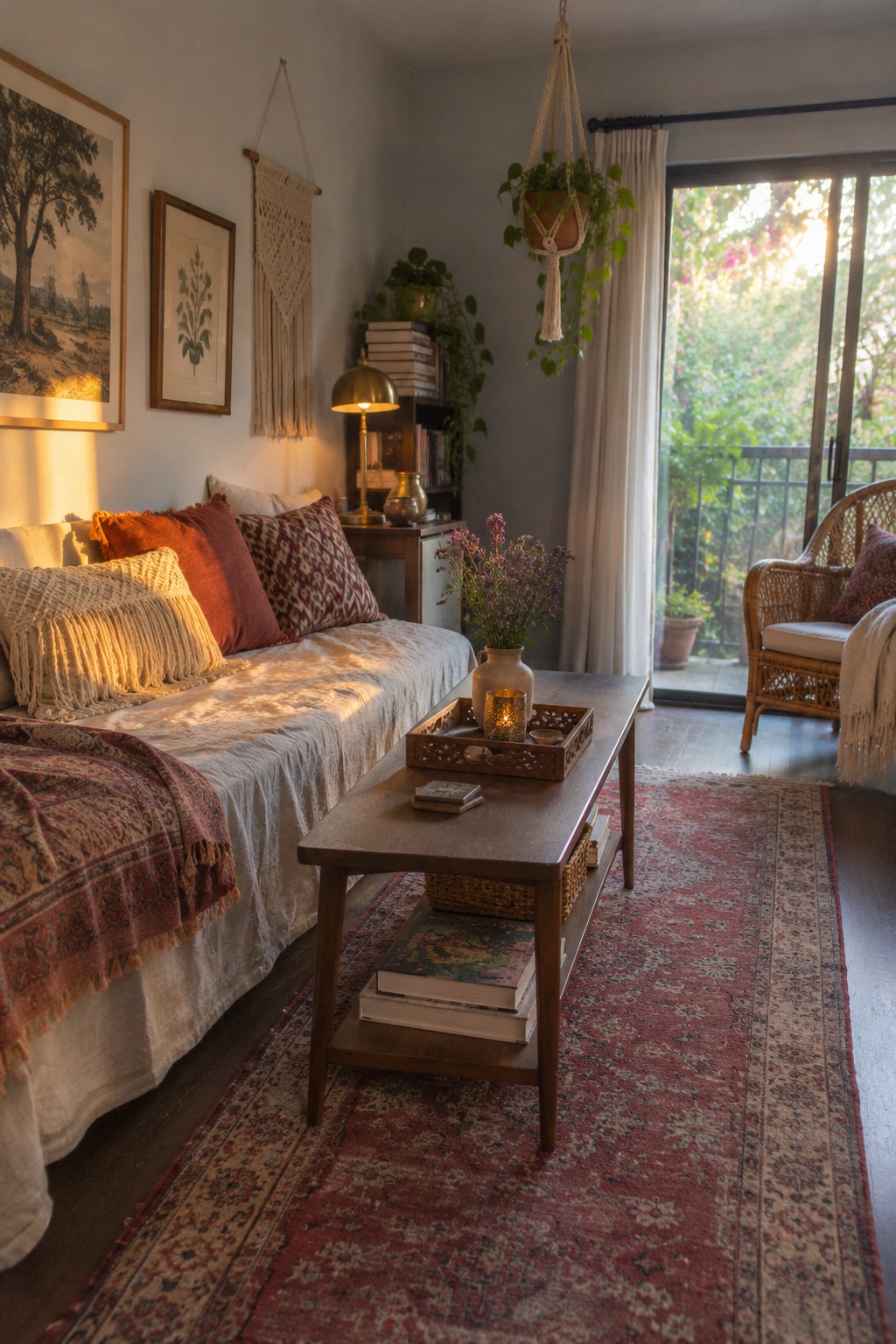
A daybed can make a narrow living room feel less crowded than a bulky sofa, while still giving you a comfortable place to sit or stretch out. A simple cover and a few cushions make it easy to use as everyday seating.
Keep the table in front slim enough to leave a clear route through the room. This setup suits a long, narrow space where seating needs to sit close to the wall.
Use a Corner Sofa to Make the Most of a Narrow Room
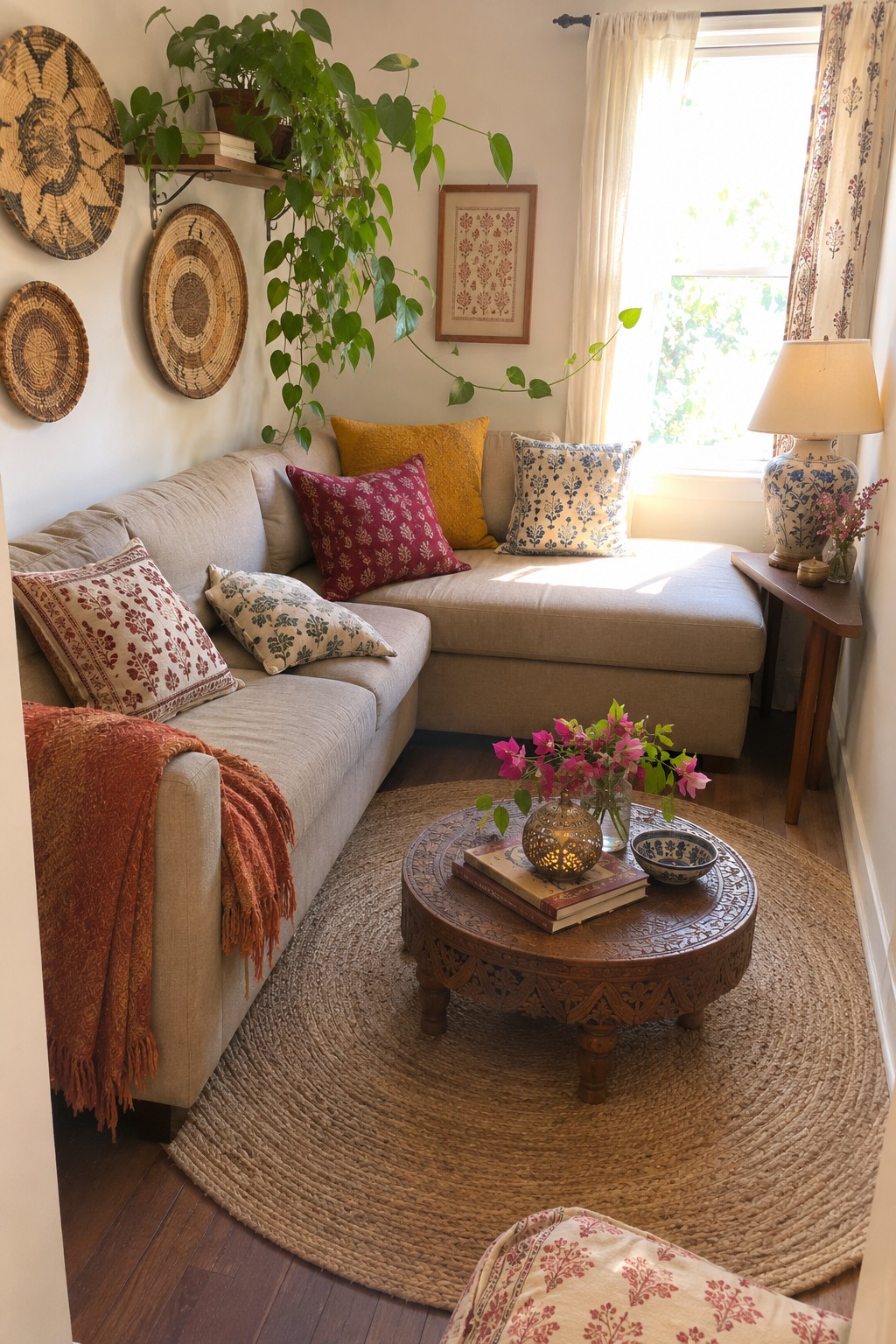
A corner sofa can turn a narrow living room into a comfortable seating area without needing chairs on every side. The L-shaped layout uses the room’s edges and leaves a clear spot in the middle for a coffee table.
This works well when the sofa can sit against two walls, as shown here. Choose a compact style and check that the longer section does not block the main path through the room.
Use Opposite Walls for a Narrow Room Layout

Placing seating along opposite walls leaves a clear route through a narrow living room. The arrangement feels easy to use, and both sofas can still face the center of the room.
A long rug can help define the shared seating area without blocking the walkway. Keep tables compact, and leave enough space between the furniture for people to pass comfortably.
Use a Recessed Nook for Compact Seating

A small recessed nook can make a narrow living room feel like it has a proper seating area without taking over the walkway. A compact sofa tucked into the alcove uses space that might otherwise go unused.
This works best when the sofa fits the nook closely and the route through the room stays clear. Keep the furniture in front simple, such as a slim upholstered ottoman, so the seating area remains easy to move around.
Use a Window Seat to Extend the Seating
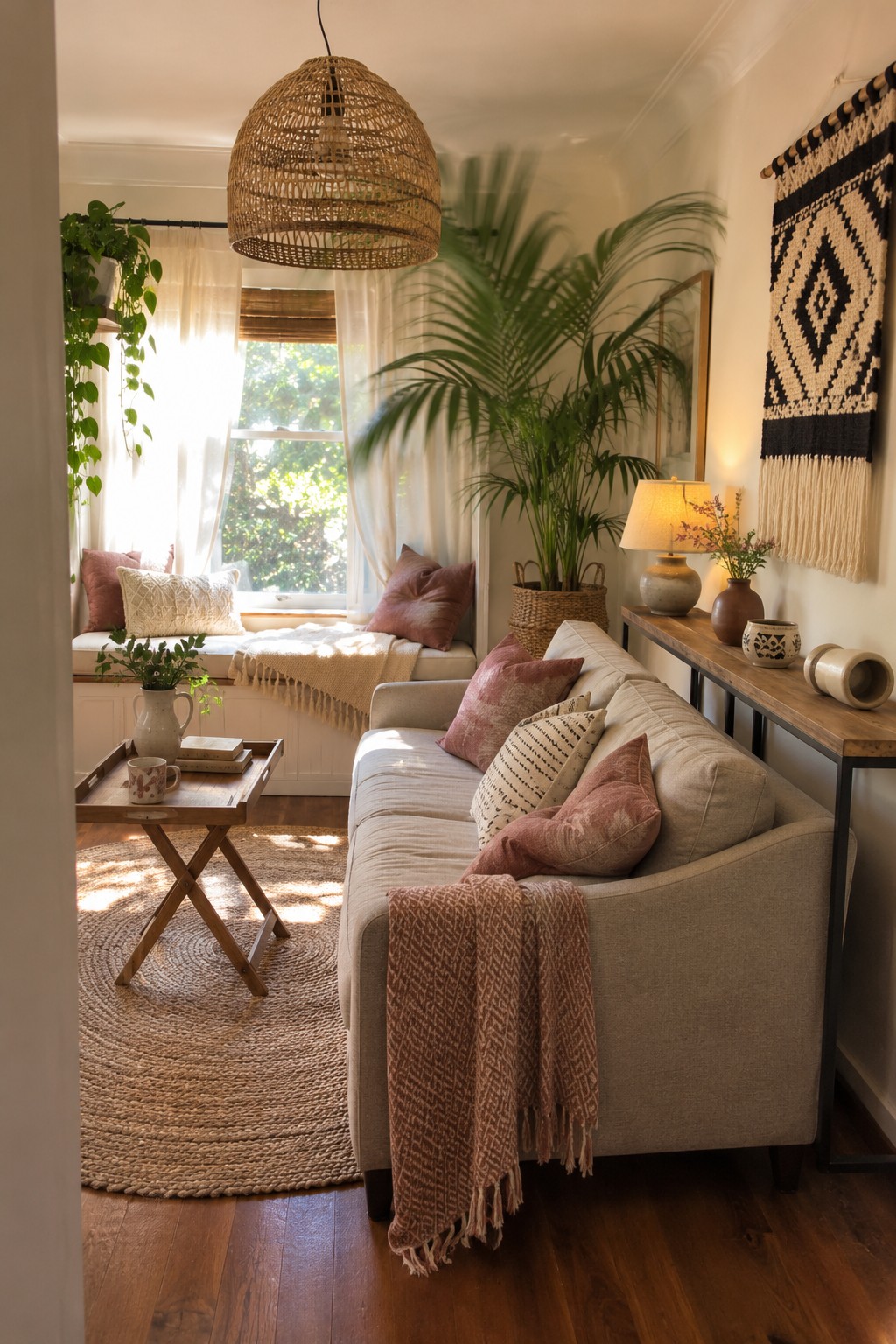
A window seat can make a narrow living room more useful without taking up space in the middle. It gives you another place to sit and helps the room feel like it has a clear purpose beyond the sofa.
If you have a deep windowsill or room for a simple built-in bench, add a few cushions and keep the seat fairly uncluttered. In a rental, a low bench can do much the same job. Just leave enough space for people to pass between the window seat and the main seating area.
Use a Narrow Console to Keep the Walkway Open

In a narrow living room, a slim table along the wall can offer a spot for books and plants without taking up the room’s main path. It keeps useful storage and display space off to one side, so the seating area feels easier to move through.
Choose a console that leaves a comfortable walkway between it and the sofa. A shallow piece works best, especially in a small room where deeper furniture can make the route feel cramped.
Use a Narrow Coffee Table to Keep the Walkway Open

In a narrow living room, a slim coffee table can make the seating area useful without blocking the route through the room. This long wooden table sits in front of the sofa, leaving space to move along either side.
Choose a table that is narrower than the sofa and keep its top fairly uncluttered. This layout suits a long room where seating runs along one wall, but leave enough room to walk comfortably between the table and the sofa.
Use a Long Rug to Define the Seating Area

A long patterned rug can help a narrow living room feel like one clear seating zone instead of a passageway. Here, it runs between the sofa and the sideboard, giving the furniture a shared area without blocking the route through the room.
Choose a rug that leaves a little floor visible along the edges, and keep its length in line with the room. In a tight layout, avoid letting the rug creep too far beneath bulky furniture or into the main walkway.
Use Floor Cushions for Flexible Seating
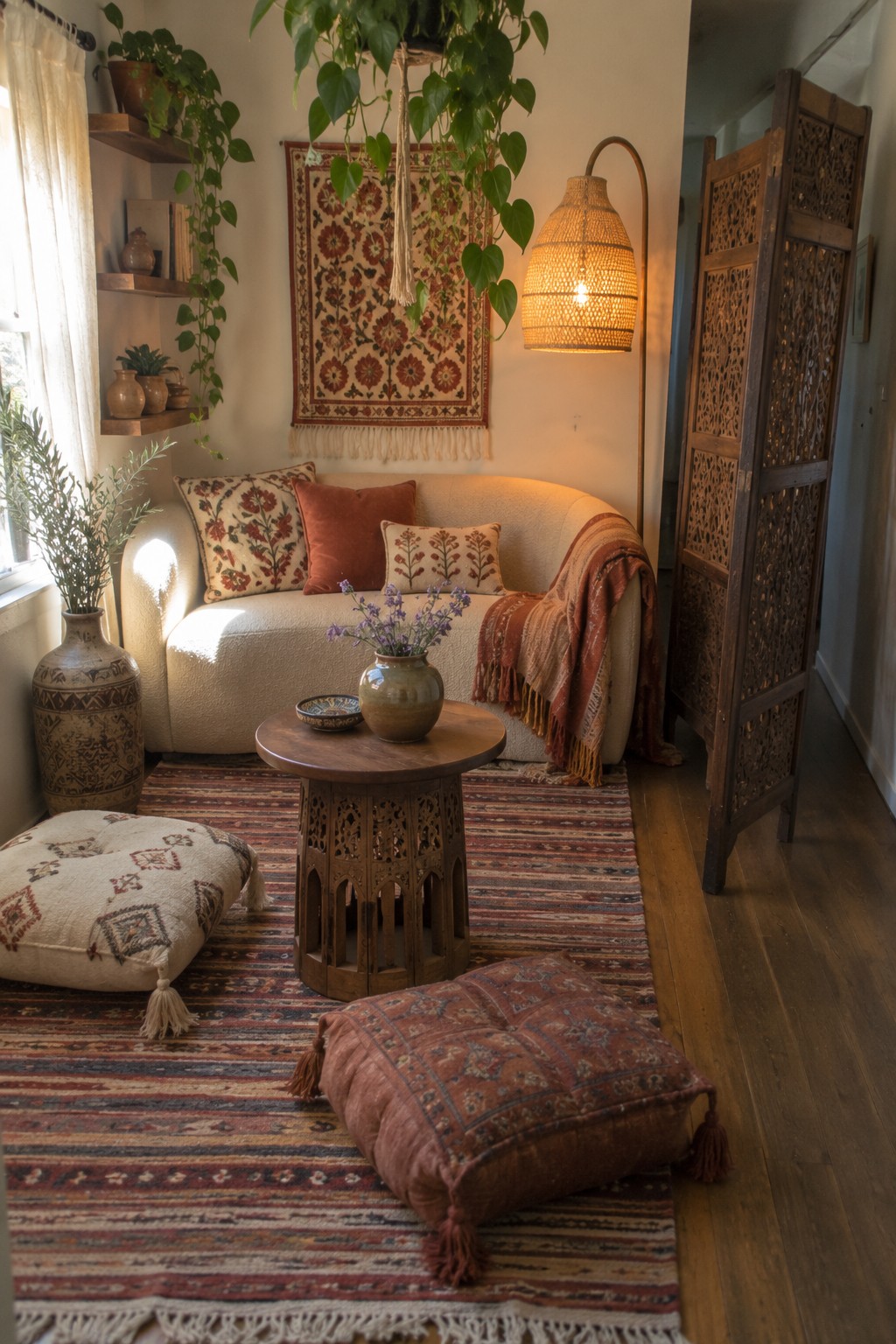
Floor cushions give a narrow living room extra places to sit without taking up much room all the time. They can be moved around as needed, leaving the center of the space easier to use than a row of bulky chairs might.
Choose cushions that tuck beside the sofa or under a table when they are not in use. A small round coffee table helps keep the seating area usable, but leave a clear path through the room.
Use a Long Rug to Define a Narrow Seating Area
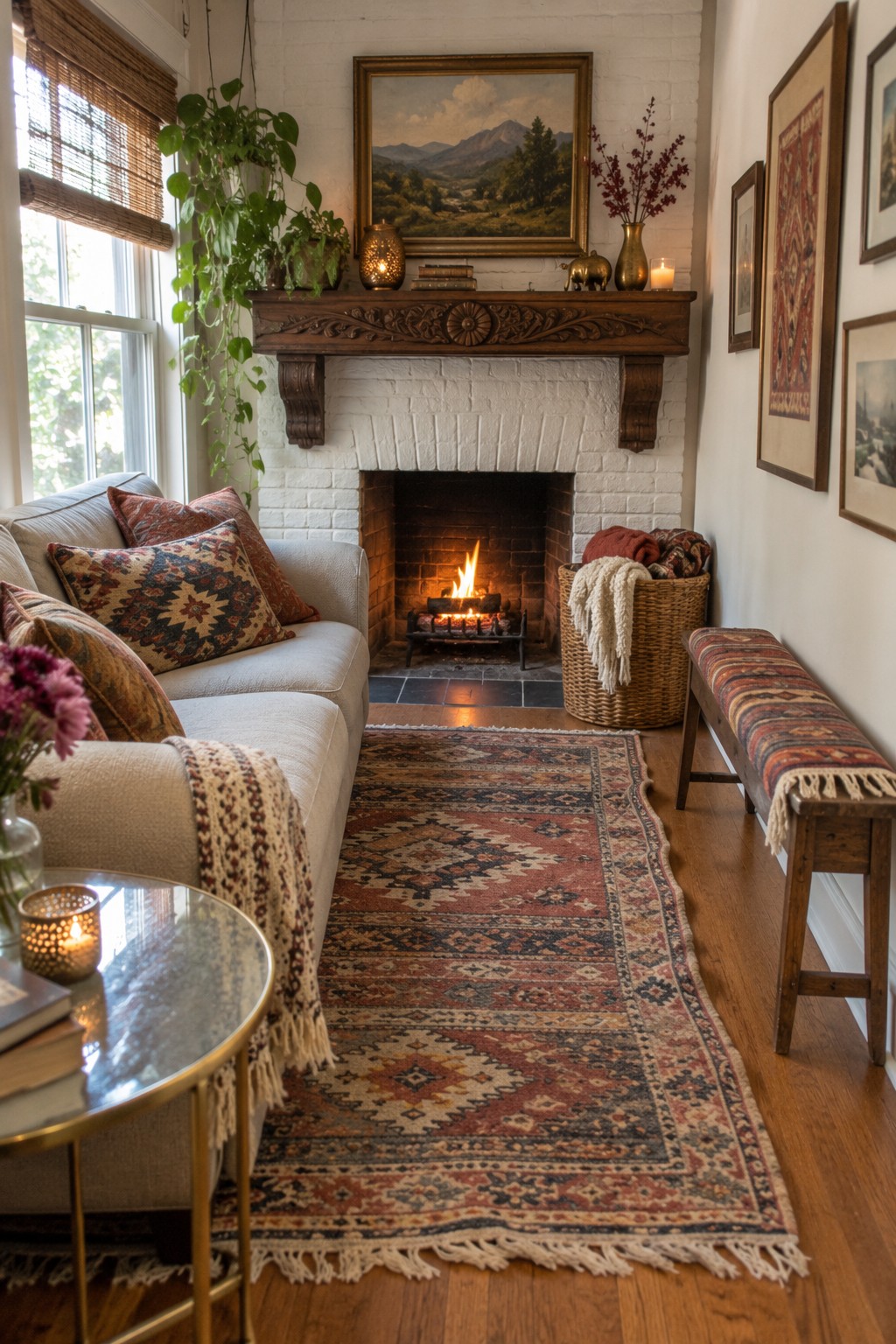
A long patterned rug can help a narrow living room feel like one clear seating area instead of a passageway. It gives the sofa and nearby furniture a shared visual boundary without taking up any extra floor space.
Choose a rug that leaves a strip of floor visible along the sides, and line it up with the room’s length. In a small room, avoid letting the rug push furniture into the walking path.
Use a Long Rug to Define a Narrow Seating Area
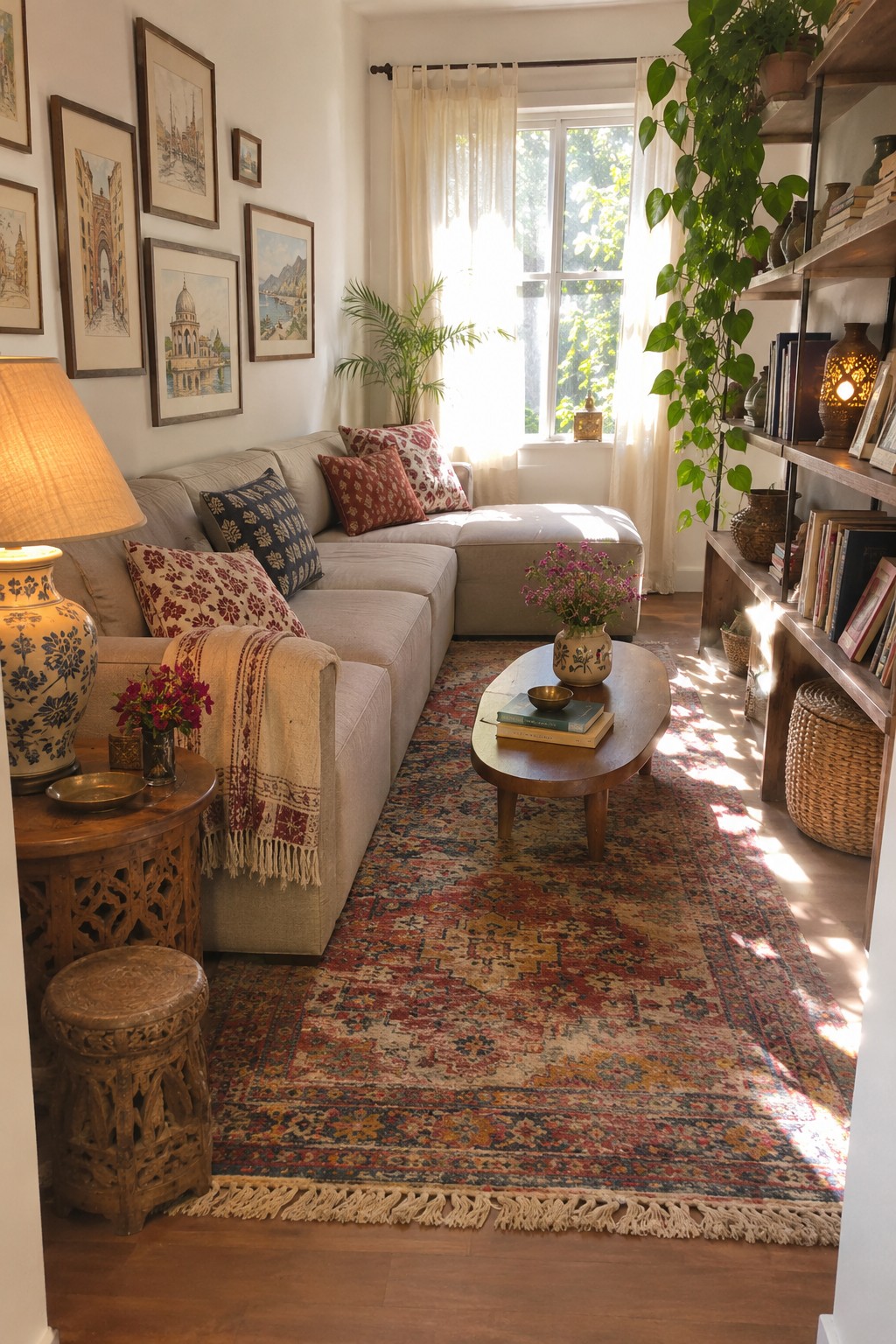
A long rug can help a narrow living room feel like one clear seating area instead of a passageway. Here, it runs alongside the sofa and leaves a small strip of floor open near the shelves, so the room still has a usable route through it.
Choose a rug that fits the length of the seating zone, but leave some floor visible at the edges. A faded, patterned rug suits boho rooms well, though a busy pattern can feel crowded if the room already has lots of color.
Frequently Asked Questions
Q: How can I fit a sofa in a narrow boho living room without blocking the walkway?
A: Place the sofa along the longest wall, then keep a clear path beside it to the door or next room. A slim, raised-leg sofa helps the space feel open and leaves room for a small woven rug underneath.
Q: What kind of coffee table works in a tight layout?
A: Try a round or oval table so you can move around it without catching your hips on sharp corners. A small pouf can also work as a footrest, extra seat, or flexible surface with a tray on top.
Q: How do I add boho texture without making the room feel crowded?
A: Stick to a few layered pieces, like a patterned rug, textured cushions, and one woven wall hanging. Keep larger surfaces fairly simple so the room still has some breathing space.
Q: Where should I put plants in a narrow living room?
A: Use a corner, a windowsill, or a hanging planter rather than lining the walkway with pots. A taller plant can draw the eye upward without taking up much floor space.
