

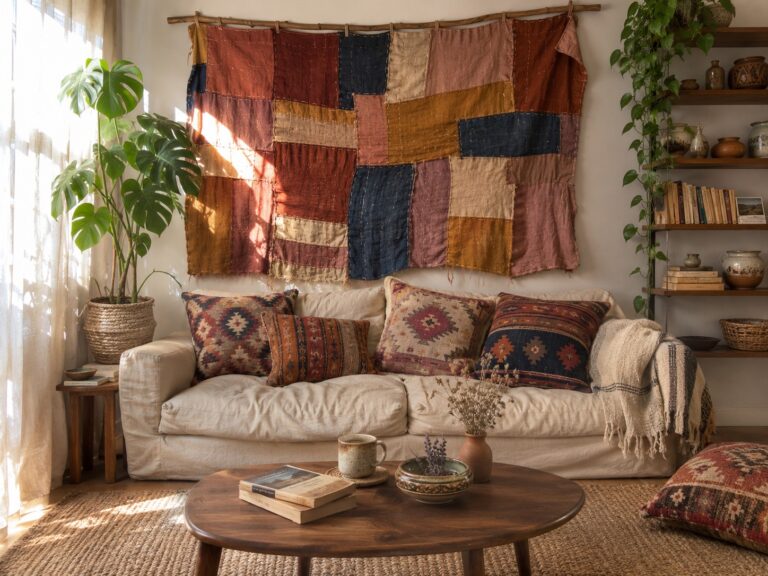
A living room can feel warm and collected without buying a whole new set of decor, especially when leftover fabric adds color and texture in small, thoughtful ways.
I find that handmade details work best when they echo something already in the room, like a cushion color, a favorite pattern, or the soft layers that make a seating area feel comfortable.
Fabric scraps can become wall hangings, pillow covers, garlands, and other accents that bring a relaxed boho feel while making use of pieces that might otherwise go unused.
The key is to mix patterns with enough shared colors or textures to keep the room feeling settled rather than busy.
I’d start with a simple project that fits the space, then save the more playful ideas for spots that could use a little extra character.
Make a Patchwork Wall Hanging From Fabric Scraps
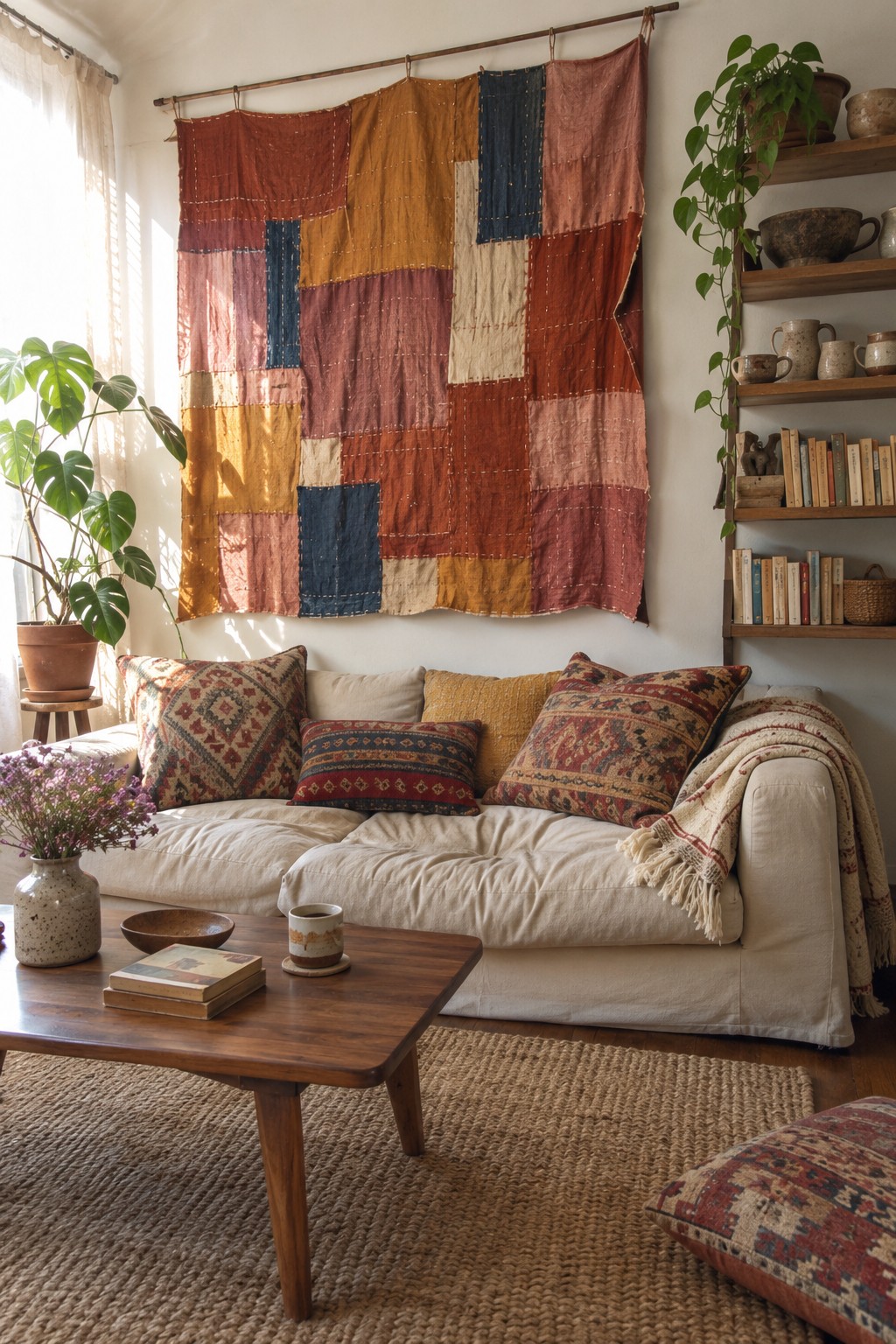
A patchwork wall hanging is a practical way to use fabric pieces that are too small for larger projects. Choose a few colors and sew the scraps into simple blocks. The varied shapes give the wall a relaxed, handmade look.
Hang the finished piece from a wooden rod above a sofa or bed. Lightweight cotton and linen are easy to stitch, but add a backing if the scraps are thin or the hanging needs more structure.
Make a Patchwork Throw From Fabric Scraps
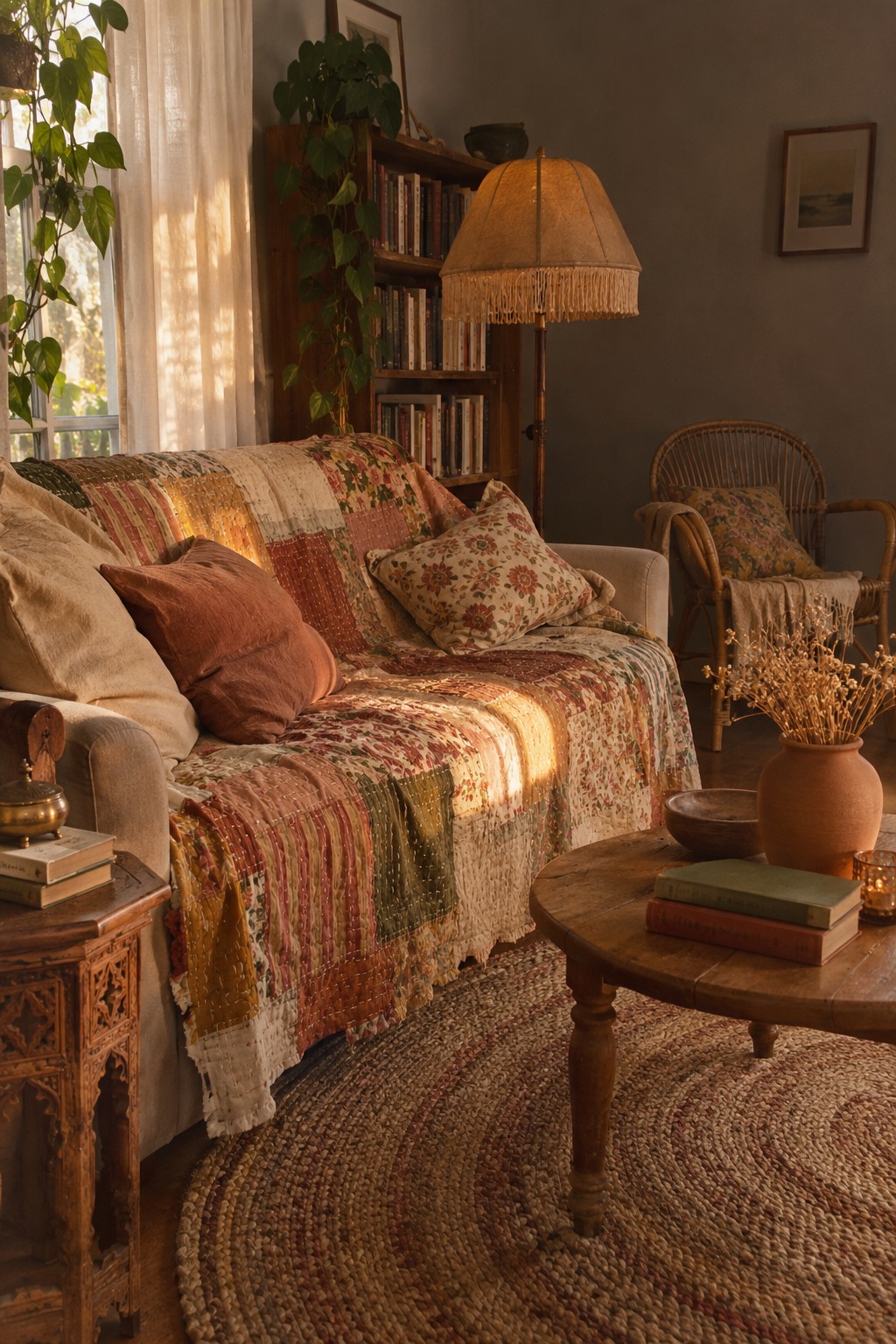
A patchwork throw is an easy way to use fabric scraps and give a plain sofa a more personal look. Mixing small floral prints with solid pieces keeps the finished blanket relaxed rather than overly matched.
Cut scraps into simple squares or rectangles, then sew them into rows and add a backing fabric. It works well as a sofa cover or a light blanket. Use pieces of similar weight so the throw hangs evenly and wears well.
Make Fabric Scrap Bunting for a Boho Living Room
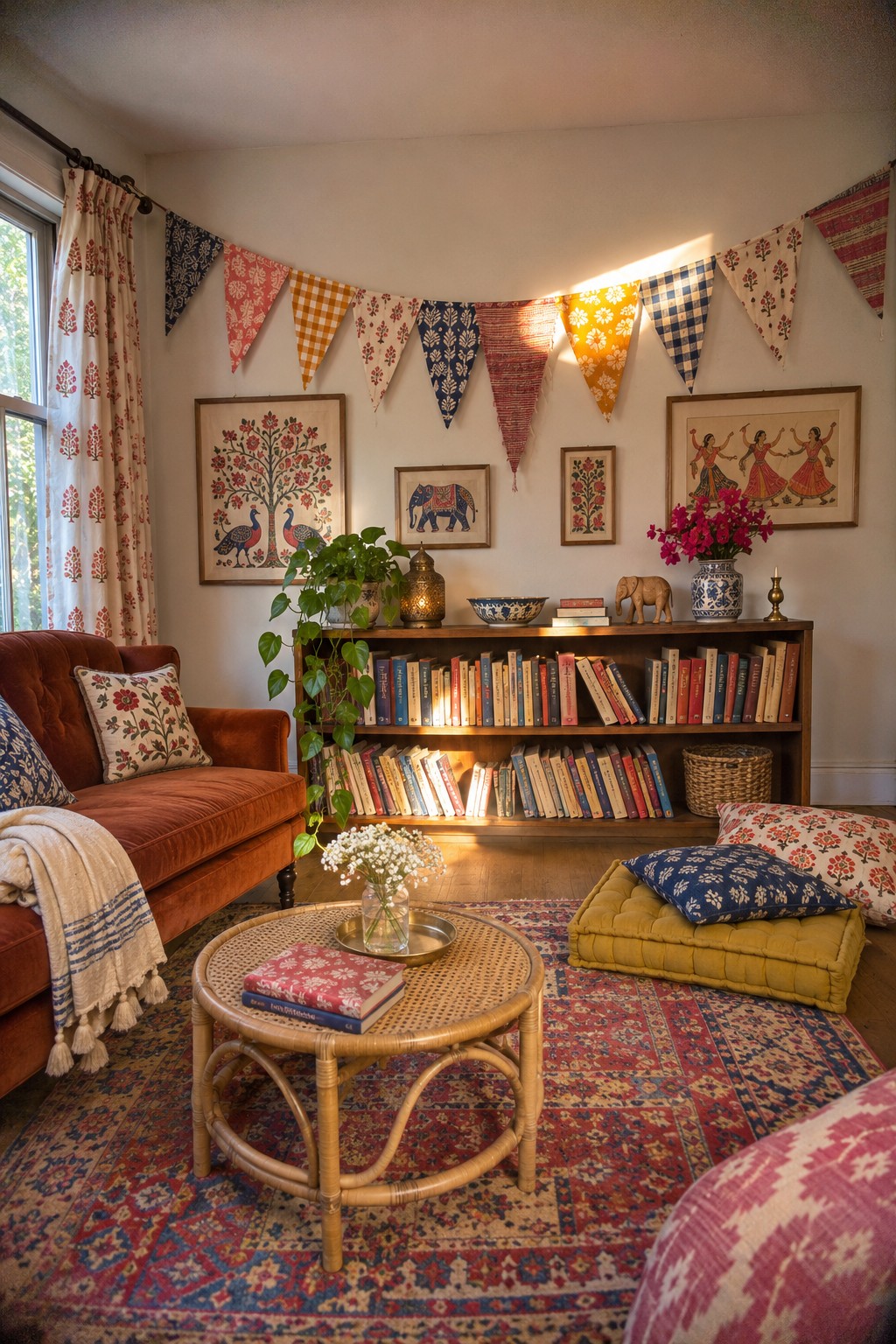
Fabric scrap bunting is an easy way to bring mixed patterns into a room without buying new decor. The different prints give a plain wall a handmade look, and small pieces of leftover fabric are enough to make a useful length of it.
Cut fabric into matching triangles and sew or glue them onto sturdy ribbon or cord. Hang the bunting above a bookcase or sofa, and keep the rest of the wall fairly simple so the patterns don’t compete.
Make Patchwork Pillows From Fabric Scraps
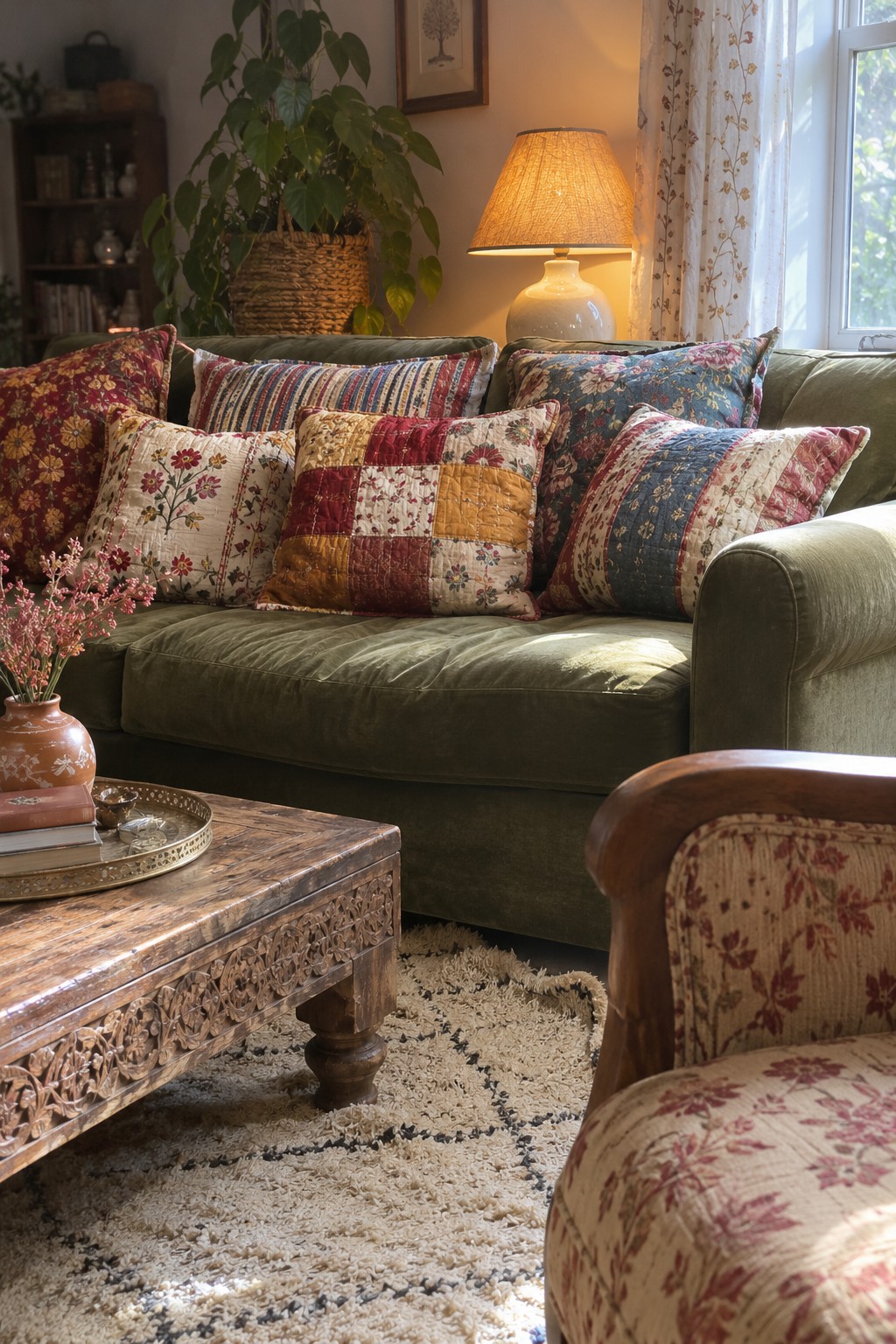
Patchwork pillows are a practical way to use small fabric leftovers and bring a handmade feel to a living room. Mixing floral prints, stripes, and plain pieces can make each cushion a little different while still tying the seating together.
Use sturdy scraps in colors that already appear in the room, and sew them into simple squares or strips before making the pillow covers. A few cushions are usually enough; leave some solid upholstery visible so the patterns have room to stand out.
Make a Patchwork Ottoman Cover From Fabric Scraps
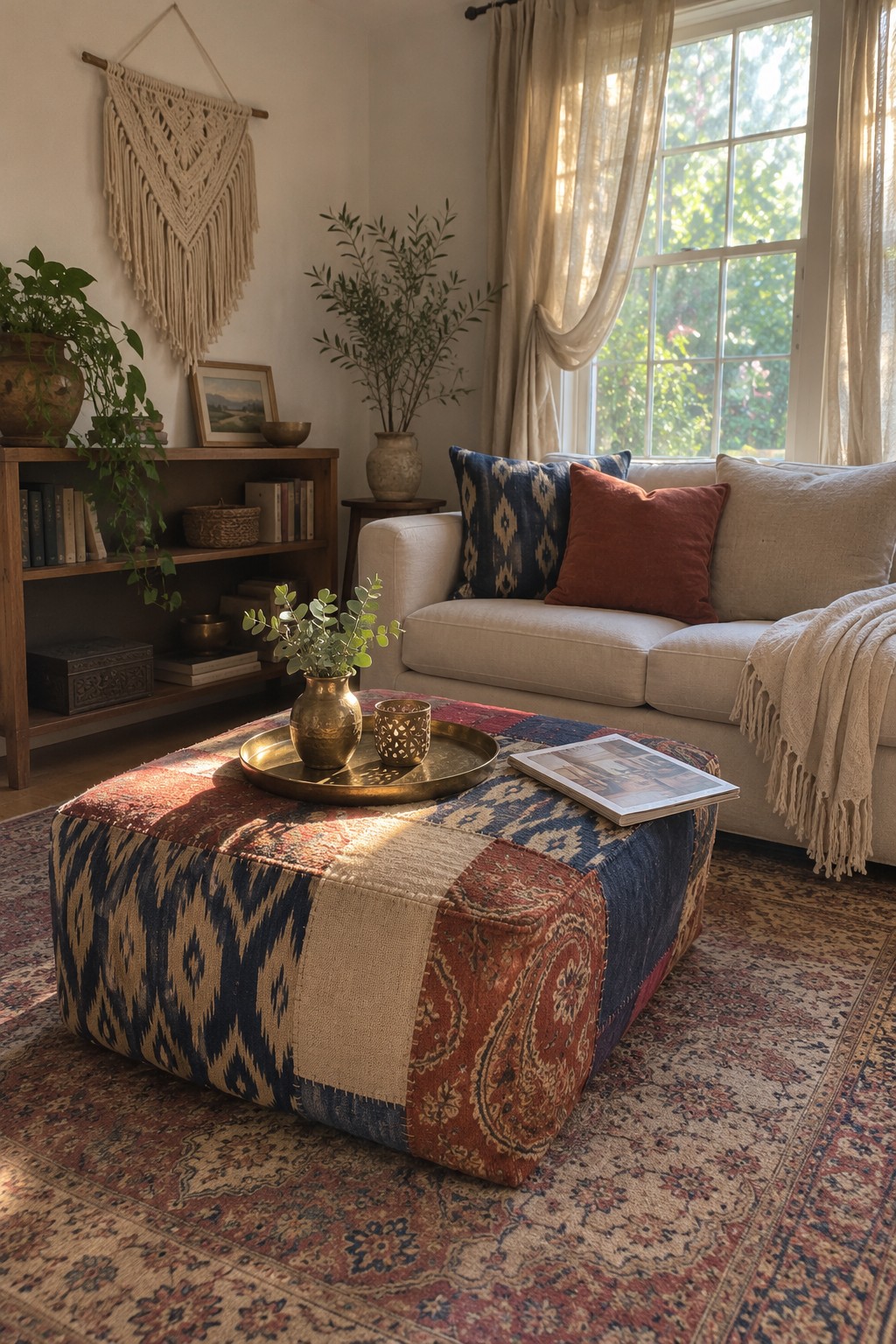
A patchwork cover can turn a plain ottoman into a useful place to bring leftover fabrics together. The different pieces make a simple furniture item feel more personal, especially when the colors echo a rug or pillows nearby.
Use sturdy fabric scraps and join them into panels large enough to cover the top and sides. An ottoman cover gets regular use, so reinforce the seams and make sure the fabric fits snugly without dragging on the floor.
Make a Fabric Scrap Lampshade
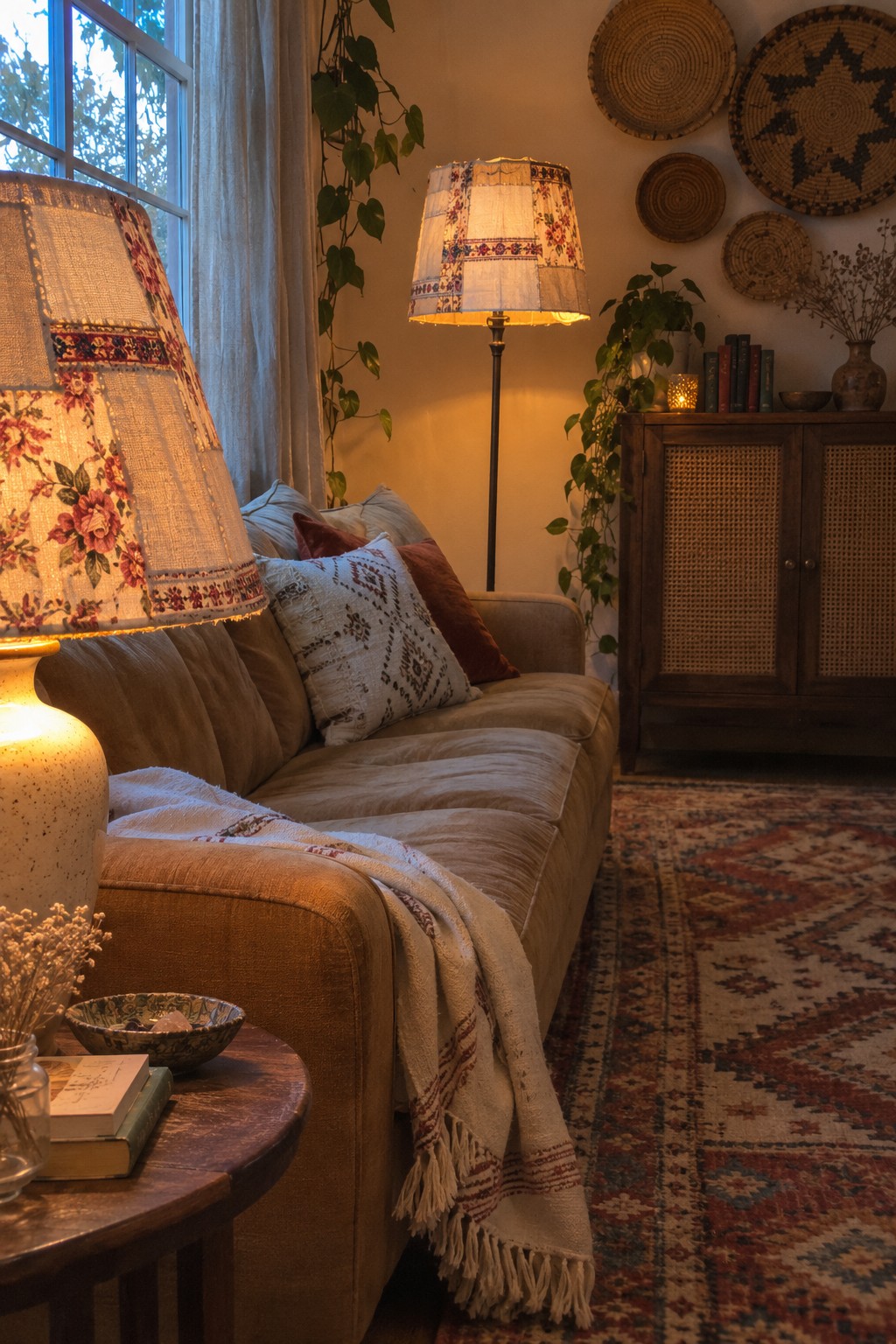
A lampshade is a simple way to use smaller fabric scraps that might not be large enough for a pillow or throw. A mix of floral pieces and narrow patterned bands gives a plain shade a relaxed, handmade look.
Use lightweight cotton and keep the scraps securely attached, away from the bulb and heat. This works well on a table or floor lamp, especially when the fabric colors pick up details in nearby pillows or rugs.
Make Botanical Fabric Scrap Art for the Living Room
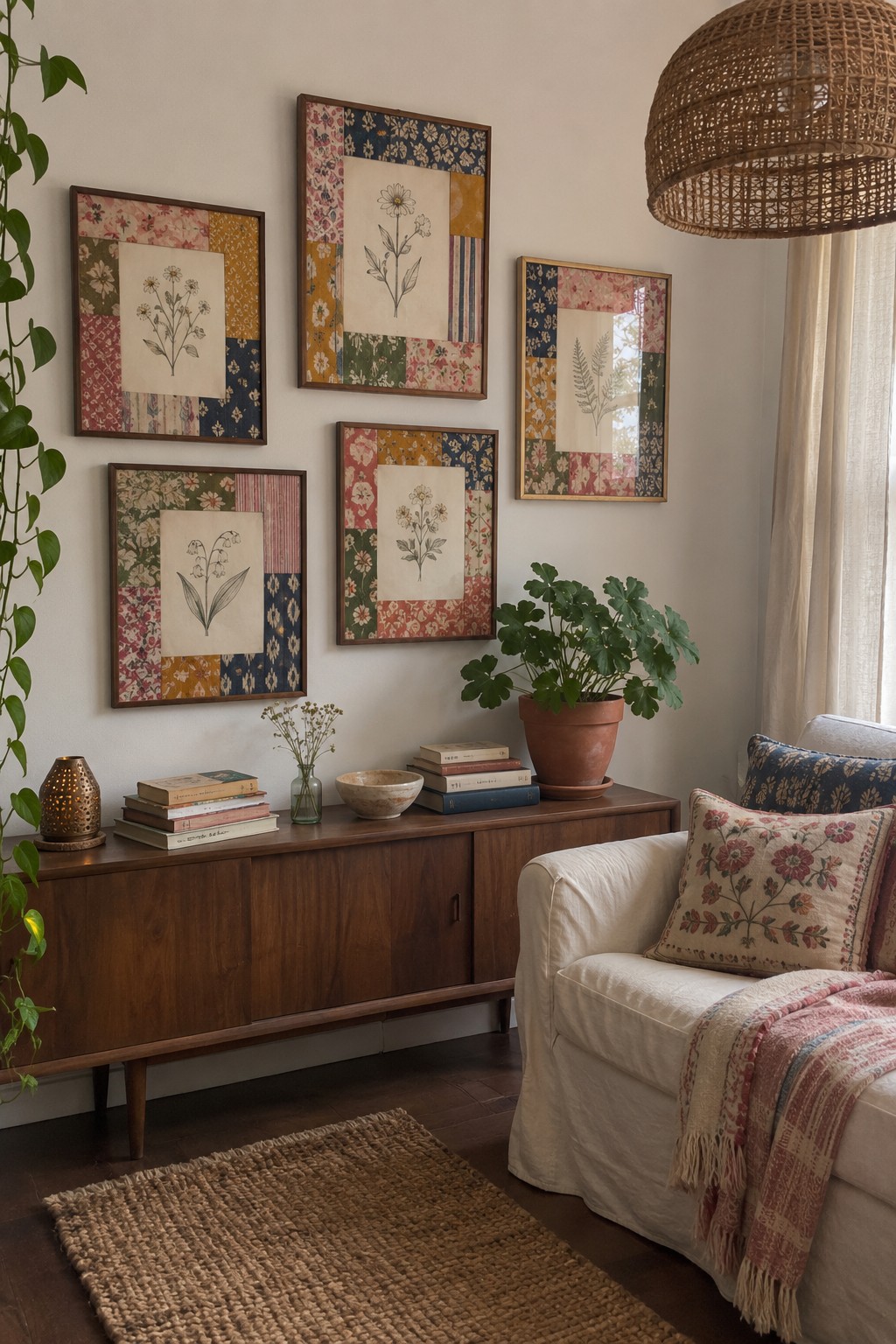
Botanical wall art is a simple way to use fabric scraps beyond pillows and throws. Small pieces in different prints can form a patchwork border around a plain center, giving the artwork a handmade look without making the wall feel too busy.
Use a neutral fabric or paper in the middle, then arrange scraps in a loose grid around it. Press the pieces flat and mount them in frames; mismatched florals and muted colors work well together. Keep the fabric patterns similar in scale so the botanical print remains easy to see.
Make Scrap Fabric Curtains for a Boho Living Room
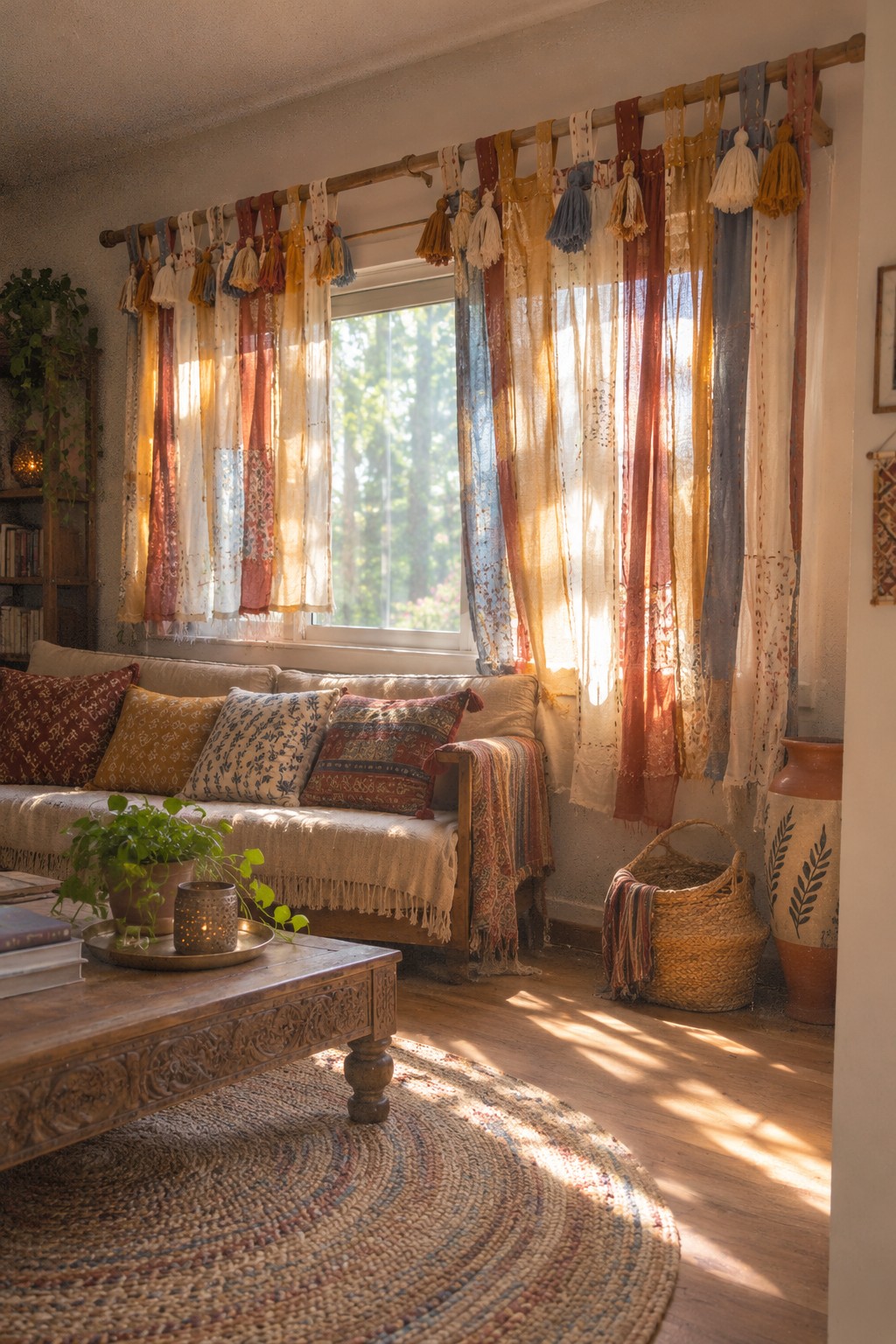
Scrap fabric curtains are a simple way to use small pieces in a larger project. Sew strips of lightweight fabric into long panels, mixing prints and colors for a relaxed, collected look. Tassels or fabric ties along the top can make the curtain rod part of the design.
This idea works best with sheer or thin scraps so the panels still let daylight through. Keep the pieces close in weight, and join them securely before hanging, since heavier sections can pull and sag.
Make a Fabric Scrap Pocket Organizer
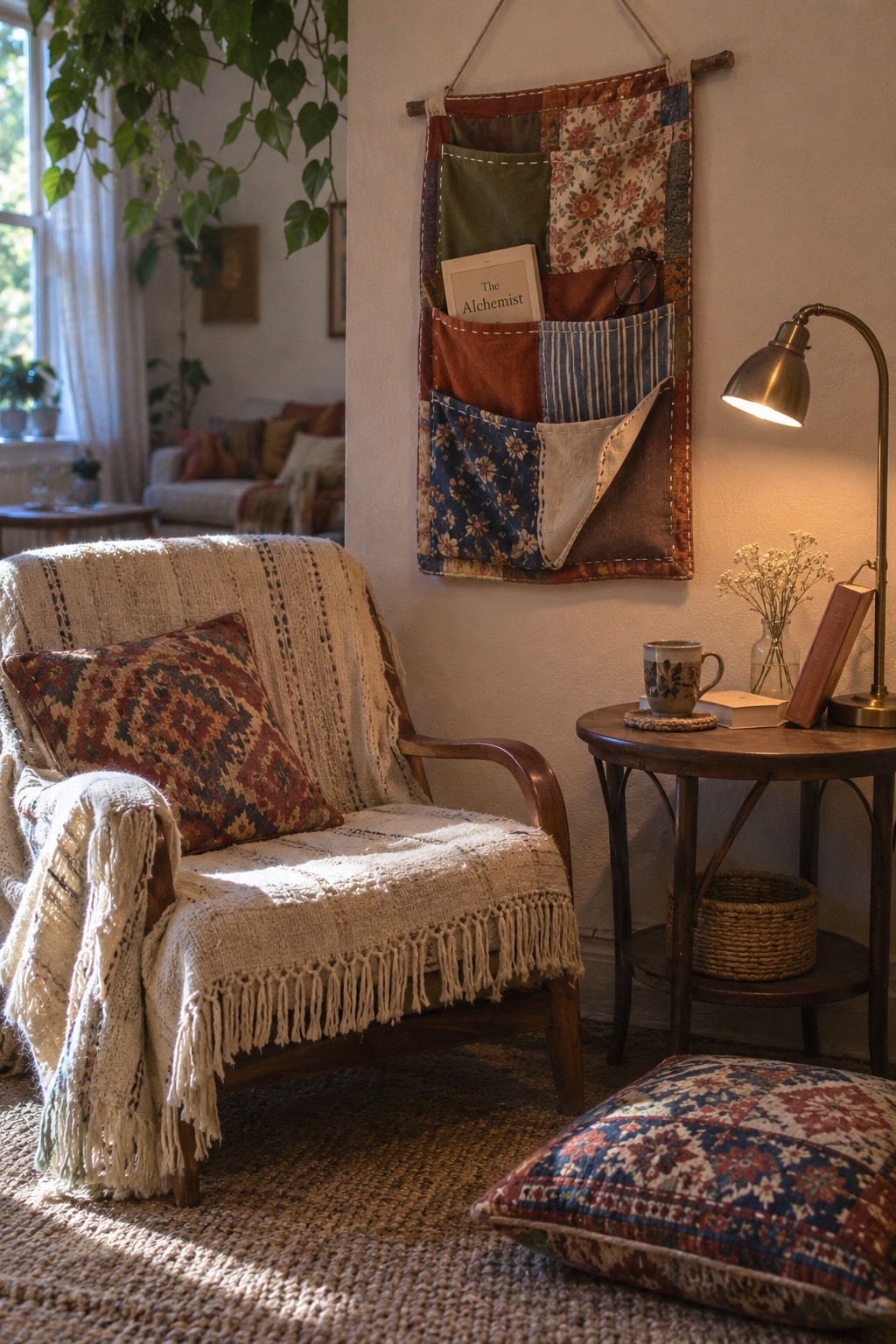
A patchwork wall organizer gives leftover fabric a useful job. Its pockets can hold small things that tend to wander, while a mix of prints makes the piece feel personal rather than purely practical.
Sew pockets from sturdy scraps and attach them to a backing fabric, leaving enough room for what you plan to store. Hang one beside a reading chair or near a desk. Keep the largest pockets near the bottom so the organizer stays steady when filled.
Make a Fabric Scrap Storage Basket
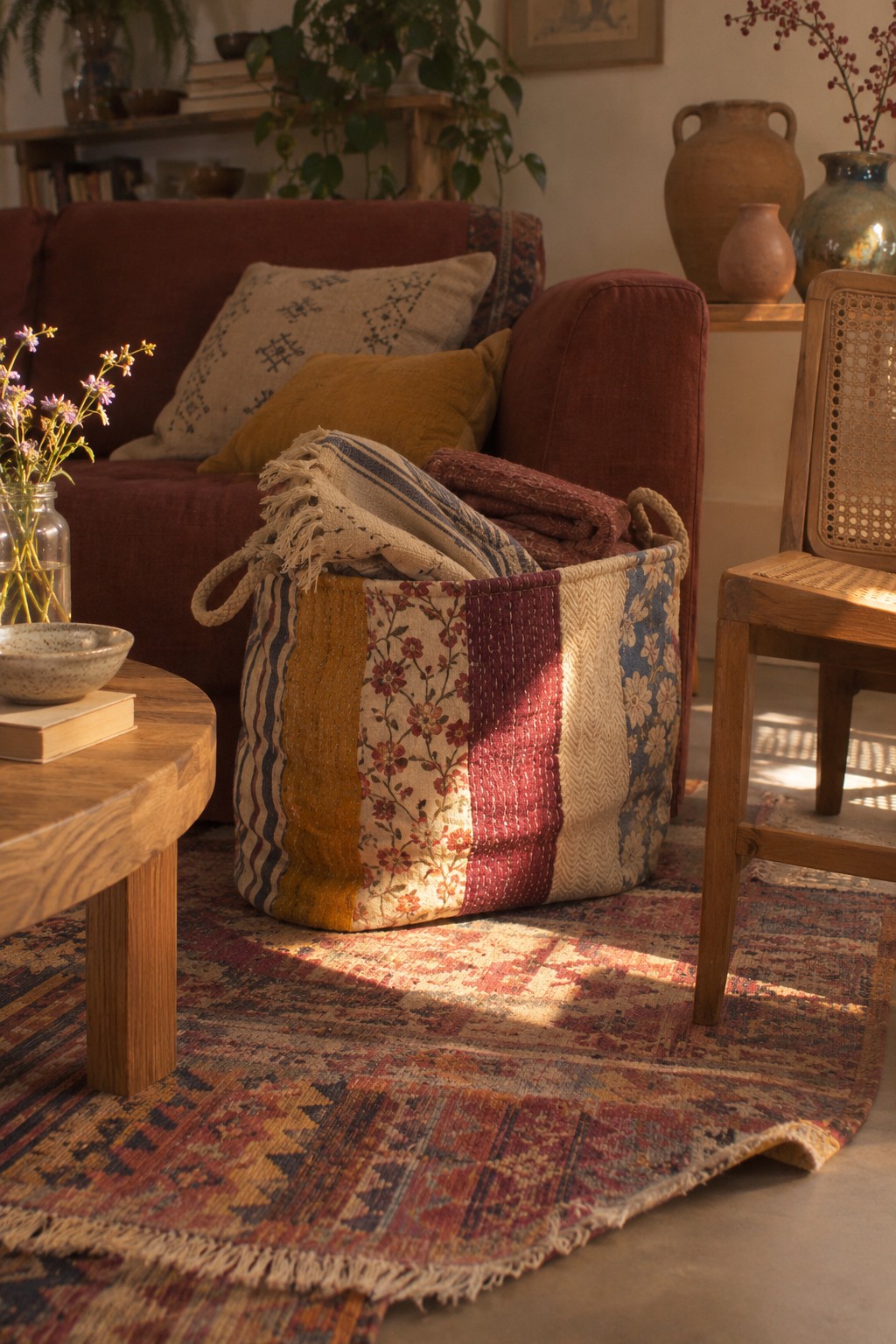
A fabric-covered basket is a useful way to turn leftover prints into everyday storage. The patchwork gives a plain container a relaxed, handmade look, while the sturdy shape keeps folded throws and cushions close at hand.
Use a firm base fabric so the basket holds its shape, then sew on scrap panels in a mix of colors and patterns. It works well beside a sofa, but avoid making it too floppy if you plan to carry heavier items.
Make a Fabric Scrap Pinboard for Travel Memories

A fabric-covered pinboard is an easy way to use small remnants while giving a living room or work nook a personal touch. Mixing a few prints and textures makes the display feel collected rather than overly matched.
Cover a corkboard with leftover fabric, then pin up postcards, photos, or small paper keepsakes. A mix of floral cotton and plain woven fabric, like the wall display shown here, can work well as long as the colors feel related.
Add a Fabric Scrap Cover to a Window Seat
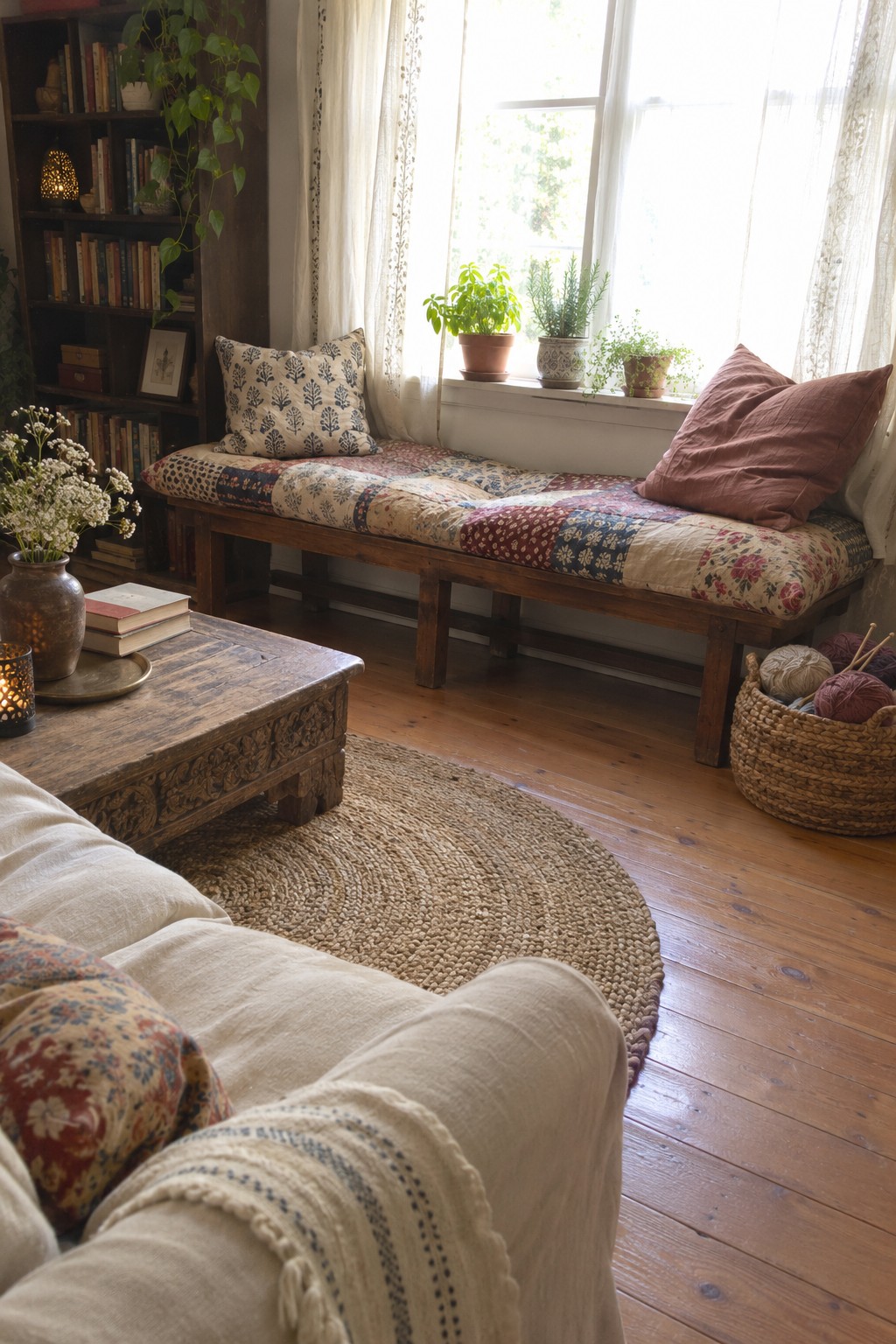
A long window seat can be a useful place to show off fabric scraps. Sew mismatched pieces into a cushion cover, and the seat gets a personal look without needing a complicated furniture project.
Use a sturdy backing fabric and make the cover removable for washing. This idea suits a sunny reading nook or an awkward stretch beneath a window; keep the patchwork colors loosely coordinated so the cushion feels collected rather than busy.
Make a Fabric Scrap Cover for an Accent Chair
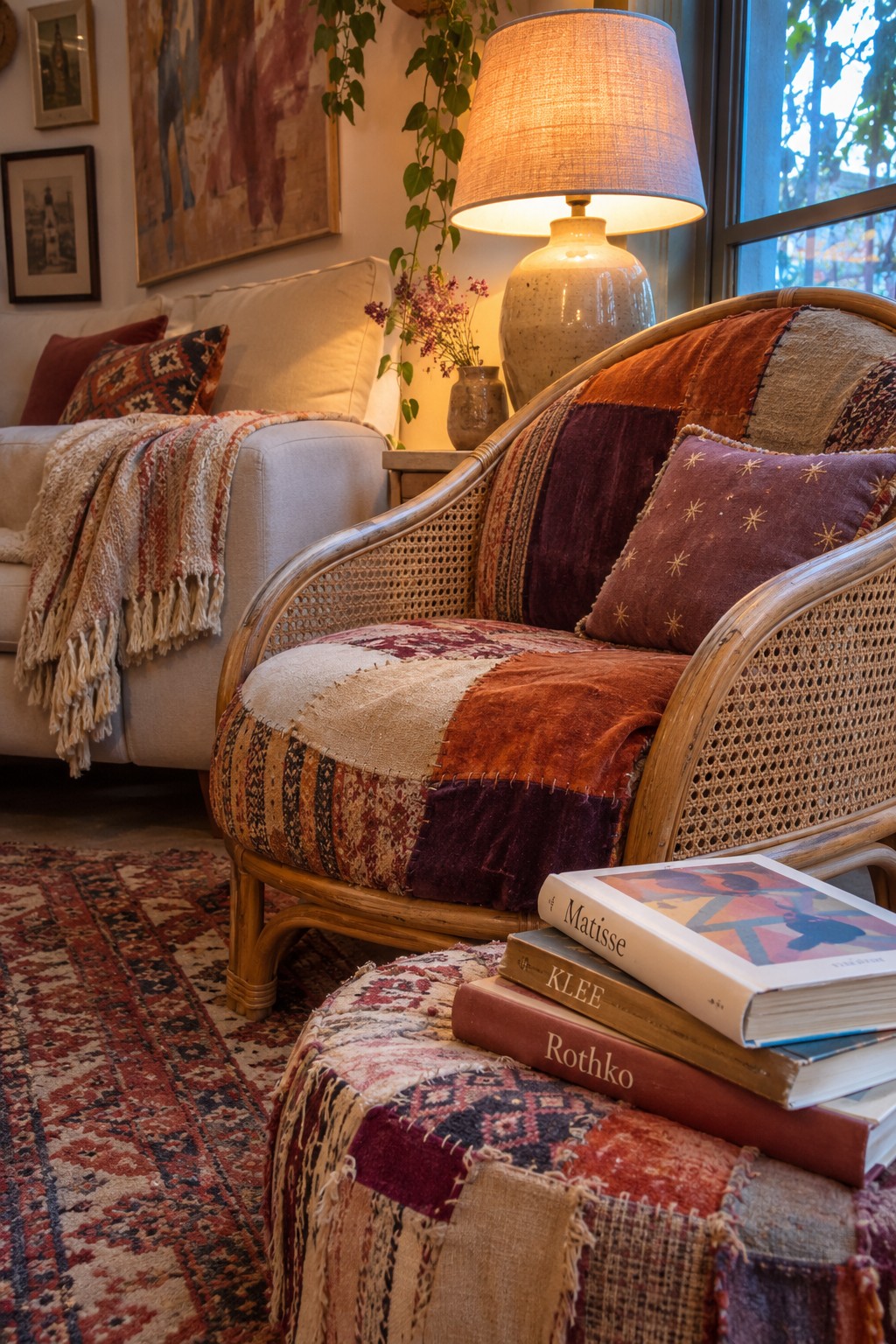
A patchwork cover is an easy way to bring leftover fabric into a living room without making a large project. Mixing warm, worn-in prints on an accent chair gives it a personal look, and the different pieces can still feel at home together when they share a similar color range.
Use sturdy scraps for the seat and back, and stitch them onto a fitted cover or cushion panels so the fabric holds up to regular use. This idea works especially well on a simple chair with a woven frame. Keep the patch sizes manageable, and avoid very delicate fabrics where people sit.
Make a Fabric Scrap Floor Cushion
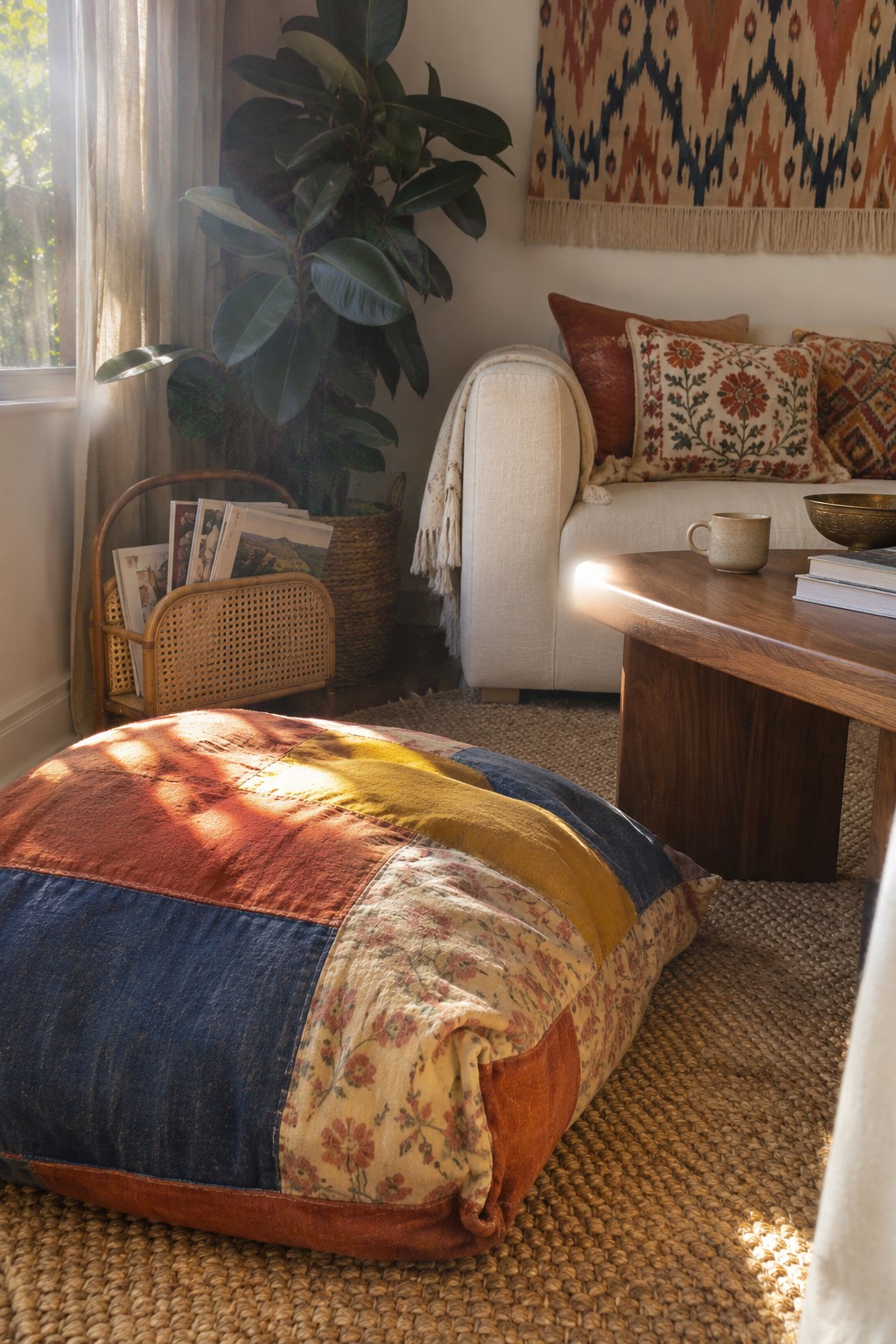
A large floor cushion is an easy way to use up fabric pieces that are too small for a throw or curtains. Sew them into broad patchwork panels, then fill the cushion firmly so it can work as extra seating or a comfortable place to put your feet.
This idea suits a relaxed living room where people like to sit on the floor. Pull colors and prints from nearby pillows, but keep the seams sturdy, especially around the edges where the cushion gets handled most.
Use Fabric Scraps to Refresh a Lampshade
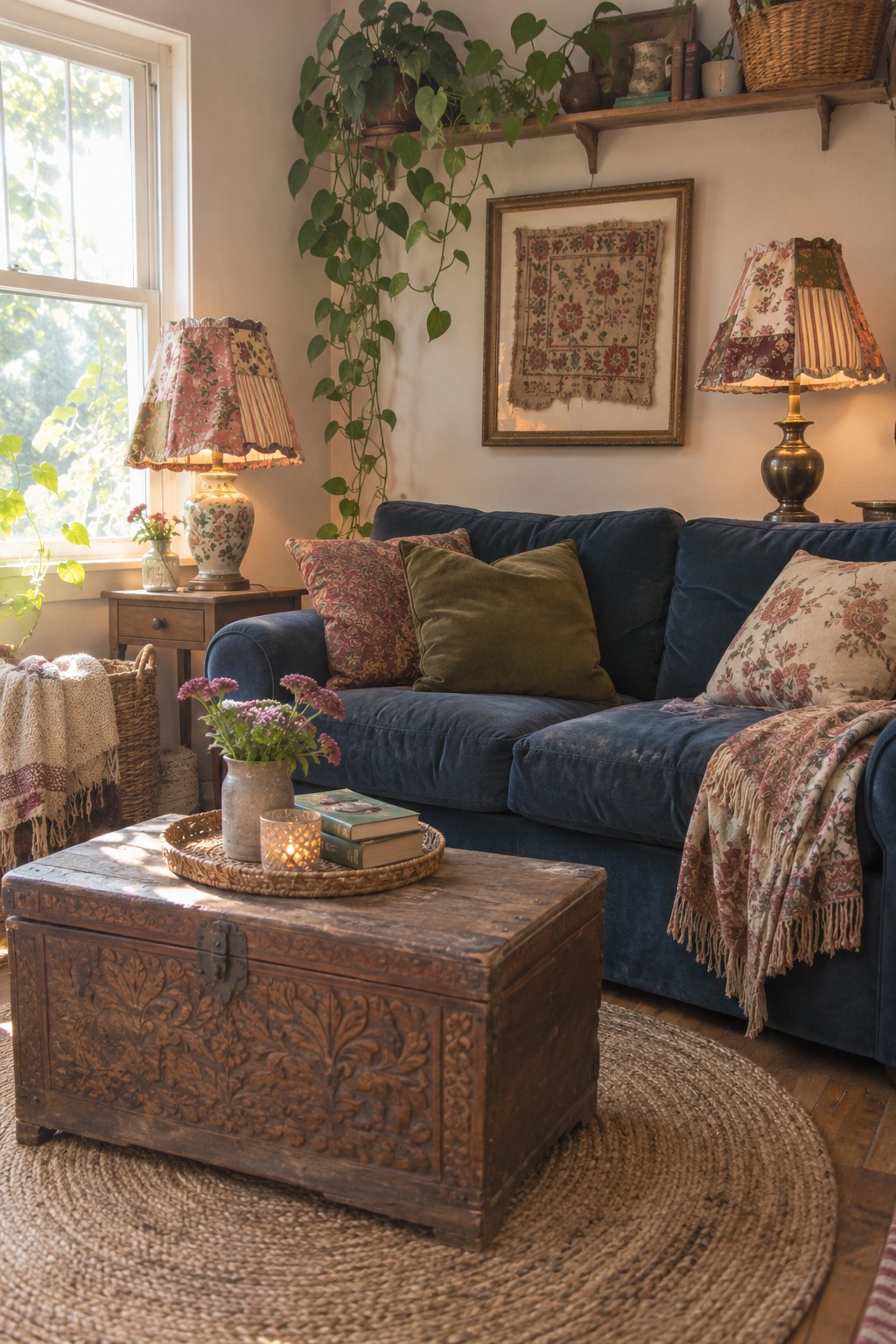
A patchwork lampshade is a simple way to use fabric scraps that are too small for a pillow or throw. Mix a few faded prints, and the lamp becomes a useful spot for bringing those leftover patterns into the room.
Use a plain shade as your base and attach the fabric securely, keeping pieces smooth and clear of the bulb and fittings. This works well on a table lamp where the shade is easy to reach. A floral shade beside a solid-colored sofa is enough pattern for one corner.
Make a Fabric Scrap Screen to Divide the Living Room
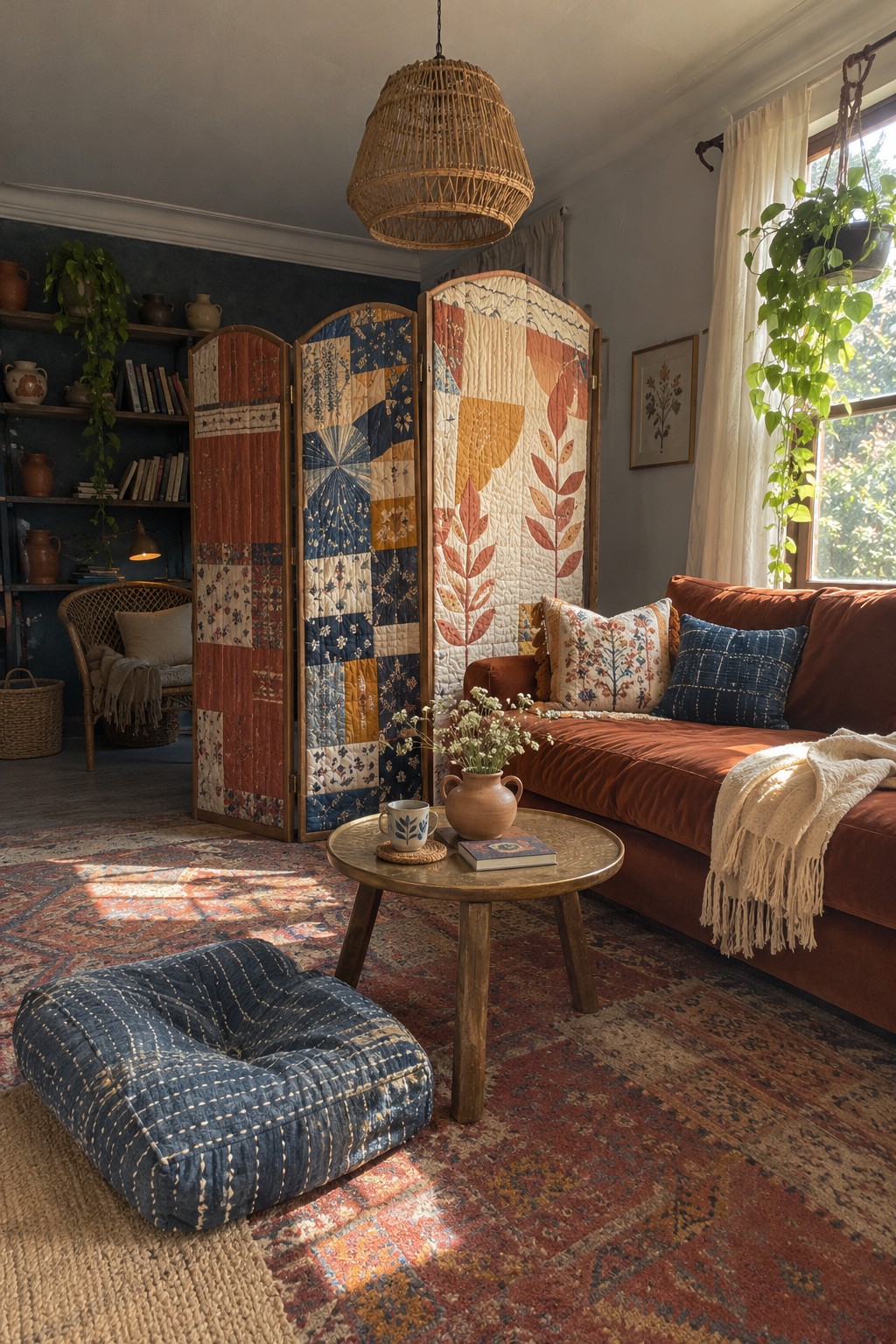
A folding screen covered in patchwork fabric can give a living room a little separation without putting up a wall. It also makes good use of scraps that are too small for a throw or curtain, and different patterns can sit together naturally in a boho space.
Stretch fabric over each screen panel, or stitch larger patchwork sections before attaching them. Keep the colors related so the panels feel connected, and choose a lightweight screen that can be moved when you want the room open again.
Make a Patchwork Table Runner From Fabric Scraps
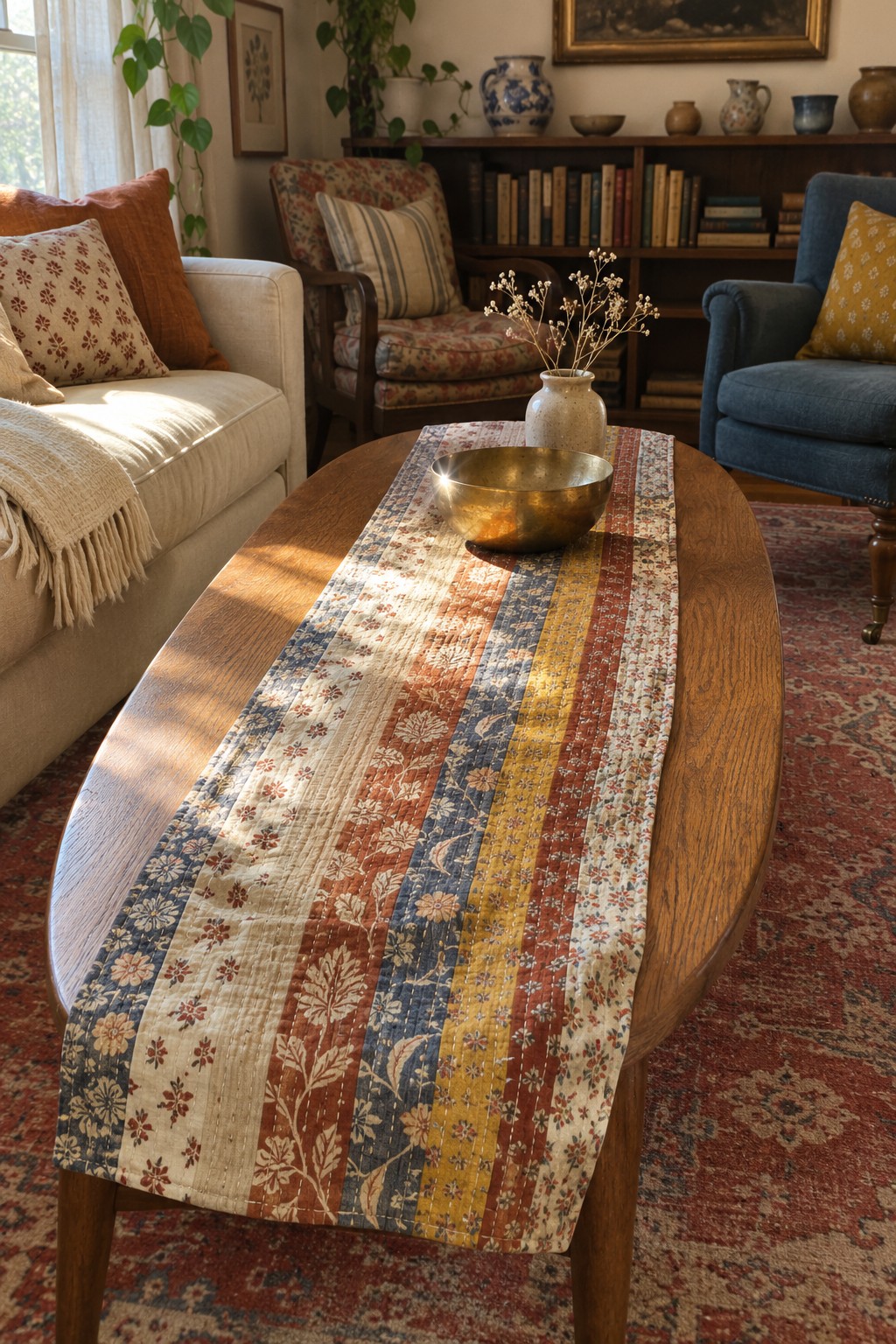
A patchwork runner is a simple way to use fabric scraps in a boho living room. Sew strips in a mix of small floral prints and muted colors, and the finished piece brings pattern to a plain coffee table without covering up the wood.
Keep the runner narrow enough to leave some tabletop visible, and add a layer of batting if you want a softly quilted finish. It works well on an oval or rectangular table, but avoid bulky seams that make the surface uneven.
Make a Fabric Scrap Wall Tapestry
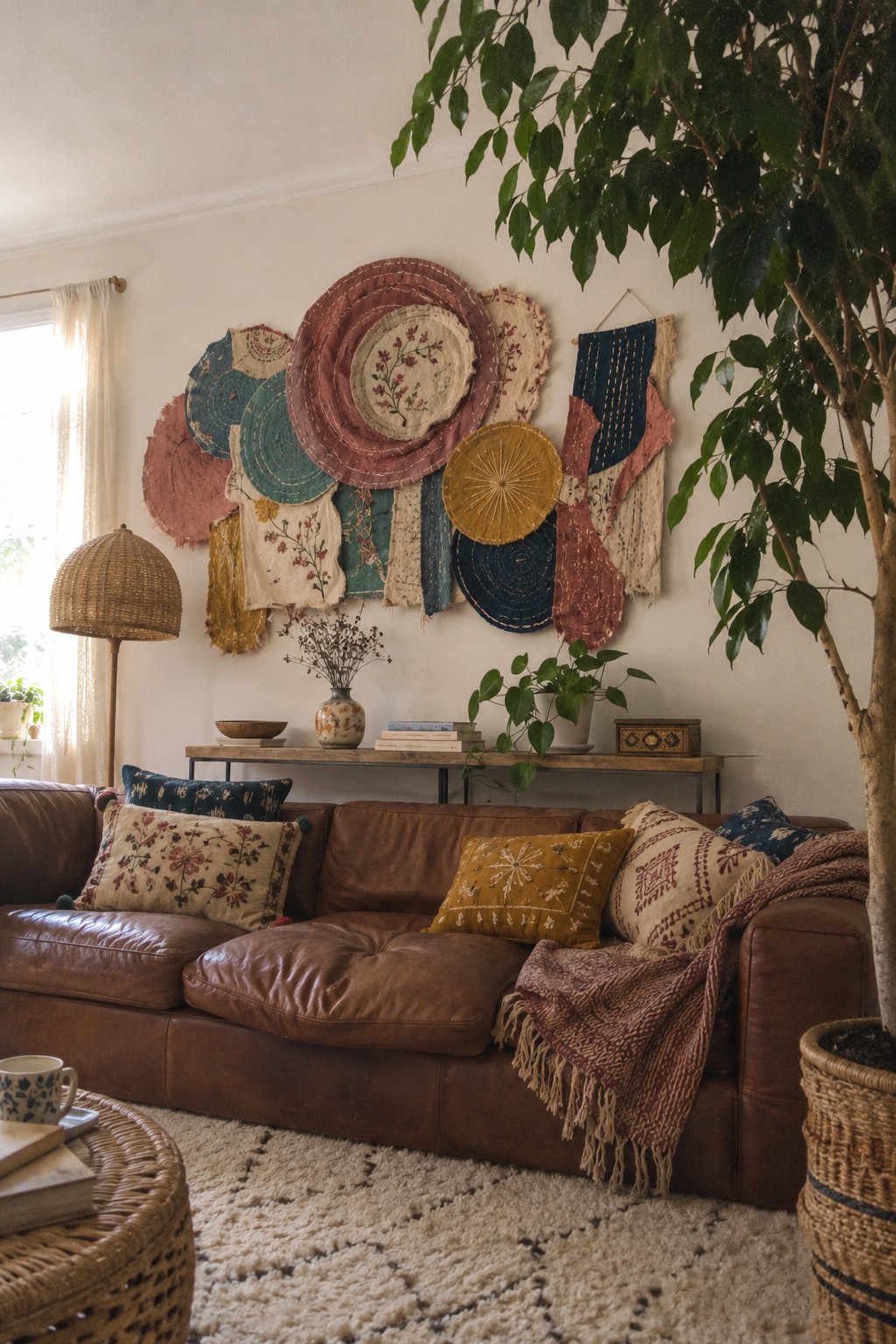
A fabric scrap tapestry is a simple way to turn leftover pieces into large-scale wall art. Layering different colors and prints makes the display feel collected rather than too coordinated, and hand stitching can help hold the pieces together.
Arrange the scraps on the floor first, then overlap and join them into one hanging. A few larger pieces can give the design shape, while smaller scraps fill gaps. This works especially well on a broad, plain wall. Keep the colors to a loose palette so the mix feels intentional.
Use Fabric Scraps to Update a Footstool
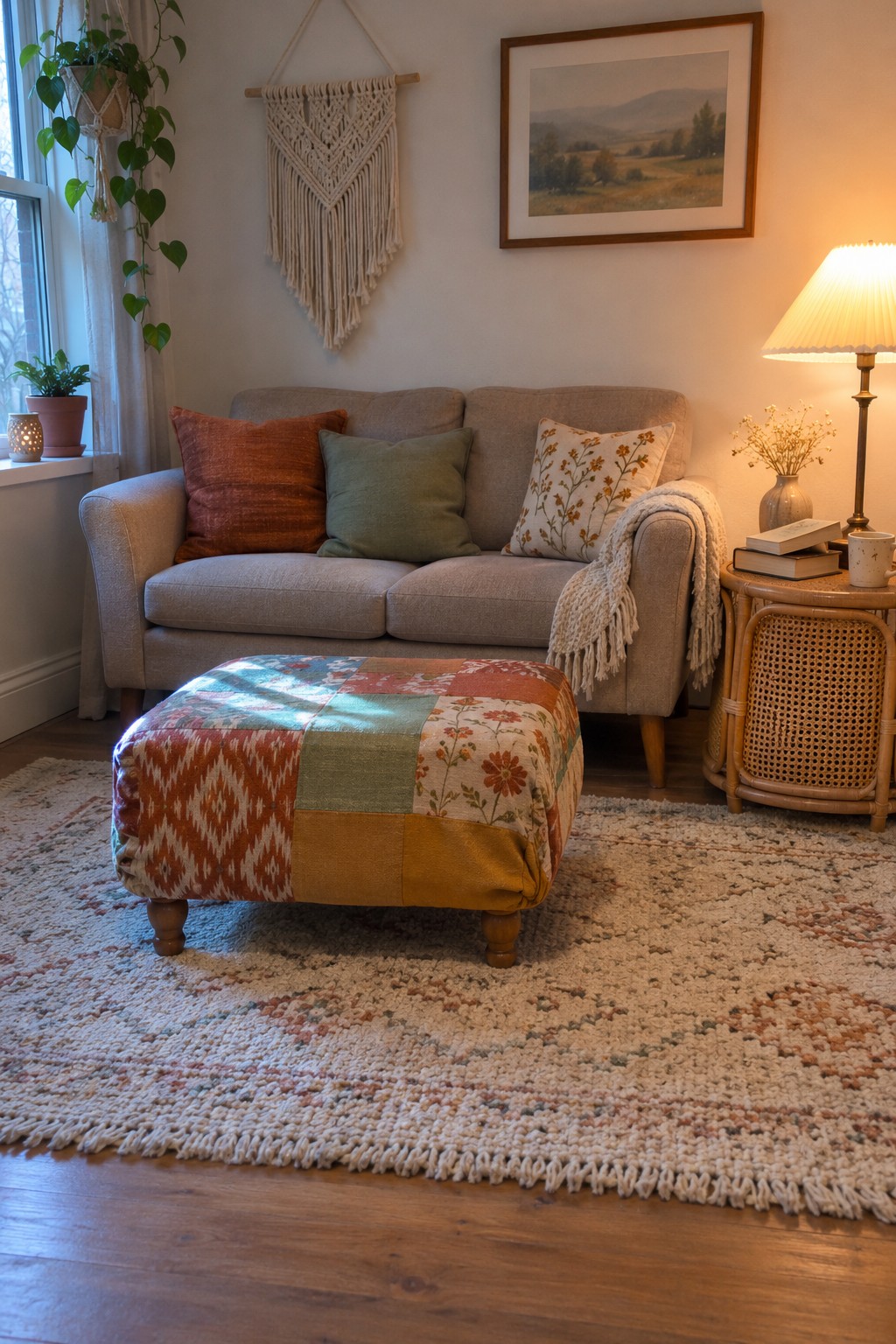
A patchwork footstool cover is a practical way to use fabric scraps in a boho living room. The mix of prints and colors gives a plain stool a more personal look, and the finished piece can serve as a footrest or extra seat.
Choose sturdy fabrics, and arrange the pieces in a simple patchwork before attaching them to the stool. A palette of a few related colors helps the different prints sit comfortably together.
Make a Patchwork Cover for a Daybed
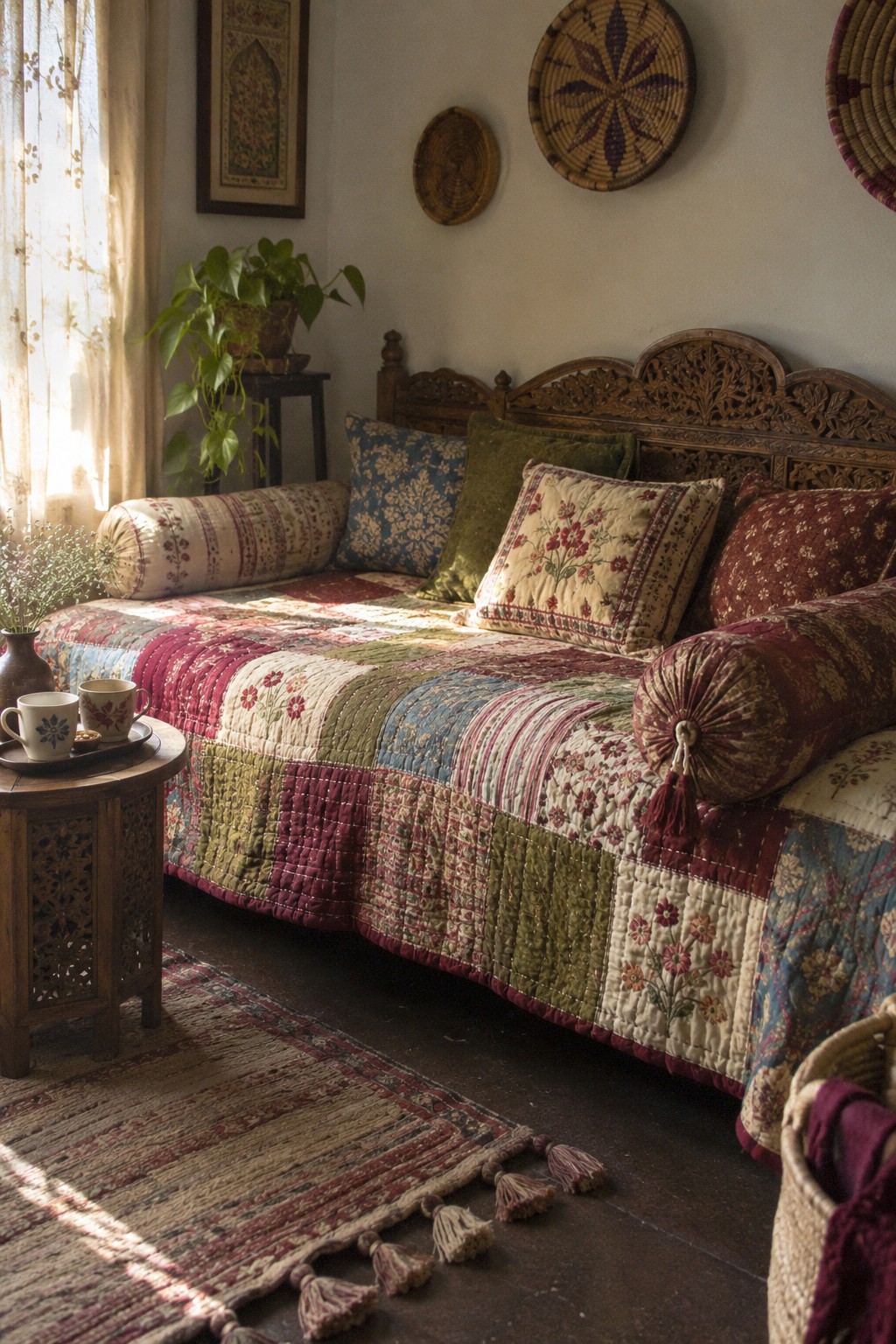
A patchwork cover can turn a simple daybed into a comfortable place to sit and stretch out. Using fabric scraps in a few related colors keeps the look collected, while the varied prints give the cover a relaxed boho feel.
Join leftover pieces into broad strips or squares, then sew them onto a sturdy backing for everyday use. This idea works well on a daybed or wide bench; choose washable fabrics and keep the finished cover easy to remove.
Organize Fabric Scrap Projects in Patchwork Storage Boxes
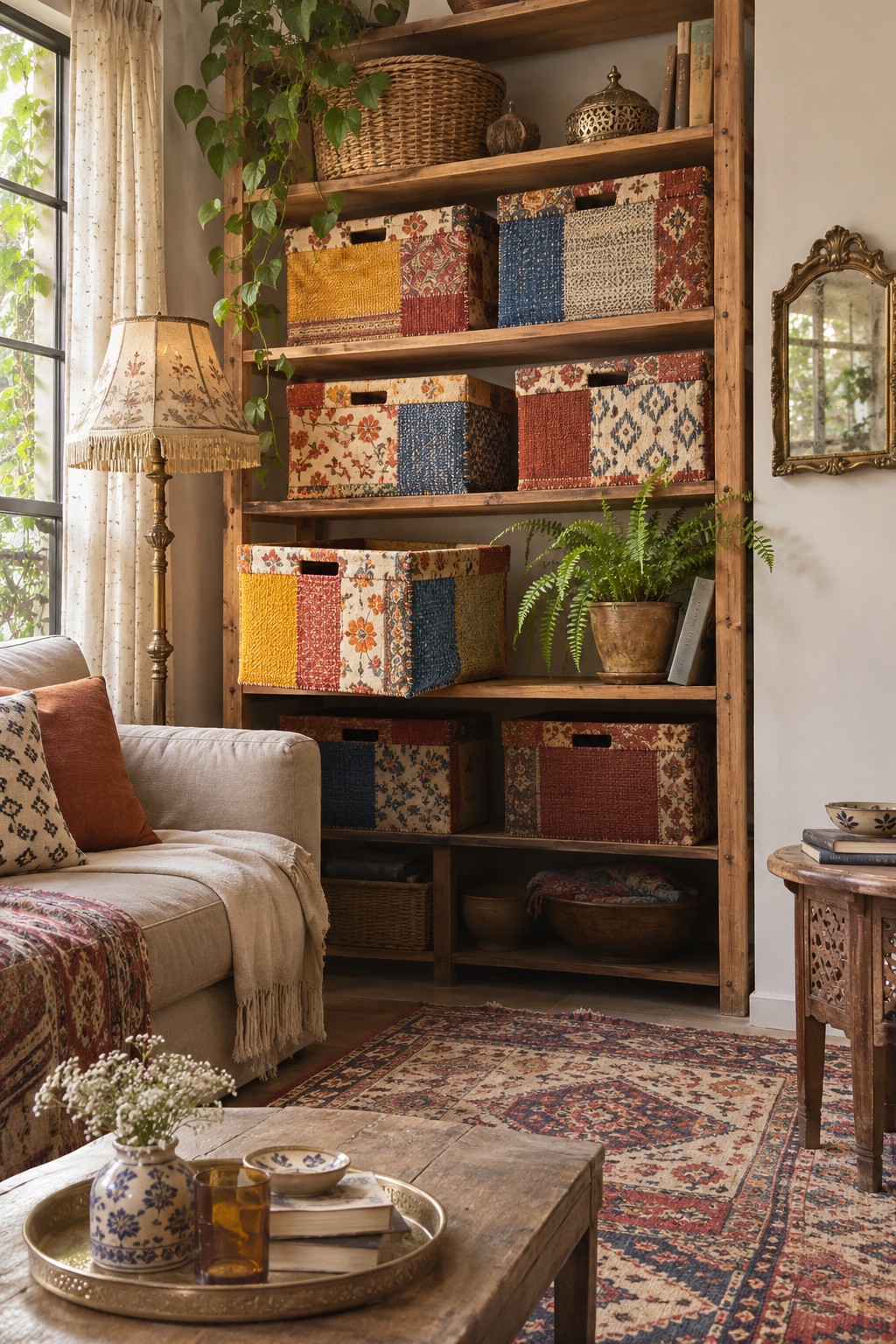
Patchwork-covered boxes make fabric scraps useful beyond the sewing table. They hide everyday clutter on open shelves while letting leftover prints become part of the room’s decor.
Cover sturdy cardboard or plain storage boxes with fabric pieces, keeping the colors and patterns varied but in a similar palette. This works well on bookcases or craft-room shelves; use a clear label or handle so you can still find what you need.
Use Fabric Scraps to Refresh Dining Chairs
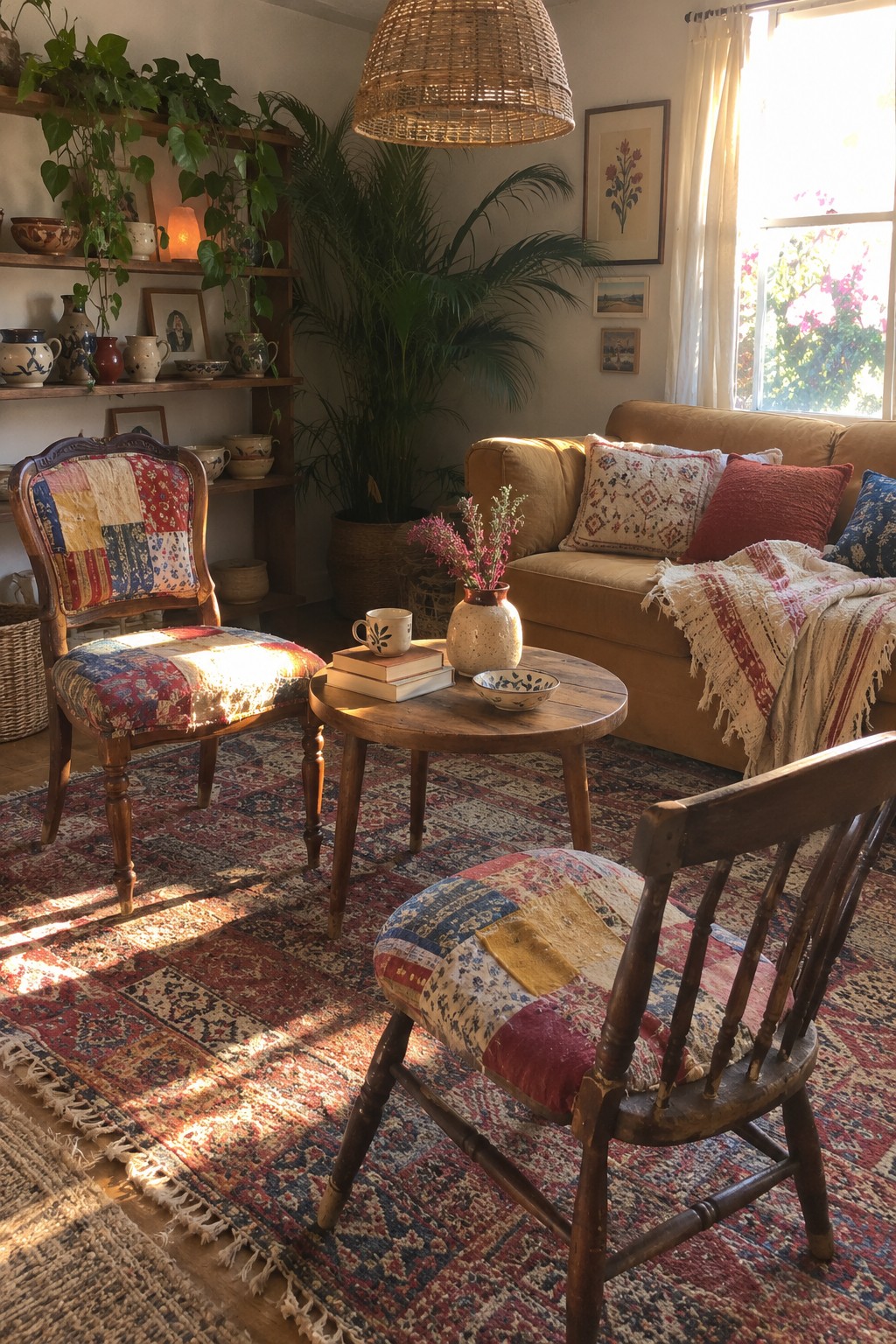
Patchwork fabric can give plain wooden chairs a more personal look, especially when the pieces share a few colors but have different patterns. It is a practical way to use leftover cloth and make mismatched seating feel intentional.
For a simple update, wrap a well-sewn patchwork panel over a removable seat cushion, or staple a fitted cover to the underside of the seat. A sturdy backing helps the fabric hold up to regular use, and a chair with a removable seat makes the job easier.
Decorate a Mirror With Fabric Scraps
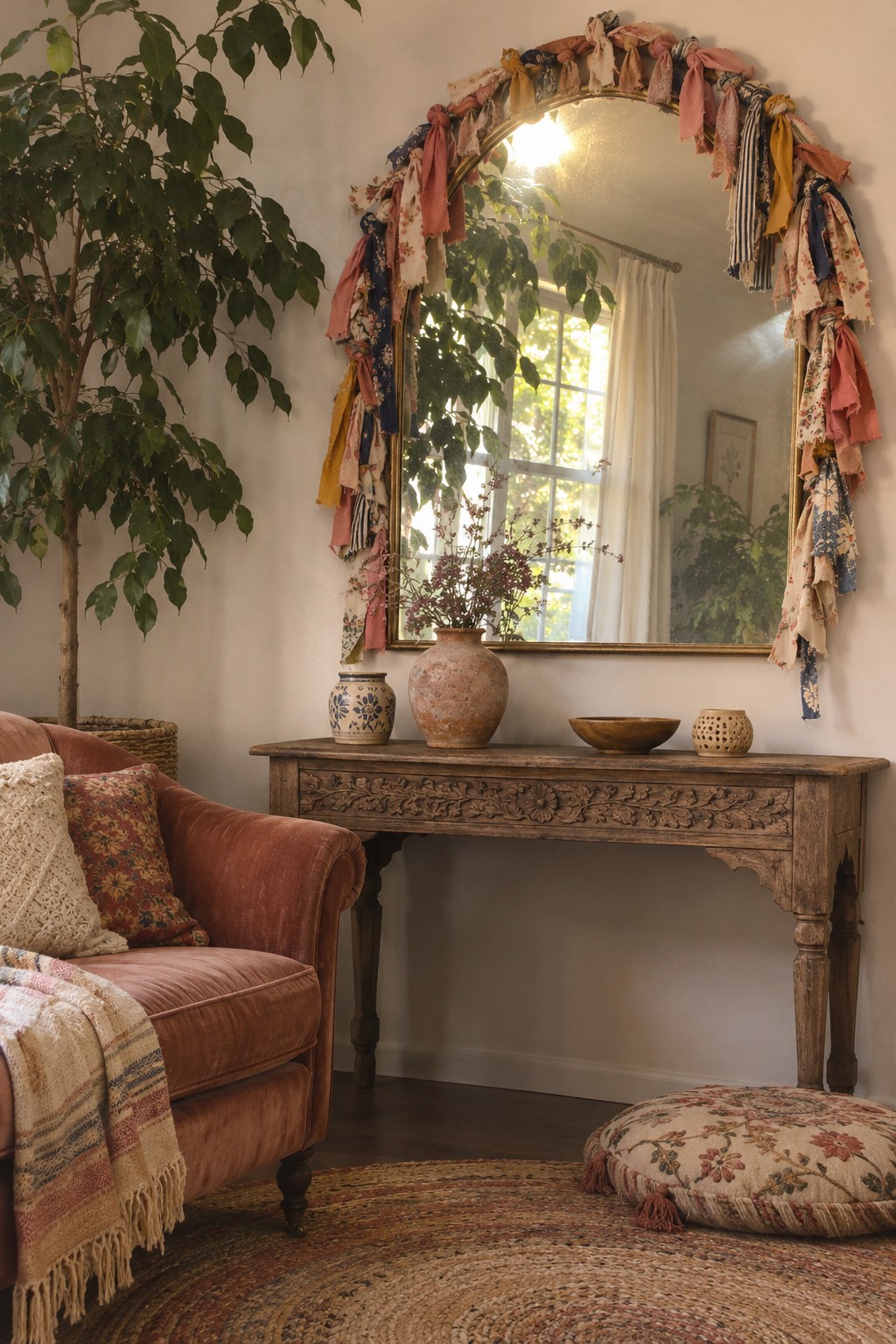
Fabric scraps can turn a plain mirror into a simple focal point for a boho living room. Tie strips of leftover fabric around the frame, mixing prints and colors for a relaxed, collected look. The scraps around this mirror show how even small pieces can make a big difference.
Use fabrics that suit the room, and vary the strip lengths so the edge feels casual rather than too uniform. This works well on a mirror with a sturdy frame; keep the fabric clear of the reflective surface and secure each piece firmly.
Use Fabric Scraps to Make a Coordinated Living Room Set
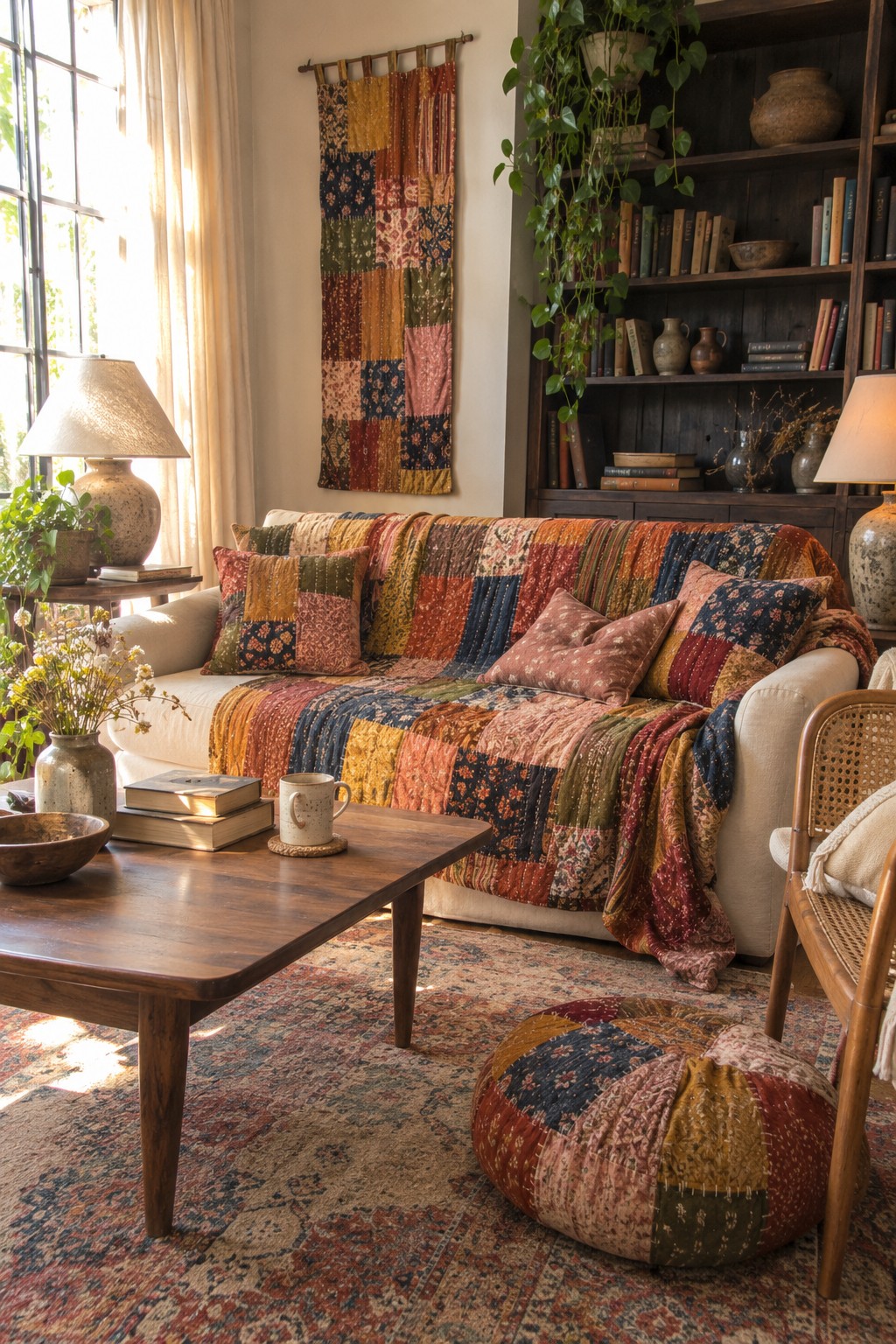
A simple way to use fabric scraps is to repeat the same patchwork across a few soft furnishings. The matching throw and wall hanging here show how varied prints can still feel connected when they share a similar mix of colors.
Try this with leftover pieces in warm, muted shades, and use a plain sofa as a calm backdrop. Keep the patterns varied, but repeat a few fabrics so the finished pieces feel related rather than busy.
Frequently Asked Questions
Q: How do I keep fabric-scrap projects from looking too busy?
A: Stick to a small color palette, even if the prints are different. Repeating one or two colors across a cushion, garland, or wall hanging helps the pieces feel connected.
Q: Can I mix lightweight scraps with thicker fabrics?
A: Yes, but use lightweight pieces for layered details and sturdier fabric for anything that needs structure, like a basket cover or cushion front. If the scraps fray, fold the edges under or stitch them down.
Q: What can I make if I only have tiny scraps?
A: Tie small strips onto a wreath, basket handle, or length of twine for an easy tassel garland. The uneven shapes add to the relaxed boho feel.
Q: How do I wash decor made from fabric scraps?
A: Check the fabric types first, since some may shrink or bleed color. For a patchwork piece, a gentle hand wash and air drying are usually safer than tossing it in the dryer.
