

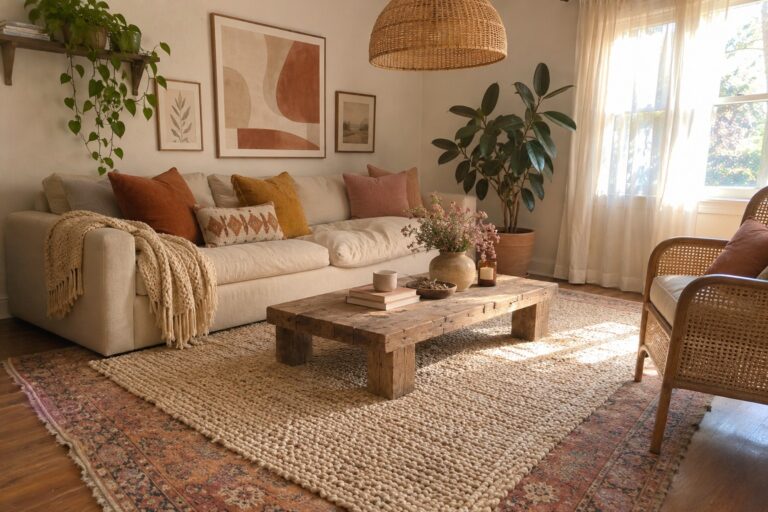
A living room can feel layered and relaxed without making it hard to walk through or keep tidy.
I find that rugs work best when they define the seating area while leaving enough floor visible to help the room feel open.
In a boho space, mixing patterns and textures can add character, but the colors and scale need to relate to one another.
These rooms show how a larger rug, a smaller patterned layer, or a natural-fiber base can change the feel of a space.
I’d save the combinations that suit your furniture and try them with rugs you already own before buying anything new.
Layer Rugs To Add Texture
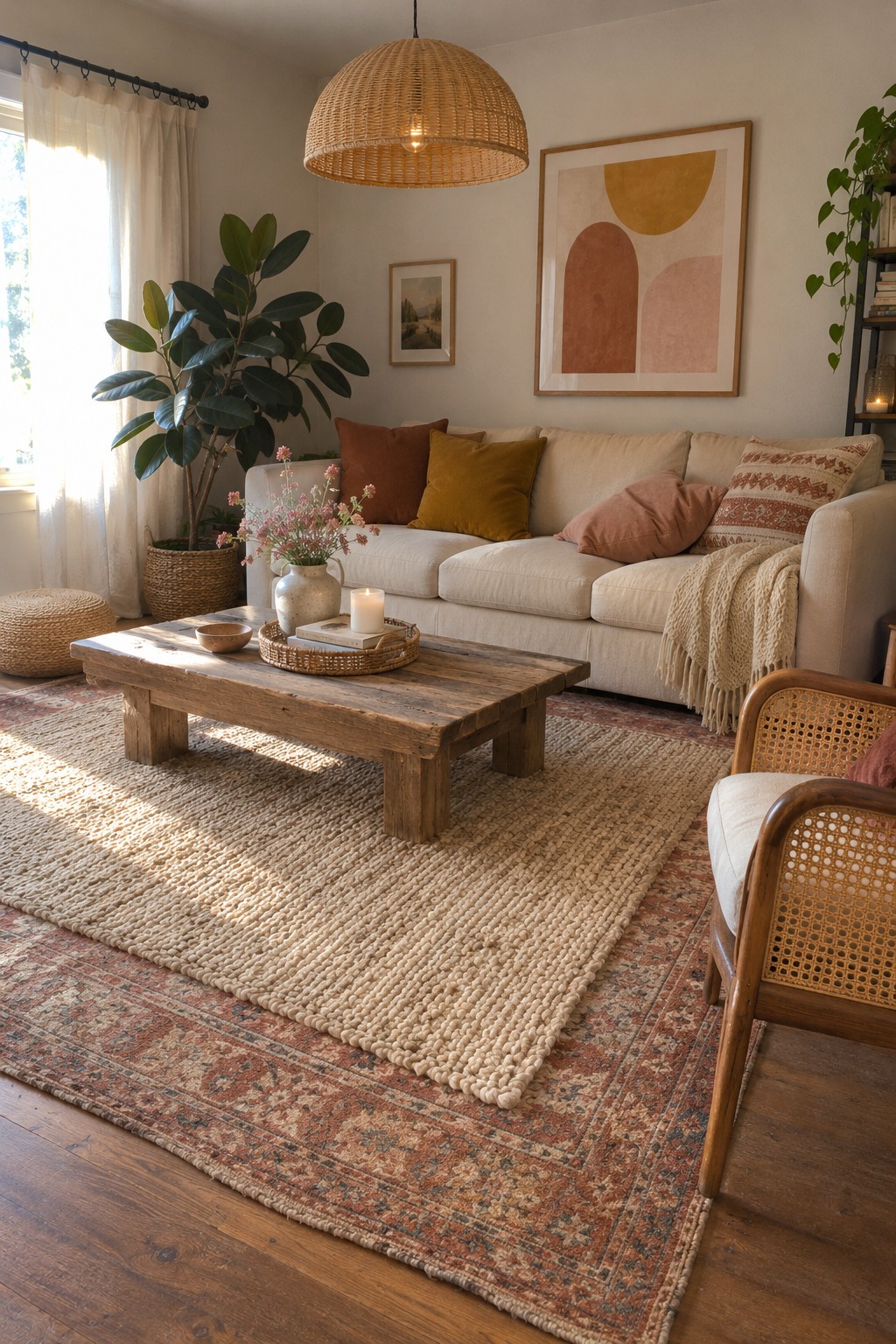
A thick, nubby rug layered over a patterned one is an easy way to bring more texture into a boho living room. The lower rug adds color, while the top layer gives the seating area a softer feel without hiding the pattern completely.
Try this in a room with wood floors and keep the top rug smaller so a border of the lower rug remains visible. Choose colors that already appear in your pillows or art, and make sure both rugs lie flat to avoid curled edges.
Layer Rugs To Make A Boho Living Room Feel Cozy

Layering a patterned rug over a larger natural-fiber rug is an easy way to give a living room a relaxed, collected feel. The woven base adds texture, while the smaller rug brings in color and pattern without taking over the room.
This works especially well in a seating area where you want the furniture to feel connected. Let the larger rug extend beyond the smaller one, and choose colors that pick up a few tones from the cushions. Keep the pile low enough that the layered edges lie flat.
Layer Rugs For A More Relaxed Living Room

Layering a patterned rug over a larger natural-fiber rug is an easy way to bring a boho living room together. The woven base gives the floor a simple texture, while the smaller red rug adds color and pattern without taking over the room.
Leave a border of the larger rug visible, and make sure the smaller one sits securely beneath the main seating area. This approach works especially well with wood furniture and other natural materials. Just keep the patterns in a similar color family so they don’t compete.
Layered Rugs Add Pattern Without Overcrowding
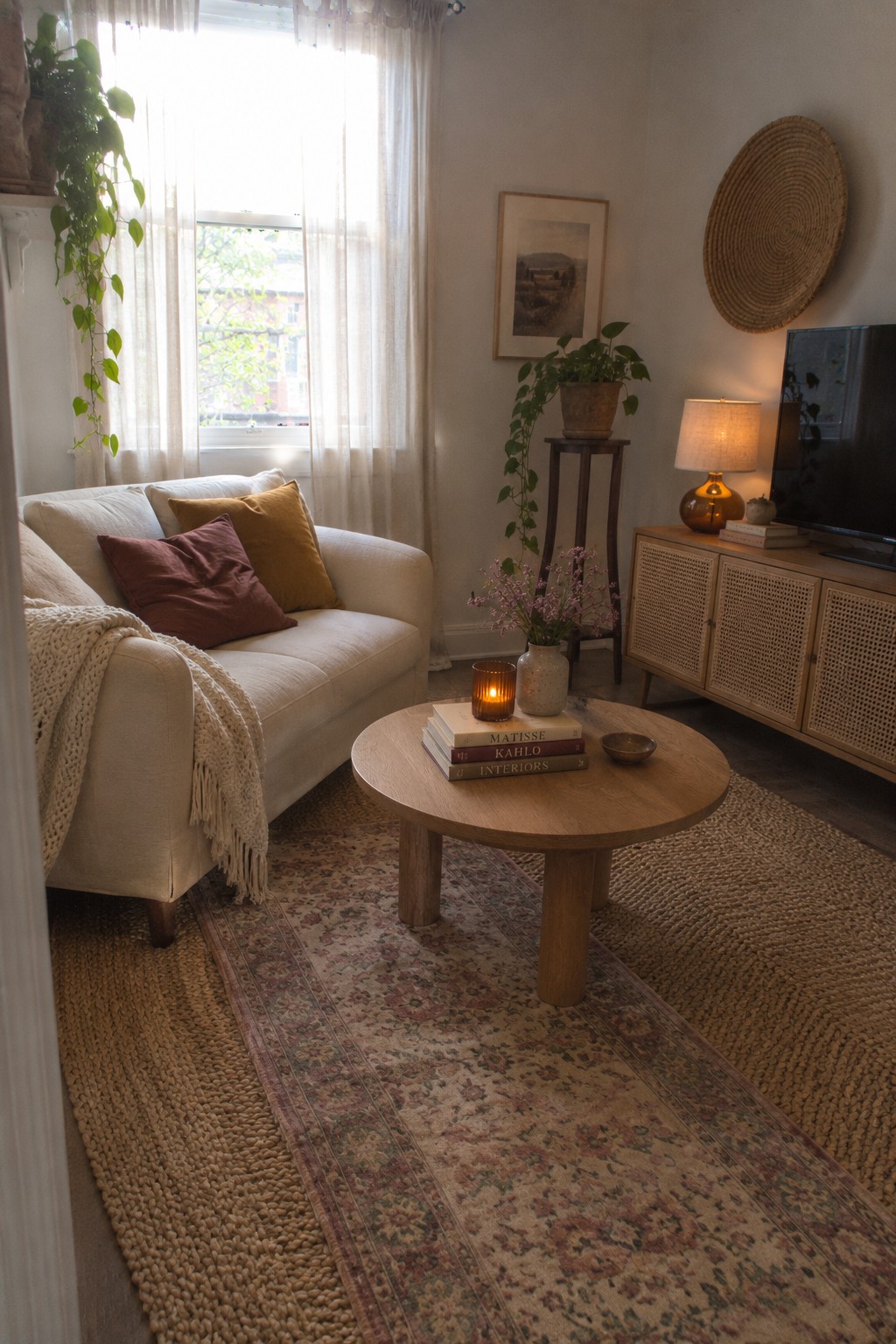
A patterned rug layered over a larger natural-fiber rug is an easy way to bring color into a living room while keeping the floor from feeling too busy. The larger rug gives the smaller one a clear place to sit, and the contrast in texture makes the arrangement feel relaxed.
Try this in a seating area where you want a little more pattern without covering the whole floor in it. Keep the top rug centered around the coffee table, and choose colors that already appear in the room. A low-pile patterned rug is usually easier to layer and less likely to bunch up.
Use A Large Rug As The Base Layer
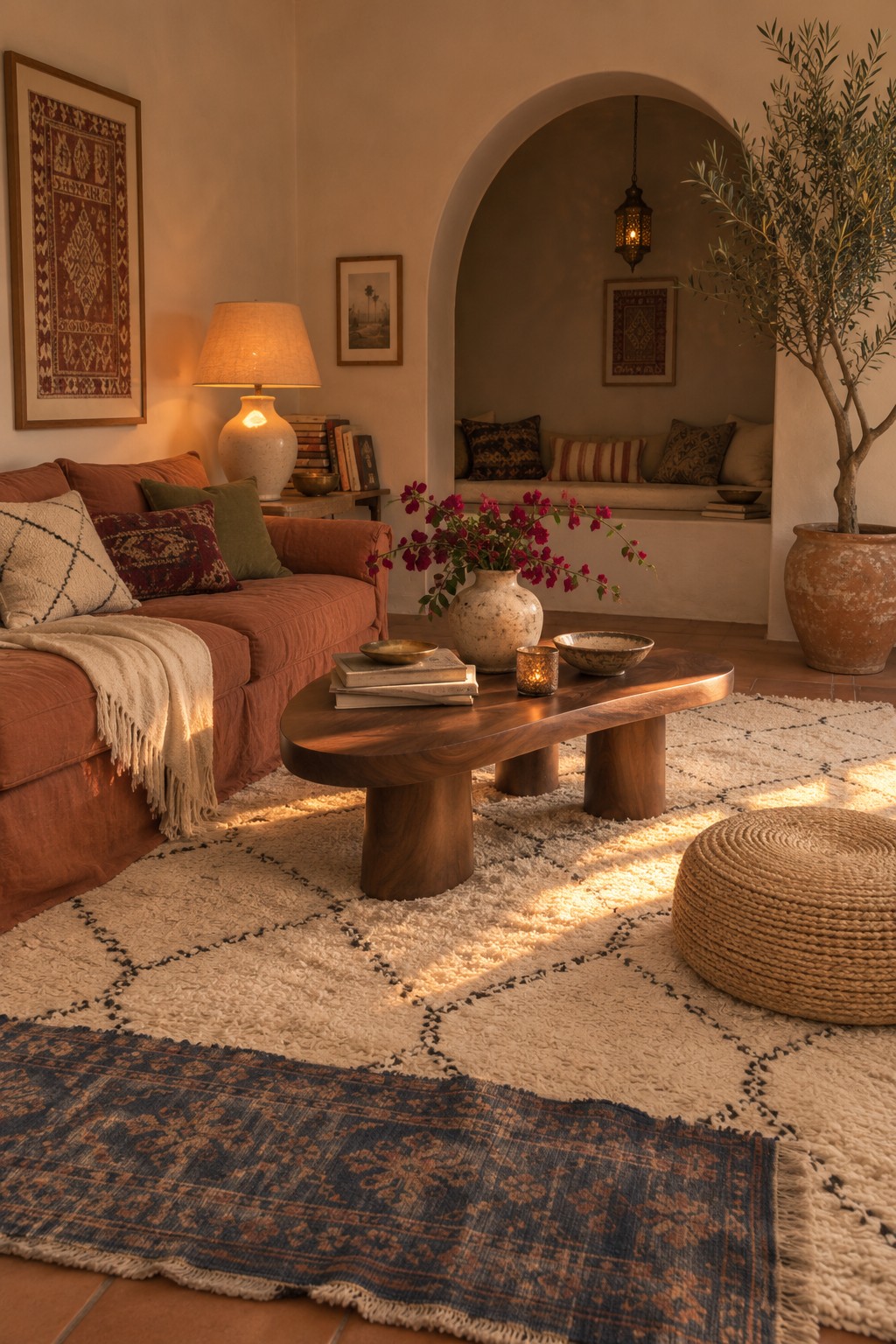
Layering a smaller patterned rug over a large neutral one gives a boho living room texture without making the floor feel too busy. Here, the cream rug’s simple dark lines leave room for a smaller, richly colored rug to stand out.
Try this approach when you want to bring an existing rug into a room without covering the whole floor in pattern. Keep the base rug large enough to sit beneath the main seating area, and make sure the top rug has colors that relate to the furniture or cushions.
Use A Large Rug To Set The Room’s Colors
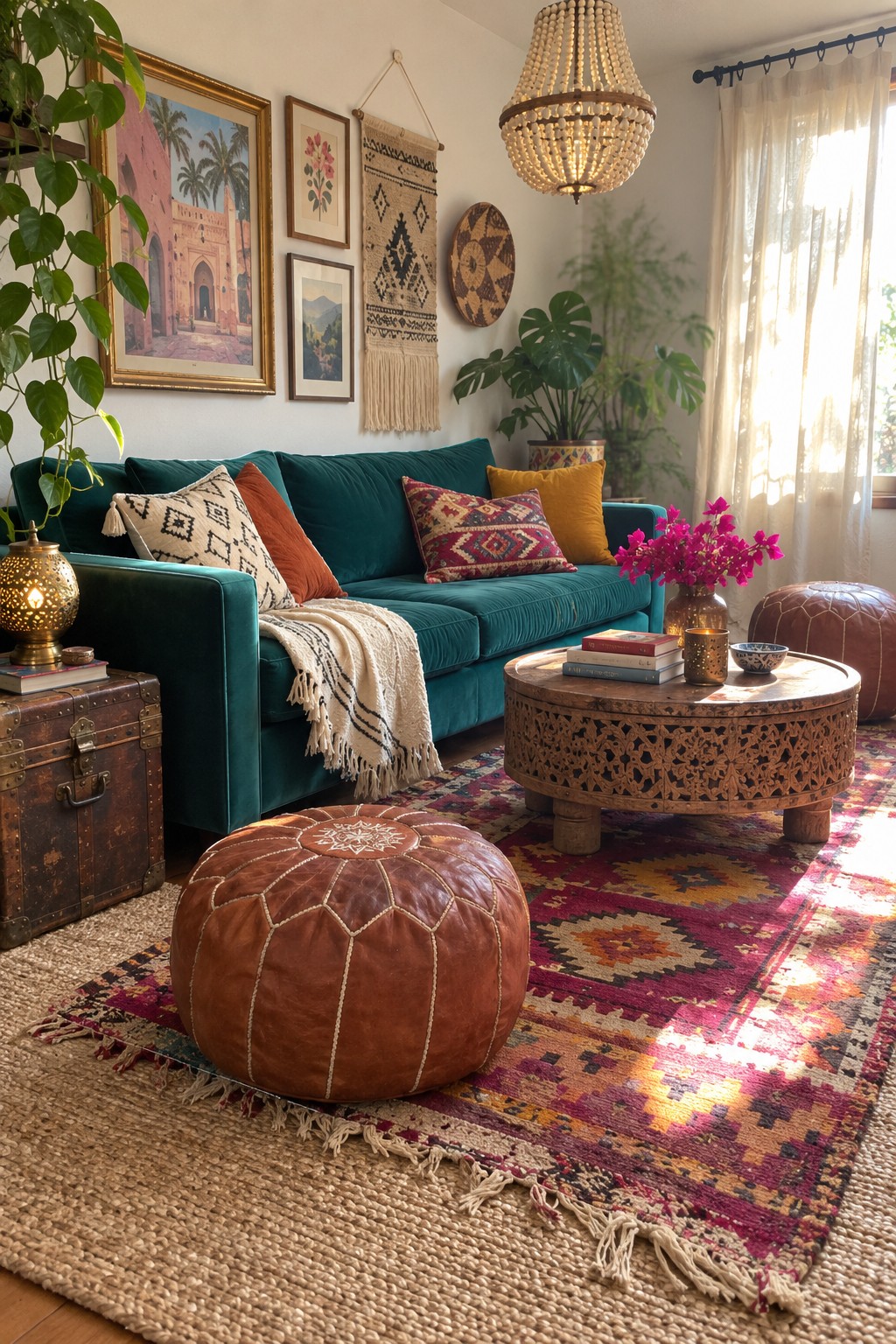
Layering a patterned rug over a simple jute base is an easy way to bring color and texture into a boho living room. Here, the smaller rug’s rich reds and golds pick up the colors in the cushions without making the room feel crowded.
Try this approach when you want a lively rug but still want a little natural texture showing around the edges. Make sure the base rug is large enough to stay put, and choose a top rug that leaves a clear border.
Use A Large Jute Rug As A Base
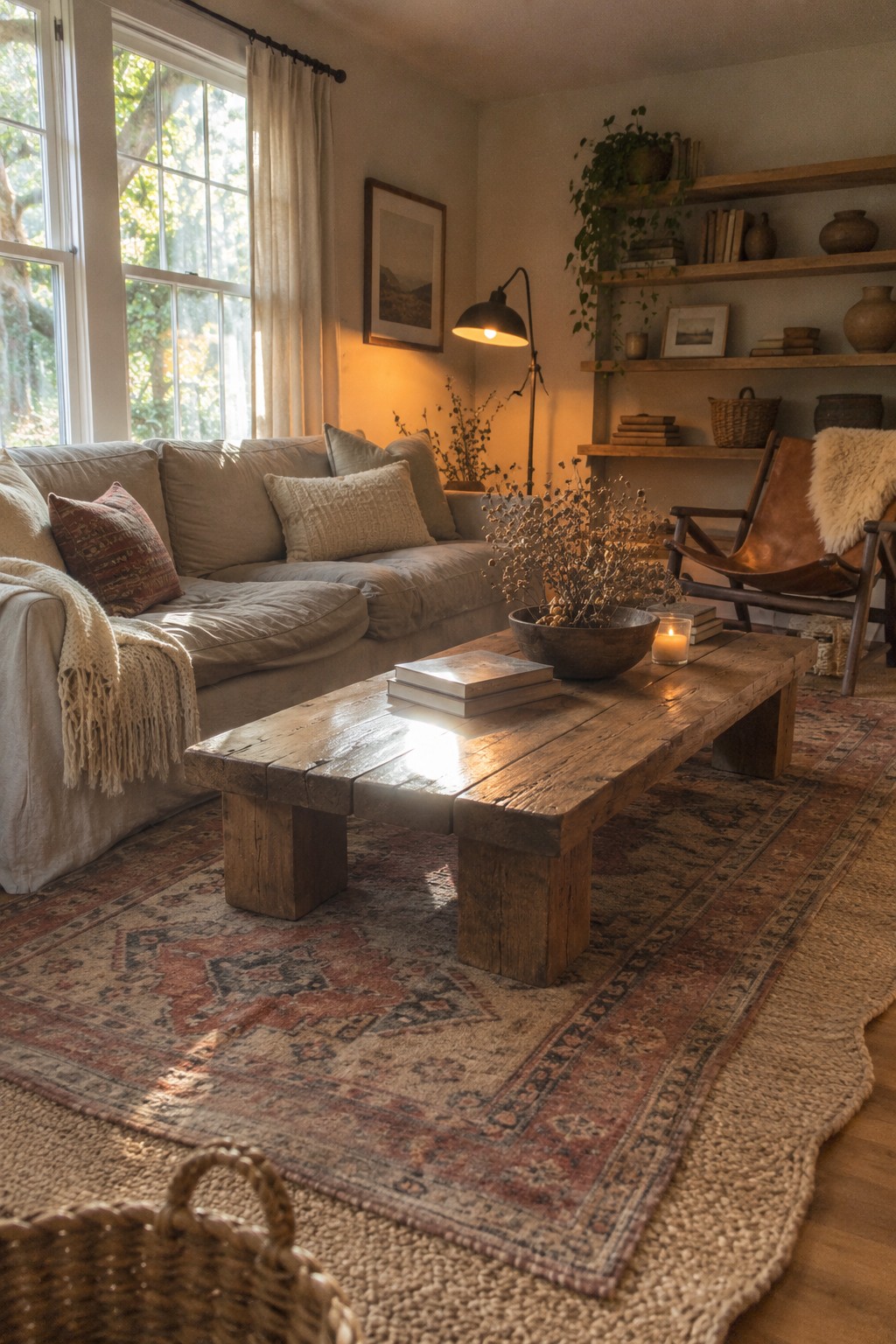
Layering a patterned rug over a larger natural-fiber rug gives a boho living room texture without making the pattern feel too busy. The jute edge also helps define the seating area.
Choose a base rug large enough to extend beyond the furniture, then place a smaller vintage-style rug on top. This works especially well with wood floors, but keep the top rug centered so the layers look intentional.
Let a Patterned Rug Sit Over a Plush Base
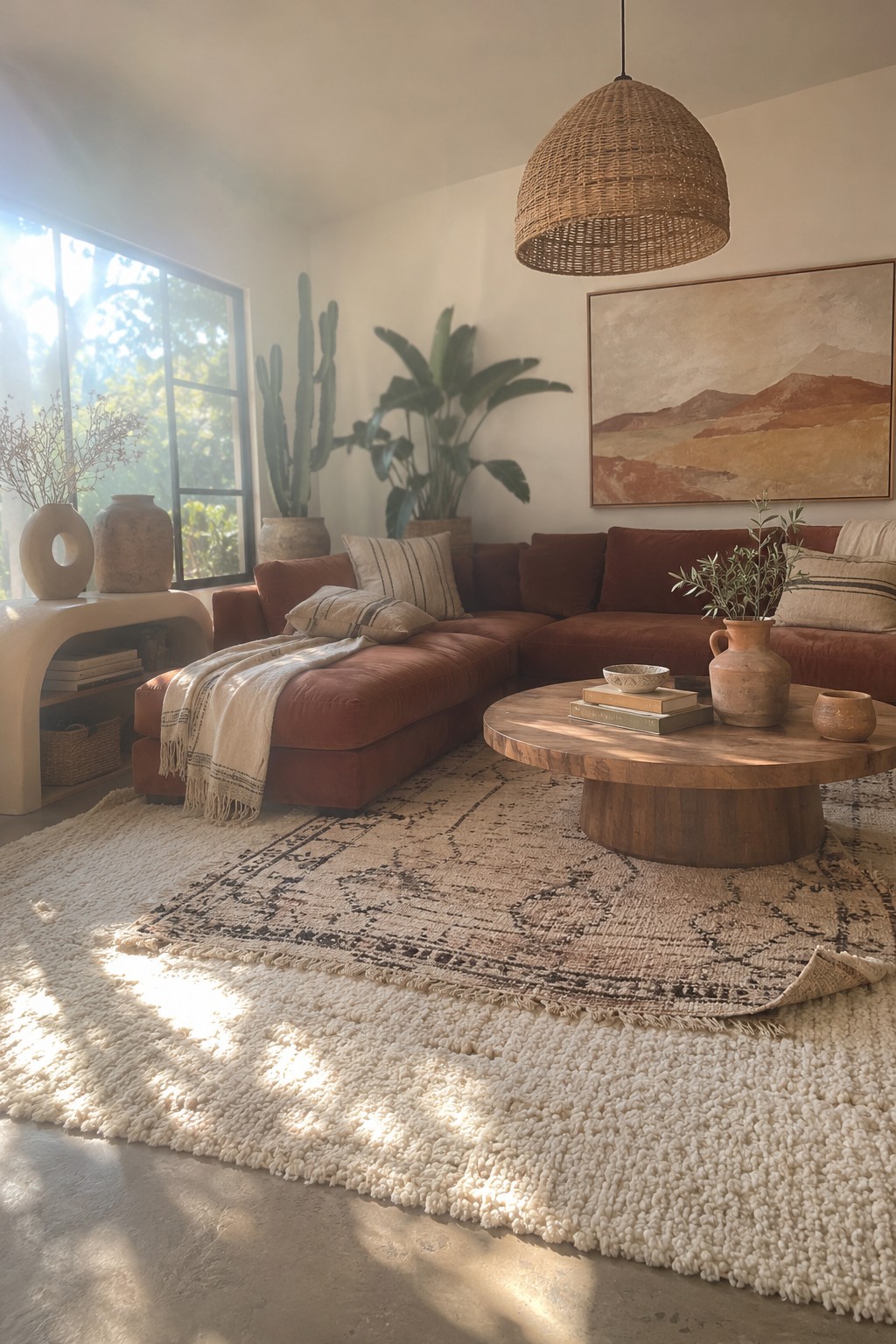
Layering a patterned rug over a thicker, plain rug gives a boho living room more texture without making the floor feel too busy. The cream shag rug beneath the smaller patterned rug is a simple way to make the seating area feel softer and more settled.
For a similar look, choose a base rug large enough to extend beyond the top rug, then keep the patterns in related, muted colors. This works especially well in a room with a simple sofa, where the rugs can bring in detail without competing with the furniture.
Layer A Patterned Rug Over Natural Fiber
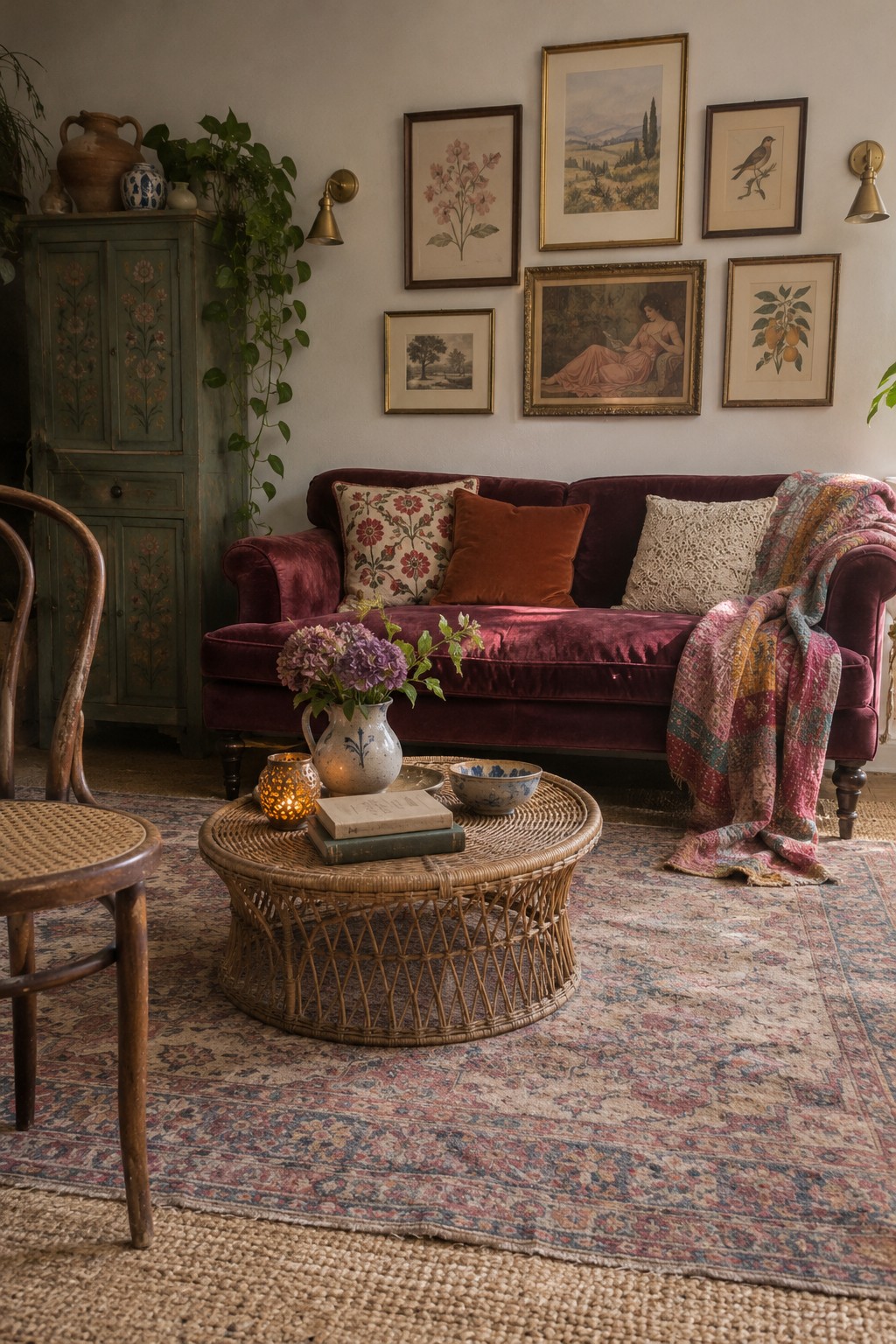
Layering a patterned rug over a simple natural-fiber rug is an easy way to bring more texture into a boho living room. The woven base gives the floor a casual feel, while the faded pattern on top adds color without making the room look too busy.
Let the base rug extend beyond the patterned one so the layers are easy to see. This works especially well with vintage-style rugs, though it’s worth checking that both rugs lie flat and don’t slide underfoot.
Use a Vintage Rug To Break Up Natural Textures

A patterned rug over a chunky woven base is an easy way to layer texture without making the room feel busy. The vintage-style pattern adds color and detail, while the larger neutral rug gives the arrangement a simple foundation.
Try this in a living room with plain upholstery and wood or woven materials. Let the bottom rug extend beyond the patterned one, and keep the top rug large enough to sit under the main furniture rather than floating in the middle.
Layer A Patterned Rug Over Natural Fiber
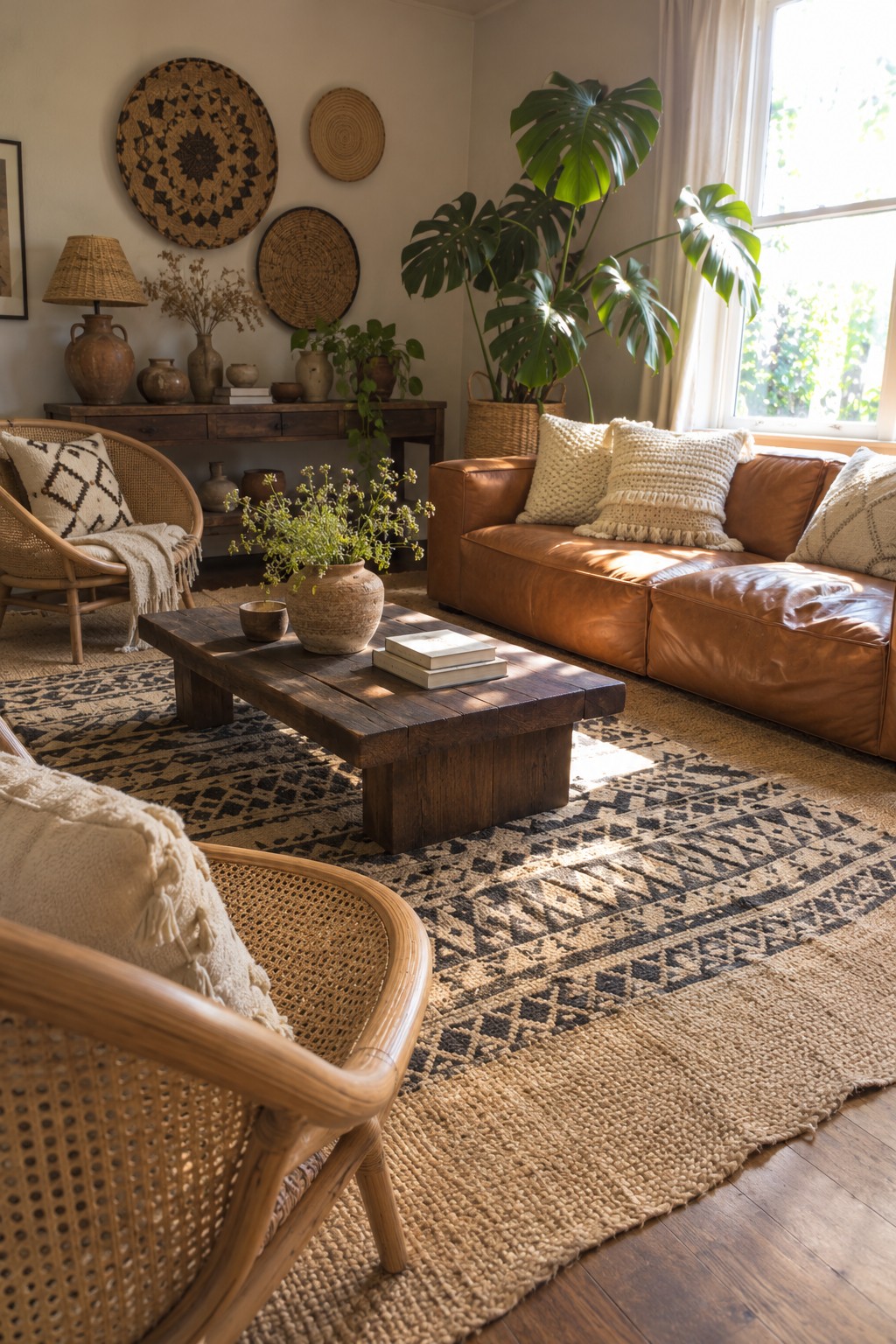
Layering a smaller patterned rug over a broad natural-fiber rug is an easy way to bring more texture into a boho living room. The woven base gives the floor a relaxed look, while the dark geometric pattern adds definition without covering the whole space.
This approach works well in a seating area where you want to mark out the conversation space. Keep the lower rug large enough to extend beyond the furniture, and choose a top rug that shares a color with the room.
Layer a Vintage Rug Over Natural Fiber

A patterned rug over a larger woven rug is an easy way to bring texture into a boho living room. The natural-fiber base gives the smaller vintage-style rug a clear place in the seating area, while its worn colors add character without covering the whole floor.
Choose a base rug large enough to extend beyond the sofa, then set the patterned rug where people gather. Keep the colors related so the layers feel comfortable together, and check that the edges lie flat to avoid a tripping hazard.
Use A Vintage Rug To Add Color

A vintage-style rug can bring pattern into a boho living room without making the seating area feel busy. Its muted reds and blues work well alongside natural textures, while a plain jute rug underneath gives the layered look a clear base.
Try this approach when you have a large neutral sofa or open floor to define. Keep the top rug smaller than the base, and leave enough of the jute visible around the edges.
Layer A Smaller Rug Over a Textured Base
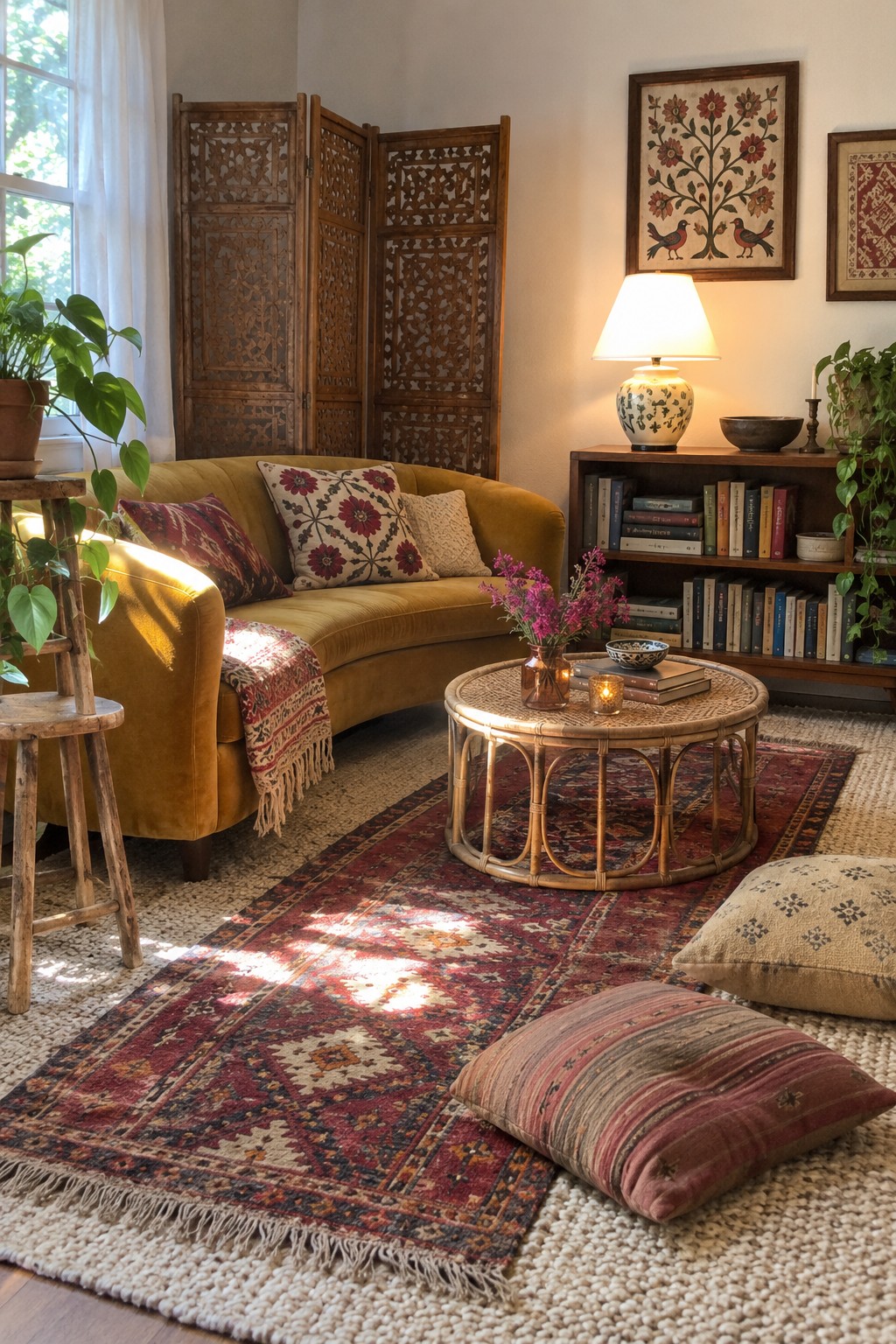
A smaller patterned rug over a broad natural-fiber rug is an easy way to bring color into a boho living room without covering every bit of the floor. The woven base keeps the look relaxed, while the vintage-style rug gives the seating area a clear center.
For a similar effect, let the lower rug extend beyond the sofa and coffee table, then place the patterned rug where people gather. This works well in a compact room, too, as long as the top rug is large enough to sit beneath the main furniture rather than floating by itself.
Layer a Vintage Rug Over Natural Fiber
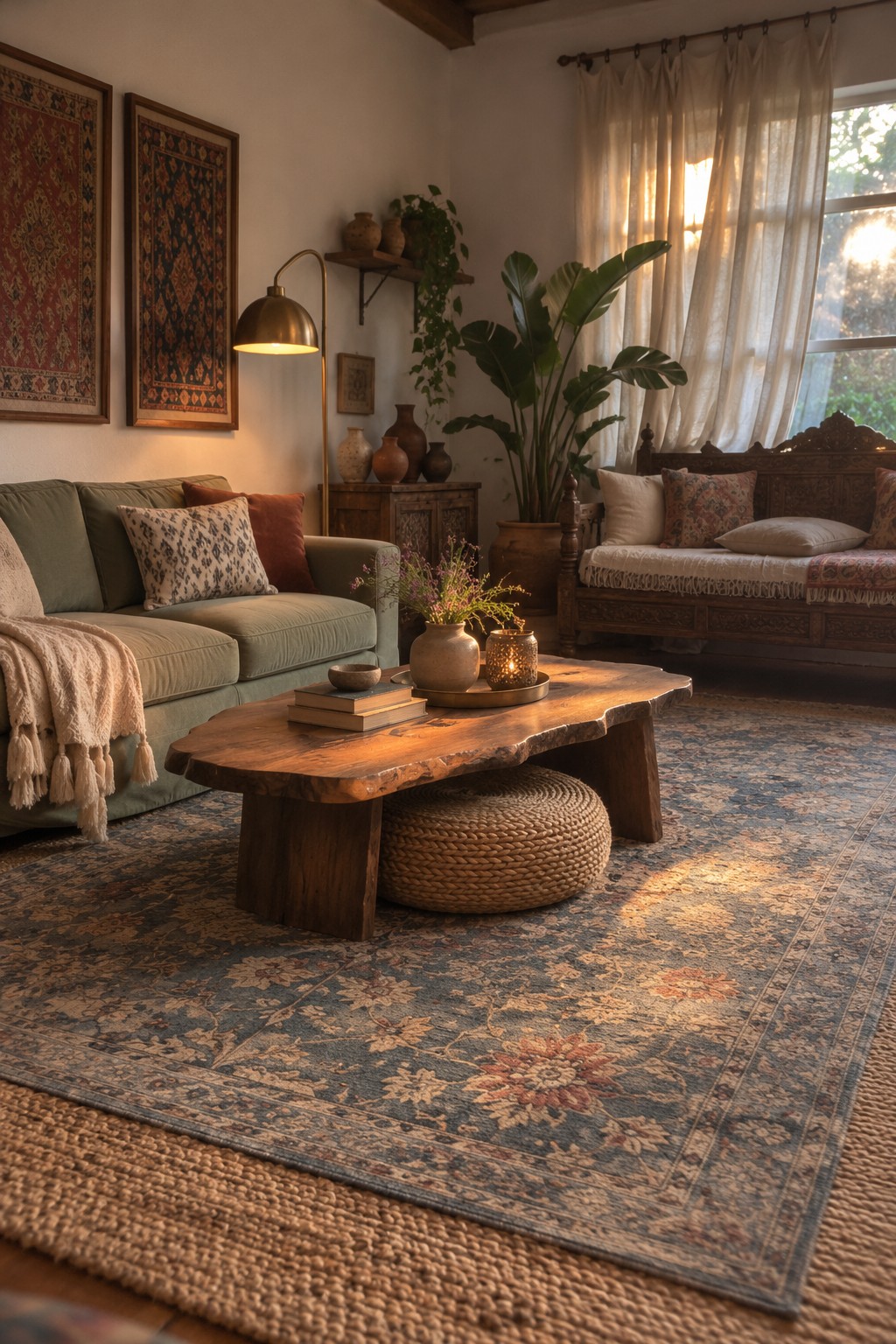
A vintage-style rug can bring color and pattern to a boho living room without covering every bit of the floor. Here, a muted patterned rug sits over a larger woven jute rug, so both textures show.
This works well when you want a smaller rug to define the seating area but still need a soft landing underfoot around it. Leave a clear border of the base rug visible, and check that the layers lie flat so they do not shift or catch at the edges.
Let the Rug Layers Define the Seating Area
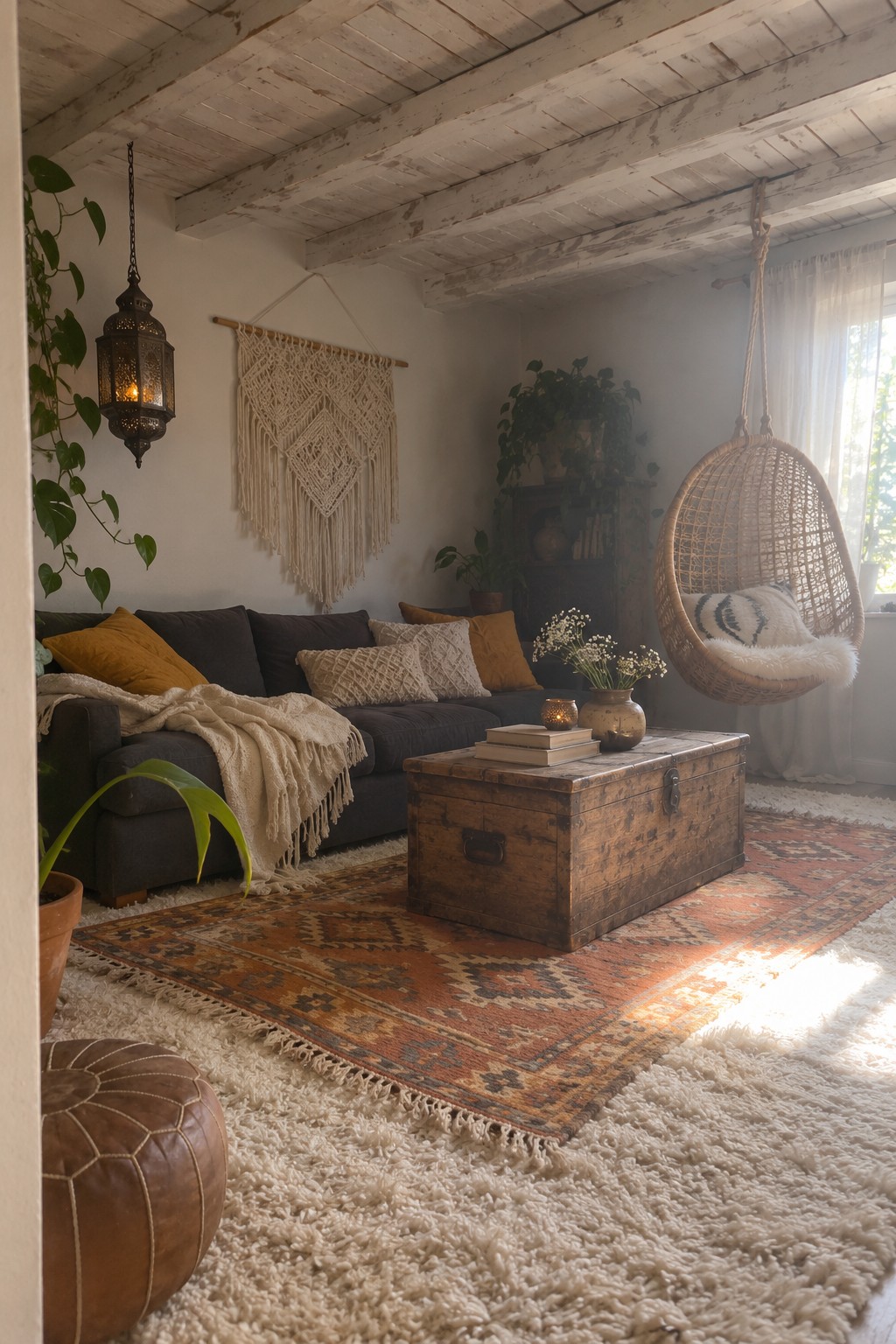
Layering a patterned rug over a larger, plush rug gives a seating area a clear place to gather. The worn, earthy pattern adds character, while the soft border around it keeps the floor comfortable underfoot.
This works especially well in a relaxed living room with a sofa and coffee table. Let the lower rug extend beyond the furniture, then center a smaller rug on top. Check that both rugs lie flat so the edges don’t become a tripping hazard.
Use Rug Layers To Define A Cozy Seating Area
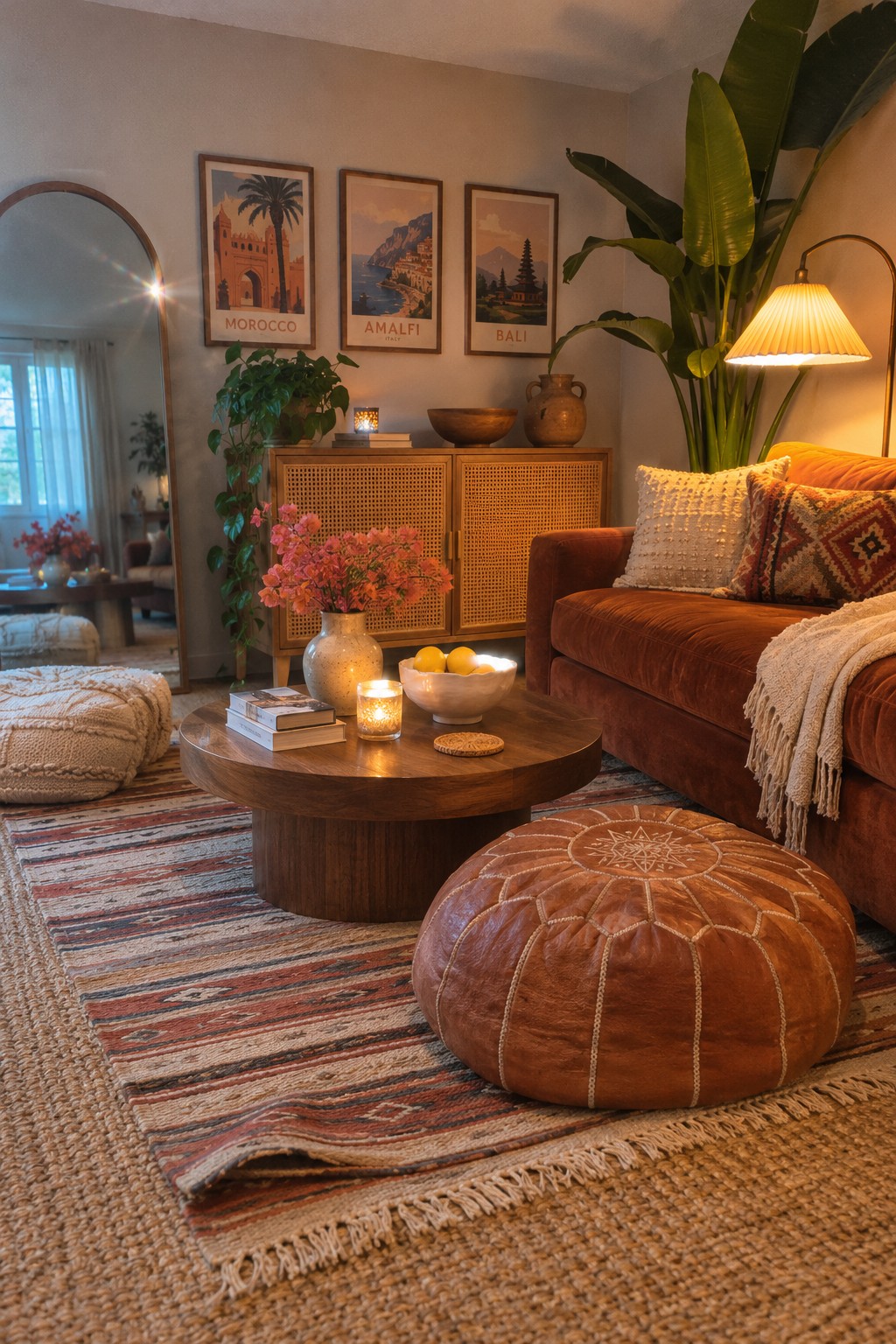
Layering rugs can help a living room feel more settled, especially when the seating area sits within a larger open floor. Here, a striped rug sits over a woven natural-fiber rug, giving the space a clear center without needing a separate boundary.
Try a patterned rug over a larger, simpler base when you want color and texture but still want the floor to feel connected. Leave enough of the bottom rug showing around the edges, and keep the top rug sized to the chairs or sofa rather than letting it crowd the walkway.
Use Layered Rugs To Define The Seating Area

A patterned rug placed over a larger natural-fiber rug helps mark out the living room’s seating area without adding furniture. The smaller rug brings in color and detail, while the woven base lets more texture show around its edges.
This approach works well when a sofa and coffee table sit in an open or shared space. Keep the base rug large enough to extend beyond the seating, then choose a top rug that leaves a clear border. The layers should feel intentional, not crowded.
Use a Patterned Rug To Bring Texture Into the Seating Area
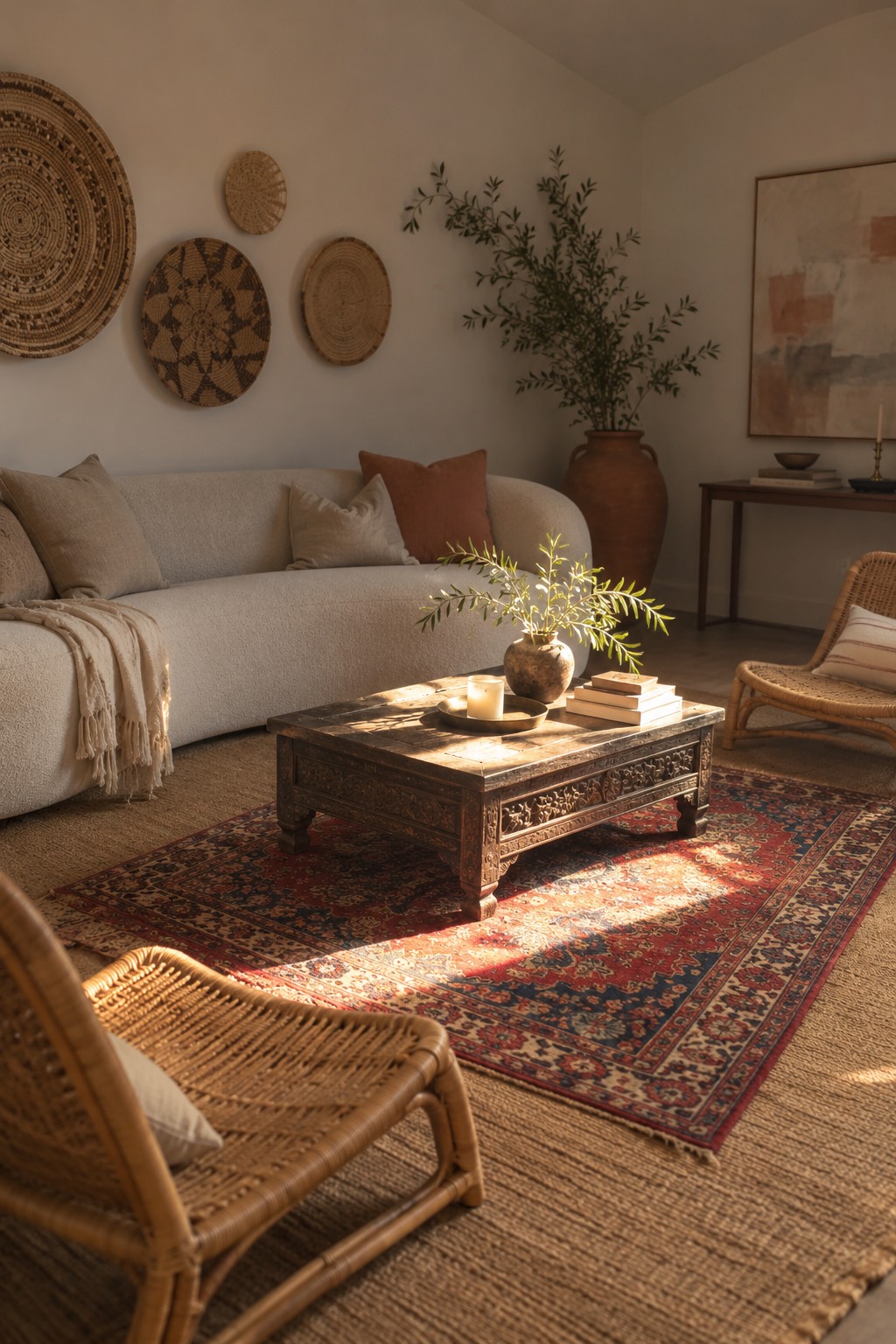
A patterned rug over a natural-fiber base is an easy way to give a boho living room more texture without changing the larger furniture pieces. The woven layer keeps the look relaxed, while the smaller rug adds color and a clear spot for the seating area.
Leave enough of the base rug visible around the edges so the layers read separately. This approach works especially well in rooms with simple upholstery, where a patterned rug can add interest without making the space feel too busy.
Layer a Vintage Rug Over Natural Fiber

A faded patterned rug can make a jute base feel more comfortable and give a boho living room a collected look. The natural weave still shows around the edges, while the smaller rug brings in color and pattern.
Leave a clear border of jute visible so the two layers read separately. This approach works well in a seating area, especially when the patterned rug picks up colors already used in the room.
Use a Vintage Rug Over a Round Natural-Fiber Rug
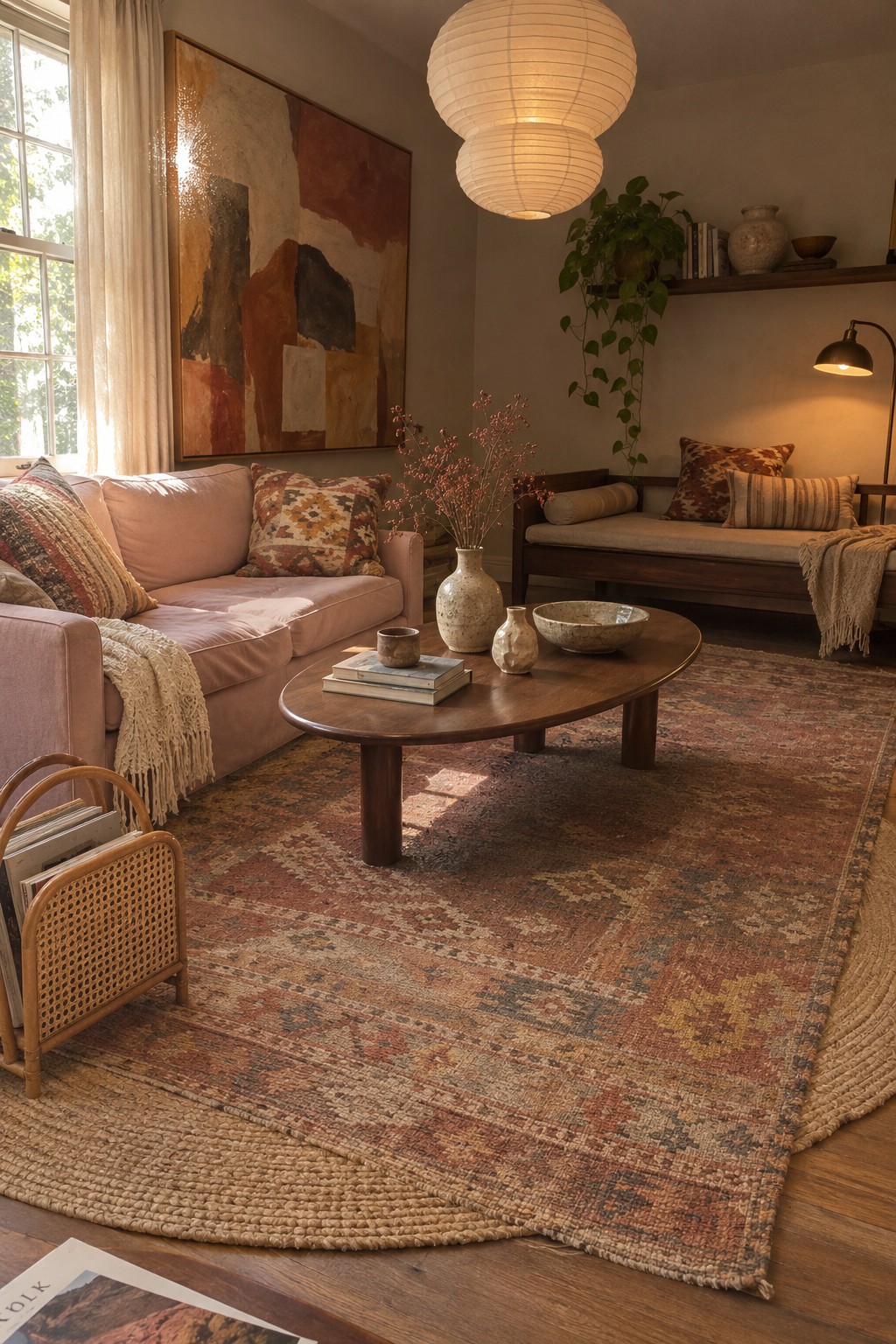
A worn patterned rug can give a boho living room color and character, while a round natural-fiber rug beneath it adds a different texture. The layered edges keep the floor from feeling too plain without making the seating area look overly matched.
Try this in a living room where the furniture can sit mostly on the top rug. Choose a base rug large enough to show around the edges, and keep the colors in the patterned rug close to the room’s other textiles.
Use a Vintage Rug To Add Pattern
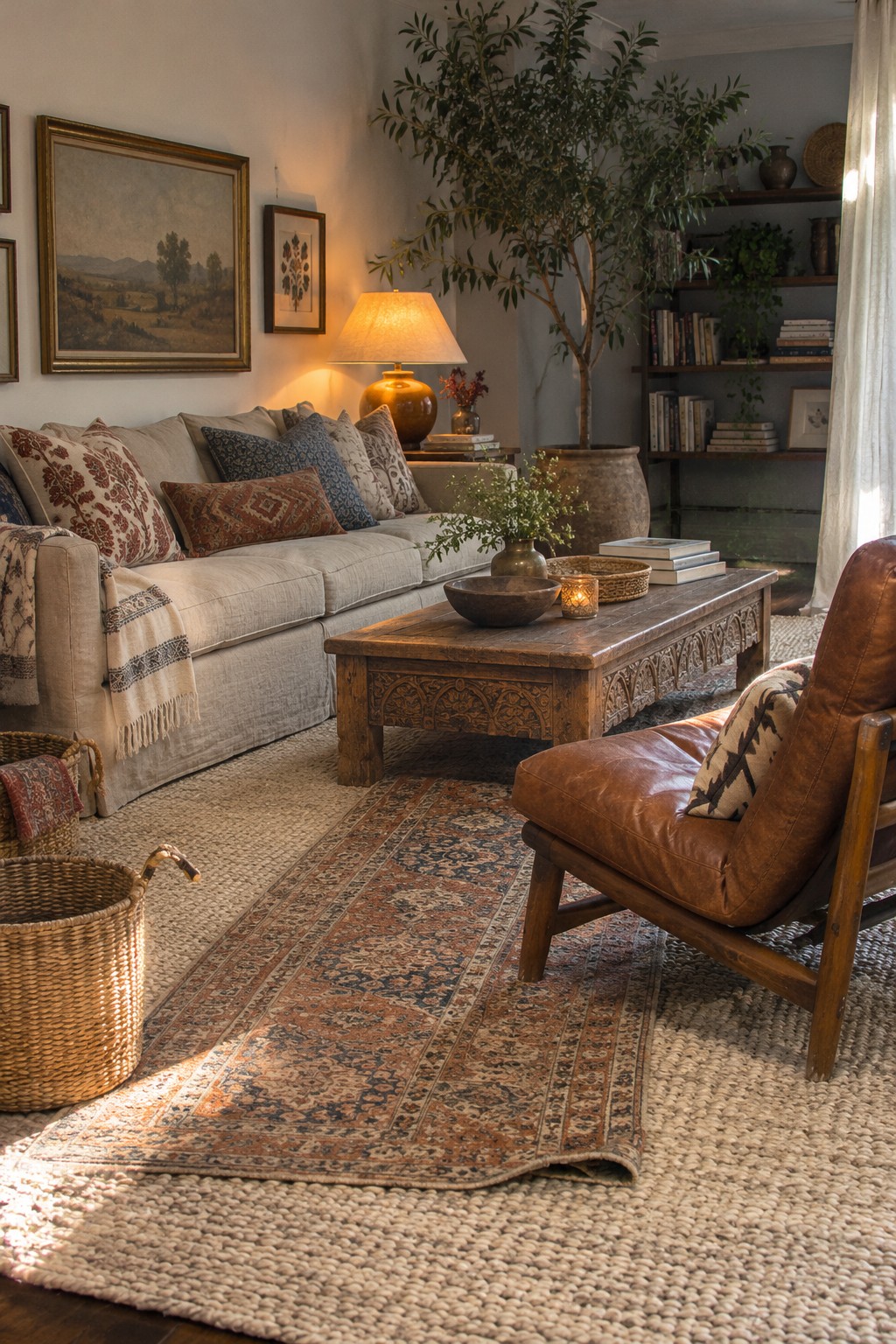
A smaller patterned rug over a large natural-fiber rug is an easy way to bring color and texture into a boho living room. The plain base gives the vintage-style pattern room to stand out without making the floor feel too busy.
Try this in a seating area, leaving enough of the larger rug visible around the edges. A low-pile top rug is usually easier to keep flat and tidy over a thicker woven base.
Frequently Asked Questions
Q: How do I layer rugs without making the living room feel too busy?
A: Let one rug set the base, then use a smaller rug with a simpler pattern or a quieter color on top. Keep a few shades in common so the layers feel relaxed rather than jumbled.
Q: What size should the top rug be?
A: Choose one that’s large enough to anchor a seating area or highlight a favorite chair, but small enough to show a clear border of the rug underneath. A tiny rug floating in the middle can look accidental.
Q: Can I layer rugs if I have pets or kids?
A: Yes. Start with a flat, durable base rug and add a smaller washable rug where spills or muddy paws are most likely. A rug pad under each layer helps keep them from sliding around.
Q: Do the rugs need to match?
A: Not at all. Mix textures, such as a flatwoven rug under a soft shag, and repeat a color or two to tie them together.
